Remember when mobile phones got cameras?
The predictions were apocalyptic. Photo studios would close. Professional photographers would become relics of a pre-digital age. Why would anyone pay for photos when everyone could take them for free?
Those predictions missed something crucial about how technology actually transforms industries.
What Actually Happened
The smartphone camera didn’t shrink the photography industry. It detonated an explosion of growth that nobody anticipated.
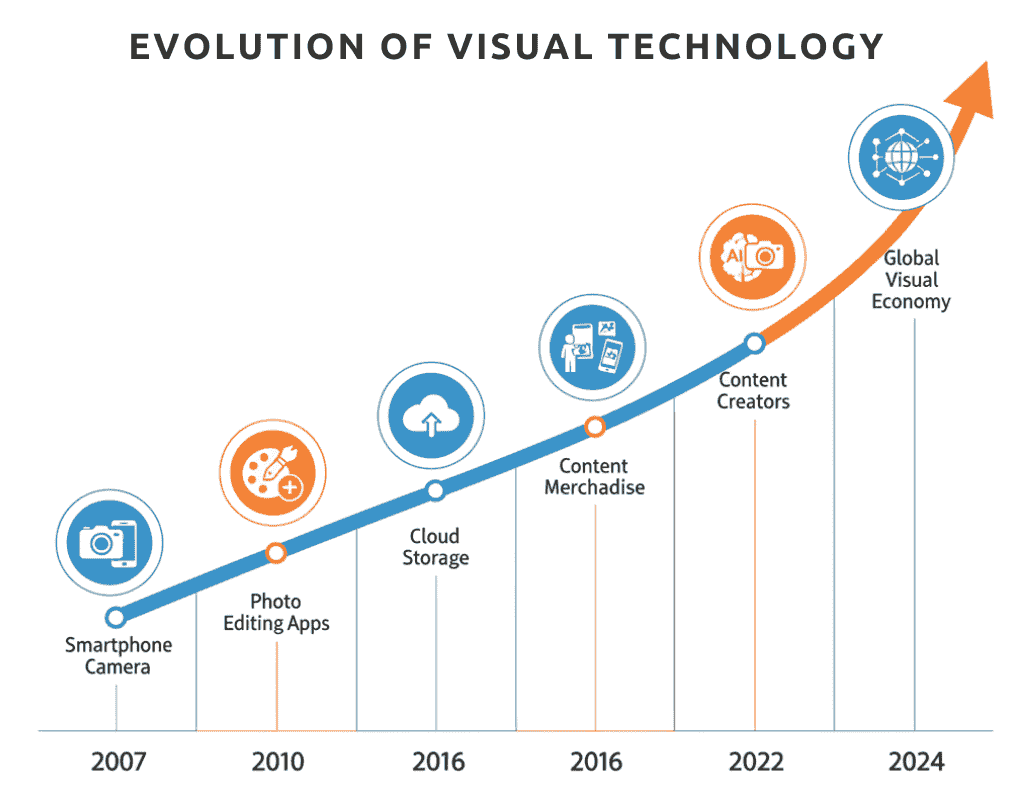
Photos taken per year went from millions to trillions. Photo editing apps became a billion-dollar industry. Cloud storage services emerged to handle the flood of images. “Content creator” became a legitimate profession. And photo printing? It didn’t die. It evolved into photo books, canvas prints, and personalized merchandise.
The camera didn’t kill photo studios. It forced them to adapt. And the smart ones didn’t just survive. They thrived.
How Studios Reinvented Themselves
The studios that survived understood something fundamental: technology handles the casual, but professionals own the important.
The “Milestone Business” Pivot
People stopped coming for everyday photos. But they still pay premium prices for the moments that matter: weddings, newborn shoots, graduations, corporate headshots, and family portraits. These milestone moments require expertise, equipment, and artistry that no smartphone can replicate.
The value proposition shifted from “we take photos” to “we capture your most important memories with the care they deserve.”
New Revenue Streams
Forward-thinking studios stopped defining themselves by a single service. They expanded into large-format printing for billboards and banners, photo printing on mugs, canvas, and wood, premium framing services, and B2B partnerships with amateur photographers who needed professional finishing.
They moved up the value chain, offering what technology couldn’t commoditize.
The Same Pattern Is Playing Out with AI
Take legal work as an example.
Yes, AI can draft agreements in minutes. Contract templates, NDAs, terms of service, privacy policies: all generated in seconds rather than hours.
Critics see this and predict the end of legal professionals. But here’s what’s really happening.
The Market Just Expanded Dramatically
Previously, only companies with legal budgets got proper documentation. Small businesses operated with handshake agreements or downloaded free templates that didn’t actually protect them. Freelancers skipped contracts entirely because lawyers were too expensive.
Now, every freelancer, small business, and creator can generate legal documents. The documentation gap is closing across the entire economy.
The volume of legal work didn’t shrink. It multiplied by ten.
Where Human Expertise Becomes More Valuable
Someone still needs to review those AI-generated documents. Someone still needs to customize them for specific situations. Someone still needs to handle disputes when things go wrong. Someone still needs to advise on strategy when the stakes are high.
AI handles the drafting. Lawyers own the judgment.
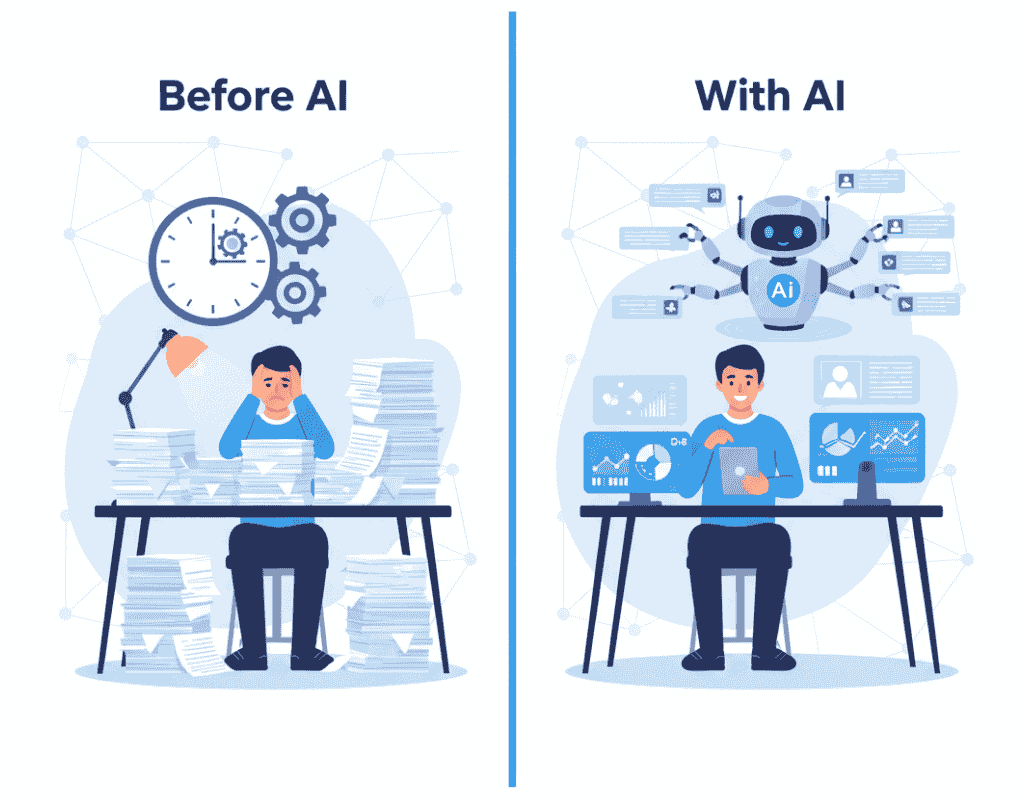
This pattern repeats across every industry facing AI disruption. Designers use AI to generate options faster, then apply their expertise to refine and select. Writers use AI to overcome blank-page syndrome, then layer in voice, strategy, and human insight. Developers use AI to write boilerplate code, then architect systems and solve novel problems.
Technology Expands Markets More Than It Contracts Them
The historical pattern is remarkably consistent.
ATMs didn’t eliminate bank tellers. They reduced the cost of opening branches, leading to more branches and more tellers doing higher-value work.
Spreadsheets didn’t eliminate accountants. They made financial analysis faster, which meant more analysis got done, which meant more demand for people who could interpret results.
E-commerce didn’t eliminate retail. It created an entirely new category of business while traditional retail adapted and often integrated digital channels.
Technology doesn’t eliminate demand. It expands the market so dramatically that new opportunities emerge faster than old ones disappear.
The Real Question You Should Be Asking
The question isn’t “Will AI take my job?”
That framing assumes a fixed pie of work that AI will eat into. But the pie is growing. The question is whether you’ll be positioned to serve the larger market or whether you’ll be competing for the shrinking commodity portion.
The real question is: “How fast can I adapt to do 10x more?”
If you can use AI to multiply your output, you’re not competing with AI. You’re competing with other humans, some of whom have figured out how to leverage AI and some of whom haven’t.
Finding Your “Milestone Business”
Every professional has work that falls into two categories.
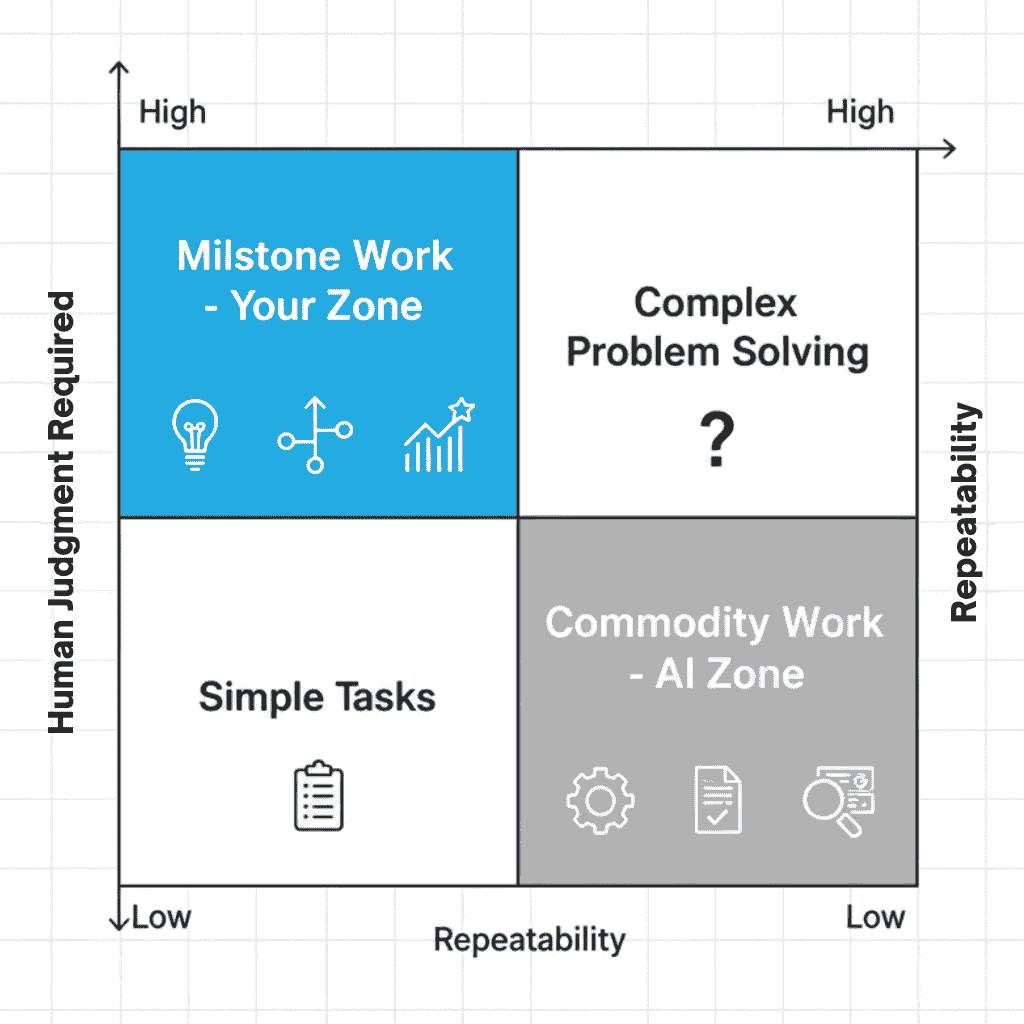
The first is commodity work: tasks that are repeatable, well-defined, and don’t require deep judgment. This is the work AI will increasingly handle.
The second is milestone work: tasks that require expertise, judgment, creativity, or human connection. This is the work that becomes more valuable as AI handles the commodity layer.
Photo studios survived because they identified their milestone business: the moments that matter too much to leave to amateur equipment. They stopped trying to compete with free and started charging premium prices for irreplaceable expertise.
What’s your milestone business?
What’s the work you do that requires judgment honed over years of experience? What problems do you solve that require understanding context, reading between the lines, or navigating ambiguity? What value do you provide that goes beyond task completion into strategic guidance?
That’s where your future lives.
Practical Steps for Adaptation
Instead of resisting AI, consider treating it as infrastructure. Just as the internet became background utility, AI tools are becoming the baseline for professional work.
Start by identifying your commodity tasks. These are your candidates for AI augmentation, not elimination of your role, but acceleration of your output.
Then invest heavily in your judgment layer. The skills that are hardest to automate, such as strategic thinking, relationship building, creative direction, and complex problem-solving, become more valuable as the task layer gets cheaper.
Finally, expand your definition of what you offer. Photo studios didn’t just survive by taking better photos. They built new businesses around the edges of their expertise. What adjacent services could you provide if your core delivery became faster and cheaper?
The Bottom Line
The mobile camera revolution didn’t end photography as a profession. It transformed what photographers do and dramatically expanded the overall market for visual content.
AI will do the same for your industry. The question is whether you’ll be positioned as a premium provider of high-judgment work or competing for the commodity layer that AI keeps getting better at.
The studios that thrived weren’t the ones who resisted digital photography. They were the ones who adapted fastest, found their milestone business, and built new revenue streams around emerging needs.
Your industry is in the same moment of transformation. The market is about to grow dramatically. The question is where you’ll be standing when it does.
Ready to see how AI can expand your market rather than threaten it? ChatMaxima helps businesses use conversational AI to reach more customers, handle more inquiries, and deliver better experiences, all while freeing up your team for the high-judgment work that drives real value.