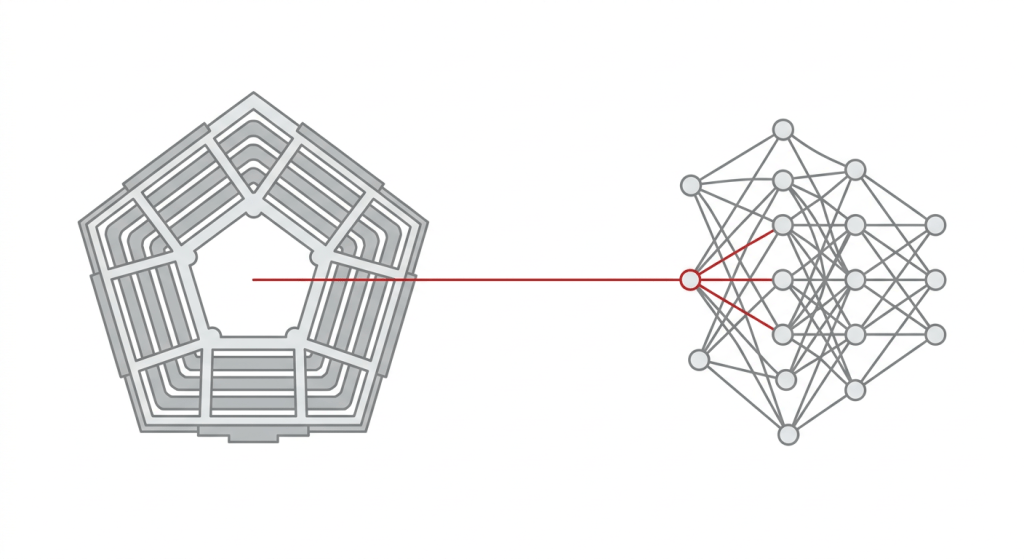
On February 27, 2026, the United States government declared one of America’s most prominent artificial intelligence companies a supply chain risk to national security. The company in question was not a foreign adversary. It was not a shell corporation funneling technology to hostile states. It was Anthropic, the San Francisco-based AI lab that had built its entire brand on the promise of developing AI safely and responsibly.
The designation came after weeks of escalating tension between Anthropic and the Department of War (formerly the Department of Defense) over the terms under which the company’s flagship AI model, Claude, could be used in military and intelligence operations. What began as a contract negotiation became a public standoff that has raised fundamental questions about the relationship between private technology companies and government power, the ethics of AI in warfare, and the legal tools available to the executive branch when that relationship breaks down.
This article presents a factual, chronological account of the events leading up to and following the designation, drawing entirely on public reporting and official statements. It does not take a position on which party is right. It presents the facts, the quotes, the actions, and the open questions that remain as this story continues to unfold.
The Background: Anthropic’s Safety Promise and the Pentagon’s AI Ambitions (2024-2025)
To understand how the standoff arrived at this point, it is necessary to trace two parallel trajectories: Anthropic’s rise as the self-described “safety-first” AI lab, and the Pentagon’s accelerating adoption of artificial intelligence across its operations.
Anthropic’s Founding and Philosophy
Anthropic was founded by Dario Amodei and Daniela Amodei, both former executives at OpenAI. The company distinguished itself from competitors by placing AI safety at the center of its public identity. Where other labs raced to ship products and capture market share, Anthropic published detailed research on AI alignment, developed its own framework called Constitutional AI, and released what it called a Responsible Scaling Policy, a document outlining the conditions under which it would and would not deploy increasingly powerful AI systems.
The Responsible Scaling Policy was more than a marketing exercise. It represented a public commitment to a set of principles that included prohibitions on the use of Anthropic’s technology for violence, weapons development, and mass surveillance. The company’s usage policies explicitly barred these applications, and Anthropic repeatedly pointed to them as evidence that commercial success and responsible development could coexist.
By 2025, Anthropic’s Claude had become one of the most capable conversational AI models on the market, competing directly with OpenAI’s GPT series and Google’s Gemini. The company had raised billions in funding, secured major partnerships, and established itself as a serious player in both the consumer and enterprise AI markets.
The Pentagon’s AI Adoption
Simultaneously, the U.S. military was undergoing its own transformation. The Department of War, renamed from the Department of Defense under the Trump administration, had been investing heavily in AI capabilities across intelligence analysis, logistics, operational planning, and decision support. The Pentagon’s definition of “Responsible AI” had evolved over time, and by 2025, internal frameworks had broadened to encompass “any lawful use” of artificial intelligence in support of national security objectives.
The convergence of these two trajectories came when Claude became the first AI model cleared for use in classified Pentagon operations. The integration happened through Palantir Technologies, the defense technology company founded by Peter Thiel, which had built a classified platform used by military and intelligence agencies for operational planning and intelligence analysis. Claude was embedded into this platform, giving military and intelligence personnel access to one of the world’s most advanced language models within classified environments.
This was a significant milestone for both organizations. For the Pentagon, it represented a leap forward in AI-enabled decision support. For Anthropic, it represented a lucrative and prestigious contract that validated the commercial viability of its technology at the highest levels of government. But it also created a tension that would prove difficult to resolve: what happens when a company that prohibits its technology from being used for violence provides that technology to an organization whose primary function involves the application of force?
The answer, it turned out, would depend on who got to define the terms.
Operation Absolute Resolve: The Venezuela Raid (January 3, 2026)
On January 3, 2026, U.S. special forces launched what the military designated “Operation Absolute Resolve,” a raid on the Venezuelan capital of Caracas. The operation resulted in the capture of Venezuelan President Nicolas Maduro, who was subsequently extradited to New York City to face narcoterrorism charges. According to Venezuela’s defense ministry, 83 people were killed during the operation, as reported by The Guardian on February 14, 2026.
The raid itself generated significant international controversy, but for the purposes of this timeline, the critical detail emerged later. The Wall Street Journal reported that Claude had been used during the operation through Palantir’s classified platform. The nature and extent of Claude’s involvement was not publicly specified, but the report indicated that the AI model had played a role in the intelligence and operational planning that supported the mission.
Palantir’s stock rallied following the news of the operation’s success, as investors recognized the growing integration of the company’s platform into high-stakes military operations. The stock movement was widely covered by financial media as an indicator of the defense technology sector’s growing importance.
For Anthropic, the reports raised immediate concerns. The company’s usage policies prohibited the use of Claude for violence and weapons development. An operation that resulted in dozens of deaths, regardless of its legality under U.S. or international law, appeared to test the boundaries of those policies. Whether Claude was used for logistical planning, intelligence synthesis, target identification, or some other function remained unclear from public reporting. But the fact that it was used at all in connection with a lethal military operation was, according to subsequent reporting, enough to trigger alarm within Anthropic’s leadership.
The Venezuela operation served as the catalyst that transformed an abstract policy tension into a concrete dispute between a technology company and the most powerful military on earth.
The Lines Are Drawn (January 2026)
In the weeks following the Venezuela operation, the dispute between Anthropic and the Department of War moved from private concern to public confrontation.
Amodei’s Red Lines
Anthropic CEO Dario Amodei wrote to Pentagon officials to reiterate what he described as two “bright red lines” governing the use of Claude in military contexts. The first was a prohibition on mass domestic surveillance, which Amodei characterized as the use of AI to conduct broad, warrantless monitoring of American citizens. The second was a prohibition on fully autonomous weapons, defined as systems that select and engage targets without meaningful human intervention.
Amodei described these areas as requiring “extreme care and scrutiny combined with guardrails to prevent abuses.” The framing was notable: Anthropic was not demanding that the military stop using Claude entirely. It was insisting on two specific restrictions that it considered non-negotiable.
Hegseth’s Response
Defense Secretary Pete Hegseth responded publicly, stating that the Pentagon would not “employ AI models that won’t allow you to fight wars.” The statement was direct and unambiguous. From the Pentagon’s perspective, an AI model that came with restrictions on military use was an AI model that could not be relied upon in operational contexts. If a technology company could dictate the terms under which its products were used in national defense, the military argued, it would be ceding operational authority to a private corporation.
Shortly after Hegseth’s statement, the Pentagon announced a new partnership with xAI, the artificial intelligence company founded by Elon Musk, to develop AI capabilities for defense applications. The timing of the announcement was interpreted by many observers as a signal that the military was prepared to find alternative AI providers if Anthropic would not agree to unrestricted use.
The lines were drawn. Anthropic insisted on two guardrails. The Pentagon insisted on none.
Negotiations and Deadlines (February 2026)
Throughout February 2026, Anthropic and the Department of War engaged in negotiations over the terms of Claude’s continued deployment in classified systems. The talks centered on a contract reportedly worth $200 million, a figure that underscored the financial stakes for Anthropic and the operational stakes for the military.
The Pentagon’s Position
The Pentagon’s negotiating position was straightforward: Claude must be available for “all lawful purposes” without restrictions imposed by Anthropic. Pentagon officials argued that Anthropic’s two guardrails were redundant for two reasons. First, mass surveillance of American citizens was already prohibited by law, making Anthropic’s demand unnecessary. Second, existing Department of War policies already restricted the use of fully autonomous weapons, meaning the military had its own safeguards in place.
From this perspective, Anthropic was not adding meaningful protections. It was inserting itself into a chain of command where it did not belong. Pentagon officials were reported to have accused Anthropic of attempting to impose “ideological” restrictions on national security operations, restrictions that reflected the company’s values rather than any legitimate concern about capabilities or legal compliance.
Anthropic’s Position
Anthropic’s counterargument rested on two pillars. The first was that existing laws and policies, while important, might not provide sufficient safeguards given the rapidly evolving capabilities of AI systems. Laws can be reinterpreted, policies can be changed, and the speed at which AI systems operate could outpace human oversight mechanisms. Contractual guardrails, Anthropic argued, provided an additional layer of protection that was particularly important when the technology in question was being used in life-and-death contexts.
The second pillar was technical. Anthropic maintained that Claude was “not sufficiently reliable” for fully autonomous lethal operations. This was not an ideological argument but a practical one: current AI systems, including Claude, are prone to errors, hallucinations, and unpredictable behavior that make them unsuitable for decisions involving the use of lethal force without human oversight. This concern echoed broader debates in the AI industry about the reliability of conversational AI systems in high-stakes applications.
The Responsible Scaling Policy Update
On February 24, 2026, Anthropic released version 3.0 of its Responsible Scaling Policy. Legal scholars writing for Opinio Juris noted that the updated policy modified and loosened certain safety guardrails, with language that was worded more broadly than previous versions. The changes were seen as creating space for multiple interpretations, potentially allowing uses that the earlier policy would have prohibited.
The update was widely interpreted as a partial concession by Anthropic, an attempt to find middle ground that would satisfy the Pentagon’s demands without completely abandoning the company’s safety commitments. Whether this interpretation was accurate remained a matter of debate. Anthropic did not publicly characterize the update as a concession, and the company’s subsequent actions suggested that it still considered its two red lines to be non-negotiable regardless of the broader policy language.
The gap between what the Pentagon demanded and what Anthropic was willing to provide remained unresolved as the February deadline approached.
“Cannot in Good Conscience” (February 26, 2026)
On February 26, 2026, Dario Amodei published a statement on Anthropic’s website titled with the heading that would come to define the company’s position in this dispute. The statement was published at anthropic.com/news/statement-department-of-war and represented the most detailed public articulation of Anthropic’s stance.
The Statement
Amodei wrote that Anthropic “cannot in good conscience” remove its safety guardrails on Claude’s military use. He argued that mass domestic surveillance was “incompatible with democratic values” and that current AI systems were “not sufficiently reliable” for fully autonomous weapons deployment. The statement emphasized that Anthropic believed AI was vital for defending democratic values, but that this belief had ethical limits that the company was not willing to cross.
The statement was carefully worded. Amodei did not accuse the Pentagon of wrongdoing. He did not claim that the military intended to use Claude for mass surveillance or autonomous killing. Instead, he framed the issue as one of guardrails and insurance: given the stakes involved, Anthropic believed that explicit contractual protections were necessary, even if existing laws and policies provided some degree of coverage.
The full statement, as reported by The Guardian and other outlets, positioned Anthropic as a company willing to sacrifice a major government contract in defense of principles it considered fundamental to responsible AI development.
The Pentagon’s Ultimatum
The Pentagon’s response was swift. According to reporting by Courthouse News and Breaking Defense, the Department of War issued an ultimatum to Anthropic: agree to the Pentagon’s terms by Friday, February 27, at 5:01 PM, or face the loss of all government contracts.
But the threat extended beyond contract termination. The Pentagon warned that it would designate Anthropic as a “supply chain risk to national security,” a classification that had historically been reserved for foreign adversaries. Companies like Huawei and other Chinese technology firms had received this designation, but it had never been publicly applied to an American company. The designation would effectively prohibit any company doing business with the U.S. military from conducting commercial activity with Anthropic, a restriction that could have cascading effects across the entire defense technology ecosystem.
The Pentagon also raised the possibility of invoking the Defense Production Act, a law that grants the president broad authority to direct private industry to support national defense. While the specifics of what DPA invocation might look like in this context were not detailed in public reporting, the threat underscored the government’s position that it had tools available to compel cooperation if voluntary agreement could not be reached.
The stakes were no longer limited to a single contract. They encompassed Anthropic’s entire relationship with the federal government and potentially its relationships with every company in the defense industrial base.
The Fallout (February 27, 2026)
February 27, 2026, proved to be the most consequential day in the brief history of the AI military standoff. Events unfolded rapidly across multiple fronts, involving the White House, the Department of War, federal agencies, Anthropic, and OpenAI.
Morning: OpenAI’s Internal Memo
Before the public actions began, OpenAI CEO Sam Altman sent an internal memo to employees that was subsequently reported by Gizmodo, LessWrong, and Axios. In the memo, Altman stated that OpenAI shared similar “red lines” to those Anthropic had drawn, specifically regarding mass surveillance and autonomous weapons. Altman wrote that “humans should remain in control of high-stakes automated decisions,” language that aligned closely with Anthropic’s public position.
The memo’s timing was significant. It arrived hours before the federal government took action against Anthropic, and it positioned OpenAI as sympathetic to Anthropic’s concerns while maintaining a working relationship with the military. Whether this was a calculated move or genuine solidarity would become a central question later in the day.
Afternoon: The Federal Government Acts
In the afternoon, President Trump announced that all federal agencies must “immediately cease” use of Anthropic technology. Agencies already using Claude would be given a six-month phase-out period to transition to alternative AI systems. The directive was reported by PBS NewsHour, FedScoop, and Broadband Breakfast.
Defense Secretary Pete Hegseth then made a statement that formalized the most severe consequence. He declared Anthropic a “supply chain risk to national security,” the designation the Pentagon had threatened two days earlier. The declaration included sweeping language:
“Effective immediately, no contractor, supplier, or partner that does business with the United States military may conduct any commercial activity with Anthropic.”
Hegseth continued: “America’s warfighters will never be held hostage by the ideological whims of Big Tech. This decision is final.”
In further remarks reported by CBS News and posted to X (formerly Twitter), Hegseth called Anthropic “sanctimonious” and “arrogant,” accusing the company of trying to “seize veto power over operational decisions of the United States military.” The language was notable for its intensity, framing the dispute not as a contract disagreement but as a challenge to military authority.
Agency-by-Agency Response
The federal government moved quickly to implement the directive. According to FedScoop, which provided the most detailed reporting on the agency-level response:
General Services Administration (GSA): Removed Anthropic from the USAi.gov sandbox and federal procurement schedule, effectively cutting off the standard pathway through which agencies could purchase Anthropic products.
State Department: Announced it was taking “immediate steps” to comply with the directive, though specific details of its Anthropic usage were not publicly disclosed.
Department of Health and Human Services (HHS): The Deputy Chief AI Officer sent an email to staff directing them to disable enterprise Claude access. This was particularly notable because HHS had just rolled out Claude to all staff in December 2025 under a contract valued at $1 per agency per year, one of the most aggressive government AI deployments to date.
Department of Commerce, Department of Energy (including Idaho National Laboratory), and Department of Homeland Security (including Customs and Border Protection): All were reported to be affected by the directive, though the specific scope of their Claude deployments was not detailed in public reporting.
The breadth of the federal response illustrated how deeply Anthropic’s technology had been integrated across the U.S. government. What had been a dispute between a company and the Pentagon was now affecting agencies with no direct connection to military operations. Government agencies had been increasingly adopting AI chatbots for a range of civilian functions, and the directive disrupted all of them.
Anthropic’s Response
Anthropic issued a statement in response to the designation, as reported by CBS News. The company vowed to “challenge any supply chain risk designation in court,” calling it “legally unsound” and a “dangerous precedent for any American company that negotiates with the government.”
The statement highlighted that this designation had never been publicly applied to an American company. The supply chain risk classification had historically been used against foreign adversaries of the United States, most notably Chinese technology companies suspected of ties to the Chinese government or military. Applying it to a domestic company over a contract dispute, Anthropic argued, represented a fundamental misuse of the tool.
Anthropic also noted, pointedly, that it had “not yet received direct communication from the Department of War or the White House on the status of negotiations.” This detail suggested that the federal actions had been taken without a final attempt at resolution, or at least without communication through the channels that Anthropic expected.
The company’s statement carefully avoided inflammatory language. It did not attack the Pentagon or the administration. Instead, it framed its legal challenge as a defense not just of its own interests but of the principle that American companies should be able to negotiate with the government without facing national security designations as a consequence of disagreement.
OpenAI’s Simultaneous Pentagon Deal
Perhaps the most discussed development of the day came when Sam Altman announced that OpenAI had “reached an agreement with the Department of War to deploy our models in their classified network.” The announcement, made via a post on X and subsequently reported by NPR, NDTV, and Axios, included details that immediately drew comparisons to the Anthropic dispute.
Altman stated that the agreement included prohibitions on domestic mass surveillance and required human responsibility for the use of force, including autonomous weapons. He wrote: “The DoW agrees with these principles, reflects them in law and policy, and we put them into our agreement.” Altman further asked the Pentagon to “offer these same terms to all AI companies.”
The parallels were impossible to ignore. OpenAI’s agreement appeared to include the same two guardrails that Anthropic had insisted upon and been punished for demanding. Critics and observers immediately raised the question: if the Pentagon was willing to agree to these terms with OpenAI, why had it refused to do so with Anthropic?
Several possible explanations circulated. Some suggested that the framing mattered more than the substance, that OpenAI had presented the guardrails as aligned with existing law and policy rather than as external restrictions, making them palatable to a Pentagon that rejected the appearance of private sector oversight. Others suggested that the timing was strategic, that the Pentagon had used the Anthropic dispute to establish a precedent of dominance before negotiating more flexibly with OpenAI. Still others pointed to political dynamics, noting the different relationships that the two companies and their leaders had with the administration.
Regardless of the explanation, the optics were striking. On the same day that one AI company was declared a supply chain risk for insisting on safety guardrails, another AI company announced a deal that included essentially the same guardrails.
The Voices: Who Said What
The Anthropic-Pentagon standoff generated reactions from across the technology, legal, policy, and advocacy communities. These reactions, representing a range of perspectives, provide important context for understanding the broader implications of the dispute.
Defense Secretary Pete Hegseth
Hegseth’s public statements were the most forceful of any party to the dispute. Beyond declaring Anthropic a supply chain risk and calling the company “sanctimonious” and “arrogant,” Hegseth framed the issue as one of military sovereignty. His accusation that Anthropic sought to “seize veto power over operational decisions of the United States military” cast the company not as a contractor with policy disagreements but as an entity challenging the fundamental authority of the armed forces.
The language was significant because it elevated the dispute beyond a contractual matter. By framing Anthropic’s guardrails as an attempt to control military operations, Hegseth positioned any future company that sought similar terms as making a similar challenge, effectively raising the cost of principled negotiation for every technology company in the defense space.
Dario Amodei, Anthropic CEO
Amodei’s public communications throughout the dispute were notably measured compared to the rhetoric from the Pentagon. His statement on February 26 focused on principles rather than personalities. He did not attack Hegseth, Trump, or the military establishment. His argument rested on two claims: that mass surveillance was incompatible with democratic values, and that AI systems were not reliable enough for autonomous lethal operations.
This restraint was strategic but also consistent with Anthropic’s broader brand identity. The company had always positioned itself as the responsible adult in the room of AI development, and Amodei’s tone reflected that positioning even under extraordinary pressure. Whether this approach would prove effective in the court challenge Anthropic promised remained to be seen.
Sam Altman, OpenAI CEO
Altman occupied the most complex position in the public discourse. His internal memo, expressing solidarity with Anthropic’s red lines, was followed hours later by an announcement of a Pentagon deal that effectively replaced Anthropic with OpenAI in the classified network. His public call for the Pentagon to “offer these same terms to all AI companies” appeared to acknowledge the inconsistency of Anthropic’s treatment while simultaneously benefiting from it.
Observers characterized Altman’s position in different ways. Some viewed it as pragmatic diplomacy, securing protections similar to Anthropic’s while maintaining a productive relationship with the military. Others saw it as opportunistic, capitalizing on a competitor’s principled stand to capture a lucrative contract. The truth likely involved elements of both, but the optics of the simultaneous announcements ensured that OpenAI’s role in the story would be scrutinized alongside the primary combatants.
Electronic Frontier Foundation (EFF)
The EFF weighed in with a statement that focused on the broader implications for the technology industry. The organization acknowledged a reality that complicated simple narratives: “Companies, especially technology companies, often fail to live up to their public statements.” This was not an endorsement of Anthropic’s position so much as an acknowledgment that corporate ethical commitments are fragile.
But the EFF was unambiguous about the danger of government pressure as a mechanism for eroding those commitments: “Government pressure shouldn’t be one of those reasons” for companies to abandon their stated principles. The statement continued: “Whatever the U.S. government does to threaten Anthropic, the AI company should know that their corporate customers, the public, and the engineers who make their products are expecting them not to cave.”
This framing placed the dispute in the context of broader technology policy concerns, including the question of whether the government should have the power to compel private companies to abandon ethical commitments through economic and regulatory pressure.
Legal Scholars and International Law Experts
Five international law professors writing for Opinio Juris on February 26 provided what may be the most comprehensive legal and strategic analysis of the dispute. Their analysis highlighted several critical points.
First, they noted that Claude was currently the only AI model deployed across classified Department of War systems. This meant that the supply chain risk designation would create immediate problems not just for Anthropic but for companies that relied on Claude in their own defense contracts, including Amazon Web Services (which hosted Anthropic’s infrastructure), Palantir (which had integrated Claude into its classified platform), and Anduril (which used Claude in defense applications).
Second, the scholars argued that the designation would have international repercussions. The United Kingdom and several European states maintained contracts with these same companies, meaning that a U.S. supply chain risk designation could disrupt allied defense technology arrangements.
Third, and perhaps most significantly, the Opinio Juris analysis characterized the dispute as “emerging as a far more consequential legal and ethical stress test for the future and limits of AI-enabled warfare.” The scholars drew connections to ongoing debates at the United Nations Convention on Certain Conventional Weapons regarding lethal autonomous weapons systems (LAWS), noting that the questions raised by the Anthropic dispute, particularly regarding human control over AI-enabled lethal force, were the same questions that the international community had been debating for years without resolution.
NYU Stern Center for Business and Human Rights
Researchers at the NYU Stern Center for Business and Human Rights published an analysis titled “The Cost of Conscience,” examining the implications of the dispute for AI governance. The analysis focused on the structural incentives that the Anthropic case created for other AI companies: if maintaining ethical guardrails results in loss of government contracts and a supply chain risk designation, what rational company would choose to maintain those guardrails?
Sky News Analysis
Sky News characterized the administration’s response as being “as much about power as it is about AI safety.” This framing suggested that the dispute’s significance extended beyond the specific policy disagreements between Anthropic and the Pentagon, touching on fundamental questions about the balance of power between the federal government and the private technology sector.
The Wider Context
The Anthropic-Pentagon standoff did not occur in a vacuum. It is part of a longer history of tension between technology companies and military establishments over the ethical use of AI, a history that includes both precedents and parallels.
Google and Project Maven (2018)
In 2018, thousands of Google employees signed a petition protesting the company’s involvement in Project Maven, a Pentagon initiative that used AI to analyze drone surveillance footage. The employee revolt, which included several high-profile resignations, led Google to announce that it would not renew its Project Maven contract and to publish a set of AI principles that included a prohibition on weapons development. The Google case established a template for technology company-military disputes that the Anthropic situation echoes, though with significantly higher stakes given Claude’s integration into classified systems.
AI in Contemporary Conflicts
The use of AI in military operations has generated controversy well beyond the U.S. context. Reporting on Israel’s use of AI-powered targeting systems in Gaza, including systems that generated target lists with minimal human review, raised alarm among human rights organizations and international law experts. The U.S. military’s own use of AI in strikes in Iraq and Syria has been the subject of investigative reporting that questioned the accuracy of AI-assisted targeting and the adequacy of human oversight.
These cases provide the backdrop against which Anthropic’s concerns about autonomous weapons must be understood. The question of whether AI systems should be trusted with lethal targeting decisions is not hypothetical. It is being tested in active conflict zones, and the results have been a subject of serious debate among military ethicists, legal scholars, and human rights advocates.
The LAWS Debate
At the international level, the United Nations Group of Governmental Experts (GGE) on Lethal Autonomous Weapons Systems has been negotiating for years on potential regulations for autonomous weapons. The talks have produced minimal concrete results, with major military powers, including the United States, resisting binding restrictions. The Anthropic dispute has brought these international discussions into sharper focus, as the questions being debated at the UN, particularly regarding meaningful human control over the use of force, are precisely the questions at the heart of the company’s standoff with the Pentagon.
The concept of AI agents requiring guardrails is not limited to military applications. Across the technology industry, companies are grappling with questions about the appropriate boundaries for AI systems that can take autonomous actions, from sending emails to making purchasing decisions to, in this case, supporting military operations.
The Unanswered Questions
As of this writing, the Anthropic-Pentagon standoff has generated more questions than answers. Several of these questions have implications that extend far beyond the immediate parties to the dispute.
What Happens to Classified Operations Running on Claude?
According to the Opinio Juris analysis, Claude is currently the only AI model deployed across the Department of War’s classified systems. The six-month phase-out period announced by the White House provides some buffer, but the transition will not be simple. Classified systems require extensive security clearances, testing, and integration work. Replacing Claude across these systems, including Palantir’s classified platform, will be a significant technical and operational undertaking. The question of what happens during the transition period, and whether any operational capability is lost, remains unanswered.
Is the Supply Chain Risk Designation Legally Sound?
Anthropic has vowed to challenge the designation in court, and the legal questions are substantial. The supply chain risk classification has historically been applied to foreign companies, most notably Chinese technology firms, under authorities designed to protect national security from external threats. Applying it to a domestic company over a contract disagreement raises questions about the scope of executive authority and the potential for abuse. If the designation can be used against any American company that refuses government terms, it becomes a tool of economic coercion with few if any limits, a concern Anthropic explicitly raised in its response statement.
Why Did OpenAI Get Different Terms?
The question that has generated the most public discussion is perhaps the simplest to state and the hardest to answer: if the Department of War was willing to agree to prohibitions on mass surveillance and requirements for human control over lethal force in its deal with OpenAI, why did it refuse the same terms from Anthropic? The possible explanations, ranging from differences in negotiating approach to political relationships to strategic timing, remain speculative. But the disparity in outcomes for companies with apparently similar positions is a fact that demands explanation, and no official explanation has been provided.
What Precedent Does This Set?
The NYU Stern analysis, “The Cost of Conscience,” points to the structural incentive problem created by the Anthropic case. If a company that maintains ethical guardrails loses government contracts and receives a supply chain risk designation, while a competitor that accepts similar guardrails through different framing secures those same contracts, the lesson for the technology industry is clear: compliance is rewarded, and the appearance of independence is punished. This precedent affects not just AI companies but any technology firm that negotiates with the federal government on terms that involve ethical or policy considerations.
For businesses evaluating AI solutions, the dispute raises a more immediate question: can companies rely on AI providers’ stated ethical commitments if those commitments can be overridden by government pressure?
What Are the International Ripple Effects?
The Opinio Juris scholars noted that the supply chain risk designation could disrupt defense technology arrangements with allied nations, particularly the United Kingdom and European states that maintain contracts with companies affected by the designation. The international dimension of the dispute has received less attention than the domestic aspects, but it may prove equally consequential. Allied governments are watching closely to see how the United States resolves this standoff, and the outcome will influence their own decisions about AI governance and defense technology procurement.
What Comes Next
The Anthropic-Pentagon standoff is not over. Several developments are expected in the coming weeks and months that will determine its ultimate significance.
Anthropic’s Court Challenge
Anthropic has explicitly promised to challenge the supply chain risk designation in court. The legal case will test the boundaries of executive authority over domestic technology companies and could establish precedent for future government-industry disputes over AI policy. The case will likely involve questions about the statutory basis for the designation, the procedural requirements for its application, and the First Amendment implications of punishing a company for publicly disagreeing with government policy.
The Six-Month Phase-Out
Federal agencies have been given six months to transition away from Anthropic technology. This timeline will test whether viable alternatives exist for the range of applications in which Claude has been deployed, from classified military operations to civilian agency functions at HHS, Commerce, Energy, and elsewhere. The transition process itself may generate additional controversy if agencies struggle to find replacement technologies that match Claude’s capabilities.
OpenAI’s Classified Deployment
OpenAI’s announced agreement to deploy its models in the Department of War’s classified network will be closely watched. The terms of the agreement, particularly the guardrails on mass surveillance and autonomous weapons, will be tested as OpenAI’s technology is integrated into the same operational contexts that Claude previously supported. Whether OpenAI’s guardrails prove more durable than Anthropic’s, or whether the company faces similar pressure to remove them over time, will be a critical indicator of the sustainability of private sector ethical commitments in the defense context.
The Broader AI Industry
The positioning of other major AI companies will shape the long-term implications of the dispute. Google, which retreated from military AI work after the Project Maven controversy in 2018, has since re-engaged with defense contracts. Meta has its own AI capabilities but has been less involved in defense applications. xAI, announced as a new Pentagon partner, is still building its capabilities. How these companies navigate the space between government demands and ethical commitments will determine whether the Anthropic case is an outlier or the beginning of a pattern.
The broader question of AI governance remains unresolved at every level, from corporate policy to national regulation to international law. The Anthropic-Pentagon standoff has made these abstract governance questions concrete and urgent. A company drew a line. A government crossed it. The consequences are still unfolding.
The Fundamental Tension
At its core, this dispute is about a question that democratic societies have grappled with in various forms for as long as democracies have existed: what is the appropriate relationship between private enterprise and state power, particularly when that power involves the use of force? The specific context, artificial intelligence, is new. The underlying tension is not.
Technology companies possess capabilities that governments need. Governments possess authorities that technology companies cannot ignore. When the interests of these two centers of power align, the results can be extraordinary. When they diverge, the results can be disruptive, unpredictable, and consequential in ways that neither side fully controls.
The Anthropic-Pentagon standoff is the first major test of this dynamic in the age of advanced AI. It will not be the last. The precedents set by the legal challenges, the policy responses, and the market reactions in the coming months will shape the landscape of AI governance for years to come, not just in the United States, but around the world.
For anyone building, deploying, or relying on AI technology, the message from February 2026 is clear: the rules of engagement between AI companies and governments are being written in real time, and the stakes could not be higher.
This timeline is based entirely on public reporting from the sources cited throughout the article. It will be updated as new developments emerge. For ongoing coverage of AI industry developments, see our AI models directory and conversational AI guide.