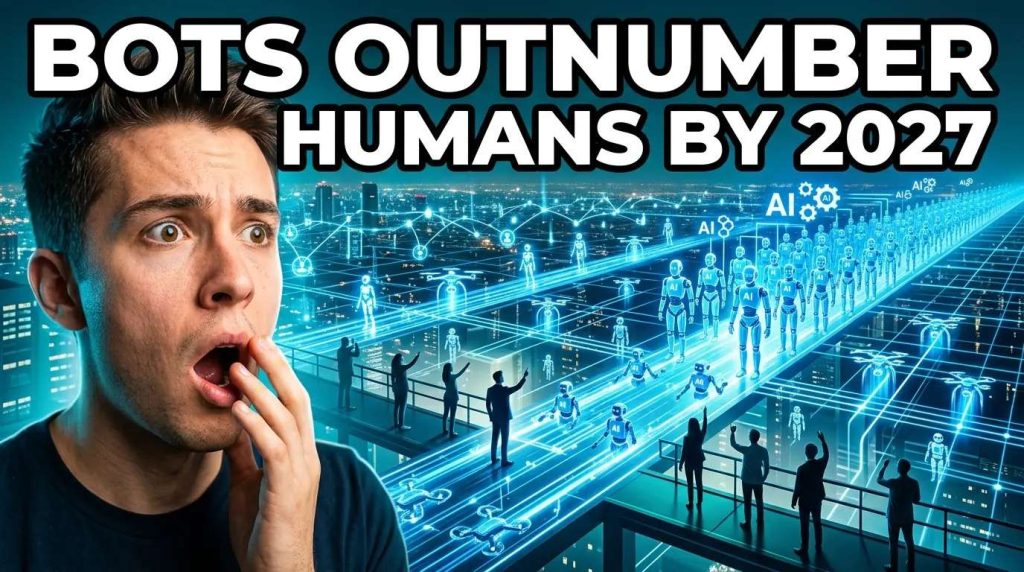
The internet is about to hit a tipping point. According to Cloudflare CEO Matthew Prince, AI bot traffic will exceed human traffic online by 2027. Speaking at SXSW 2026, Prince described a web increasingly dominated not by people browsing pages, but by AI agents crawling thousands of sites to complete tasks on behalf of users.
This is not a distant prediction. It is happening right now, and the pace is accelerating. For businesses that interact with customers online, this shift changes everything about how you think about engagement, infrastructure, and competitive advantage.
From 20% to Majority: How Bot Traffic Exploded
Before the generative AI era, bots accounted for roughly 20% of all internet traffic. The biggest bot was Google’s web crawler, followed by a handful of other search engine crawlers. Beyond those, most bots were spam, scrapers, or attack vectors.
Generative AI changed the equation completely. Large language models need constant access to fresh data. AI agents performing tasks for users visit orders of magnitude more pages than a human ever would.
Prince put it bluntly: a human shopping for a digital camera might visit 5 websites. An AI agent doing the same task visits 5,000. That is a 1,000x multiplier on traffic, and it applies to every category of online activity.
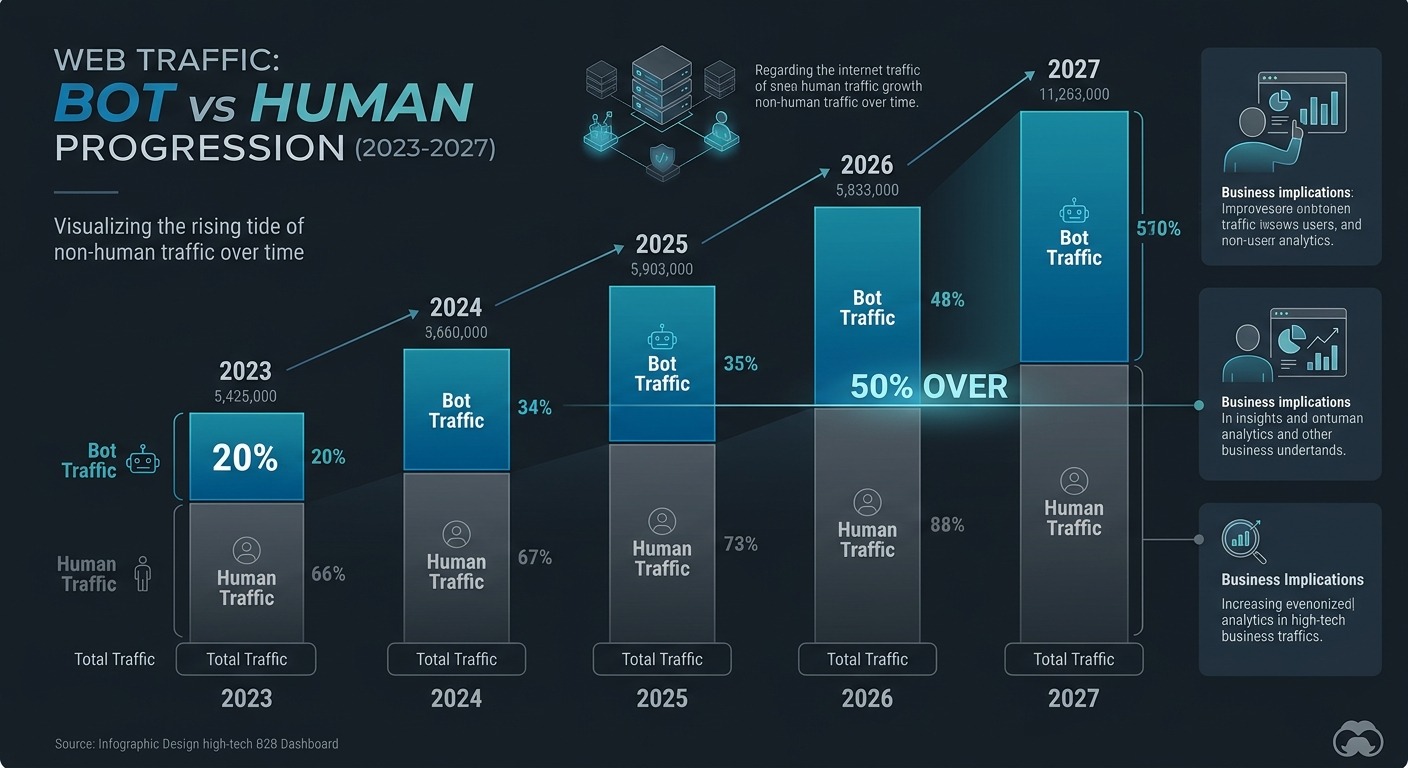
Cloudflare processes traffic for roughly one-fifth of all websites on the internet, giving Prince a uniquely broad view of these trends. When he says bot traffic is growing without any sign of slowing down, the data behind that claim is substantial.
Why This Is a Platform Shift, Not Just a Trend
Prince compared the current moment to previous platform shifts like the move from desktop to mobile. That transition did not just change screen sizes. It changed how people discovered products, how businesses built experiences, and which companies won or lost.
AI is doing the same thing. The way people consume information is fundamentally changing. Instead of typing queries into Google and clicking through blue links, users increasingly ask an AI assistant to handle tasks end-to-end. The AI does the browsing, comparing, and filtering. It returns a recommendation or completes an action.
This means your website is no longer just a destination for human visitors. It is also a data source for AI agents that may never show a user your homepage, your branding, or your carefully designed landing page. The implications for marketing, sales, and customer engagement are profound.
What This Means for Customer-Facing Businesses
If you run a business that serves customers online, here is what the bot-majority internet means in practical terms.
Your Website Needs to Serve Two Audiences
Human visitors still matter. But AI agents are becoming a second, equally important audience. Structured data, clear product information, and machine-readable content help AI agents understand and recommend your offerings. Businesses that make their information easy for bots to parse will get included in AI-generated recommendations. Those that do not will be invisible to a growing segment of buyers.
Traditional Chat Widgets Are Not Enough
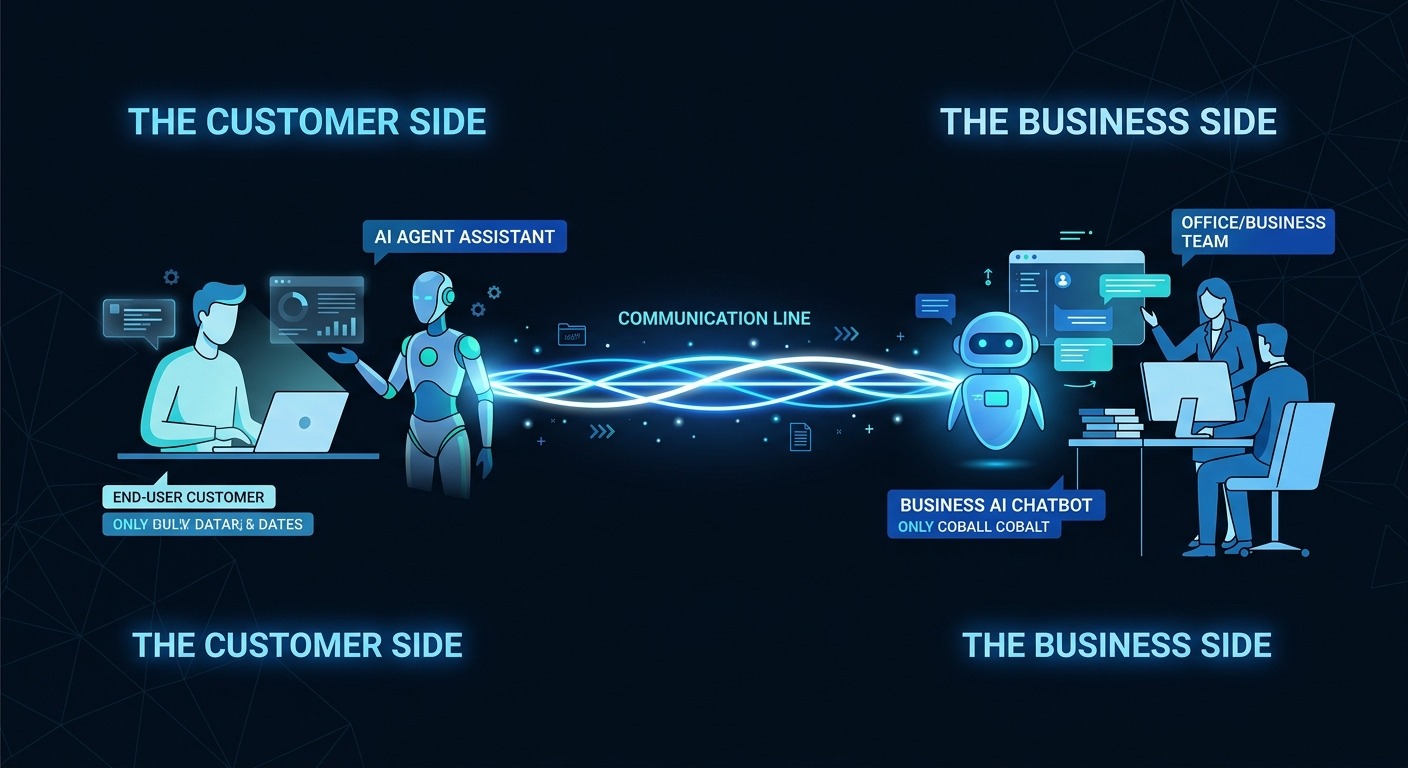
When AI agents interact with your business on behalf of customers, they do not click buttons on a chat widget. They need API-level access to information, pricing, and support. Businesses need AI-native communication channels that can handle both human conversations and agent-to-agent interactions.
This is where platforms like ChatMaxima become critical. Building an AI chatbot that can handle inquiries from both human customers and their AI agents ensures you are not left behind as the traffic mix shifts.
Customer Expectations Are Rising Fast
When a customer’s AI agent can check 5,000 competitor sites in seconds, response time and information quality become everything. If your chatbot takes 30 seconds to respond or cannot answer a pricing question directly, the agent moves on. There is no loyalty in an AI-mediated world. There is only the best answer, delivered fastest.
The Infrastructure Challenge: Sandboxes and Scale
Prince also described the infrastructure that this new internet requires. He envisions millions of sandboxes being created every second, each one a temporary computing environment spun up for an AI agent to complete a task and then torn down.
Think of it like browser tabs, but for AI. A customer asks their agent to plan a vacation. The agent spins up sandboxed sessions to check flights, hotels, restaurants, and attractions simultaneously. Each session interacts with different businesses, gathers data, and reports back.
During COVID, internet traffic spiked so quickly that parts of the infrastructure nearly buckled. Prince notes that the current growth is more gradual but unlike COVID, it is not going to plateau. The traffic just keeps growing.
For businesses, this means your digital infrastructure needs to handle significantly more automated traffic without degrading the experience for human visitors. Load times, uptime, and API reliability are no longer nice-to-haves. They are survival requirements.
How Smart Businesses Are Preparing
The companies that will thrive in a bot-majority internet are the ones preparing now. Here is what that preparation looks like.
Deploy AI Chatbots That Actually Work
Not all chatbots are created equal. A basic decision-tree bot that routes users through a flowchart cannot handle the nuanced queries that AI agents send. You need a chatbot powered by generative AI that understands context, answers dynamically, and integrates with your product data.
ChatMaxima’s AI chatbot platform lets businesses deploy intelligent chatbots across WhatsApp, websites, and other channels, with the kind of depth that satisfies both human customers and the AI agents acting on their behalf. At a fraction of the cost of competitors like Intercom or Drift, it makes enterprise-grade AI accessible to businesses of every size.
Structure Your Data for AI Consumption
Review your website content through the lens of an AI agent. Is your pricing clearly stated? Are product specifications structured and complete? Can an agent extract the information it needs without parsing ambiguous marketing copy?
Businesses that invest in structured data, clear documentation, and comprehensive FAQ content embedded naturally throughout their site will win disproportionate traffic from AI agents.
Build Multi-Channel Presence
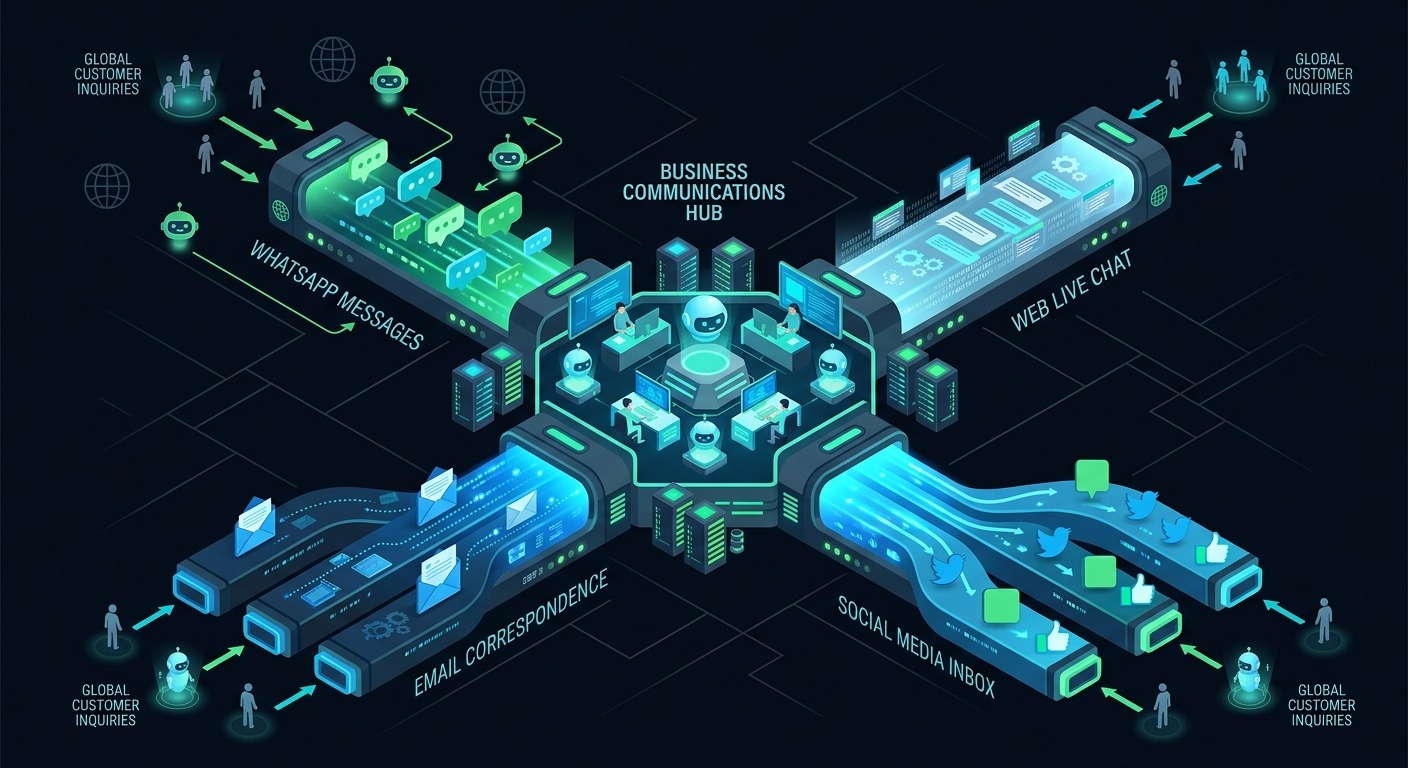
AI agents do not just browse websites. They interact across WhatsApp, social media, email, and messaging platforms. Having an AI chatbot that works across multiple channels ensures you capture engagement wherever the agent or the human customer prefers to interact.
Monitor and Manage Bot Traffic
Not all bot traffic is beneficial. Cloudflare itself offers tools to block unwanted AI bots, and businesses need strategies to distinguish between legitimate AI agents gathering information for potential customers and scrapers stealing content.
Setting up proper bot management, rate limiting, and access controls ensures your infrastructure serves the right bots while blocking the harmful ones.
The Opportunity Hidden in the Disruption
Every platform shift creates winners and losers. The shift from desktop to mobile rewarded businesses that built mobile-first experiences and punished those that clung to desktop-only sites. The AI-agent shift will follow the same pattern.
Businesses that embrace AI-native customer engagement now, while the transition is still underway, will build competitive advantages that compound over time. Early movers in AI chatbot deployment, structured data optimization, and multi-channel automation will capture the traffic that later adopters miss entirely.
The bot-majority internet is not a threat to prepare for. It is an opportunity to seize. The question is whether your business will be ready when the bots come looking for answers and your competitors have already built the systems to provide them.
Getting Started Today
The shift Prince described is not hypothetical. It is already underway, and 2027 is less than a year away. The businesses that act now will be positioned to capture value from both human and AI-driven traffic.
Start by auditing your current customer engagement stack. If your chatbot cannot handle complex queries, if your data is not structured for machine consumption, or if you are limited to a single channel, those are gaps that AI agents will exploit, in favor of your competitors.
ChatMaxima offers a starting point at $19 per month, with AI-powered chatbots that work across channels and scale with your business. In a world where bot traffic is about to outnumber human traffic, having an intelligent AI presence is no longer optional. It is the cost of staying relevant.