
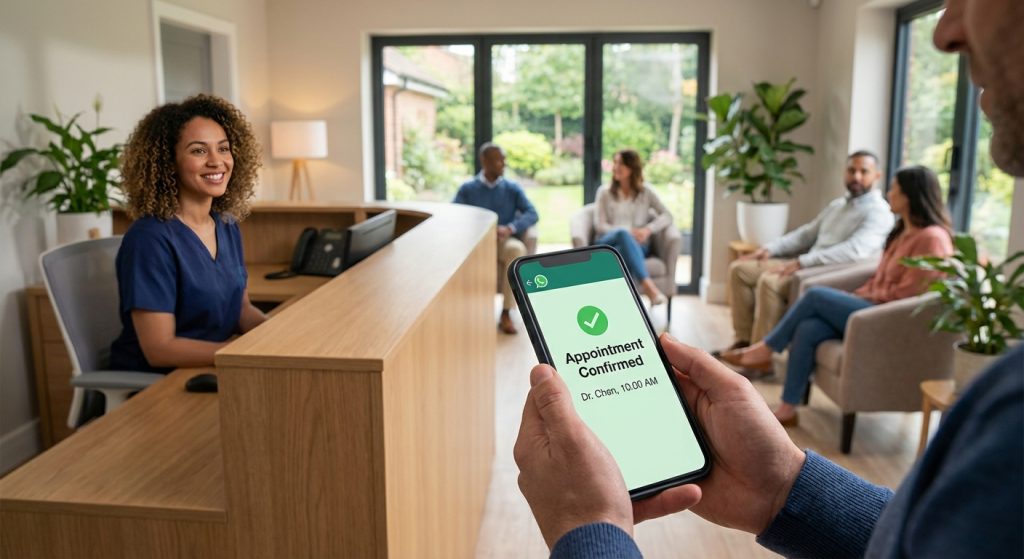
Patient no-shows cost U.S. healthcare providers an estimated $150 billion annually. For individual clinics, each missed appointment represents lost revenue, wasted staff time, and a gap in patient care that ripples through the entire schedule.
The frustrating part? Most no-shows aren’t intentional. Patients forget. Life gets busy. They lose the appointment card. They meant to call and reschedule but never got around to it.
This is exactly where chatbots are making a measurable difference. Healthcare clinics using automated patient communication report no-show reductions of 30% to 40%, and the strategies they’re using go far beyond simple reminders.
Here are seven ways clinics are leveraging chatbots to keep their schedules full and patients engaged.
1. Multi-Touchpoint Appointment Reminders
The single reminder call the day before an appointment? It’s not enough anymore. Patients are bombarded with notifications, and a single touchpoint gets lost in the noise.
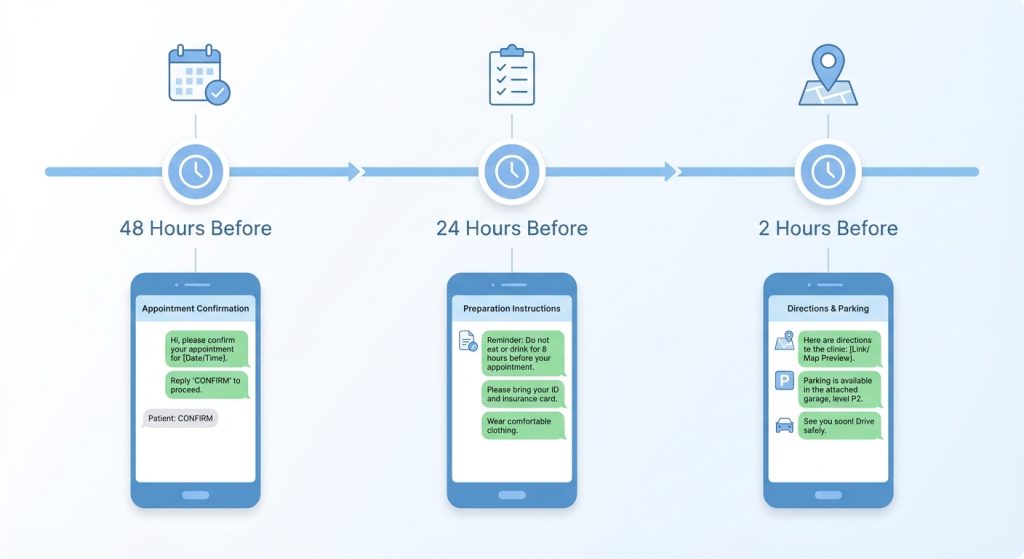
Clinics seeing the best results use a strategic reminder sequence:
- 48 hours before: Initial confirmation request asking patients to confirm or reschedule
- 24 hours before: Preparation instructions (fasting requirements, documents to bring, what to expect)
- 2 hours before: Final reminder with directions, parking information, and check-in instructions
The key is delivering these through the patient’s preferred channel. WhatsApp messages see open rates above 90%, compared to just 20% for emails. When patients actually see the reminder, they’re far more likely to show up or at least reschedule if they can’t make it.
Why it works: Multiple touchpoints create multiple opportunities for patients to engage. Each message serves a purpose beyond reminding: it prepares them for the visit, making the appointment feel more real and valuable.
2. Easy One-Tap Rescheduling
Here’s an insight many clinics miss: a patient who reschedules is infinitely more valuable than a no-show. Yet most reminder systems make rescheduling difficult. They ask patients to call during business hours or navigate a complicated online portal.
Smart chatbots include reschedule options directly in the reminder message. When a patient receives their 48-hour confirmation request, they see clear options:
- ✓ Confirm Appointment
- 📅 Reschedule
- ✗ Cancel
If they choose to reschedule, the chatbot immediately shows available slots. No phone calls. No hold times. No back-and-forth emails. The entire process takes under a minute.
Why it works: Removing friction from rescheduling converts would-be no-shows into rebooked appointments. The clinic keeps their revenue, and the patient gets care at a time that works better for them.
3. Waitlist Management and Slot Filling
Cancellations happen. The question is what happens next.
Manual waitlist management is a nightmare. Staff members call through a list of patients, leaving voicemails, waiting for callbacks, and often failing to fill the slot in time. By the time they reach someone available, the appointment window has passed.
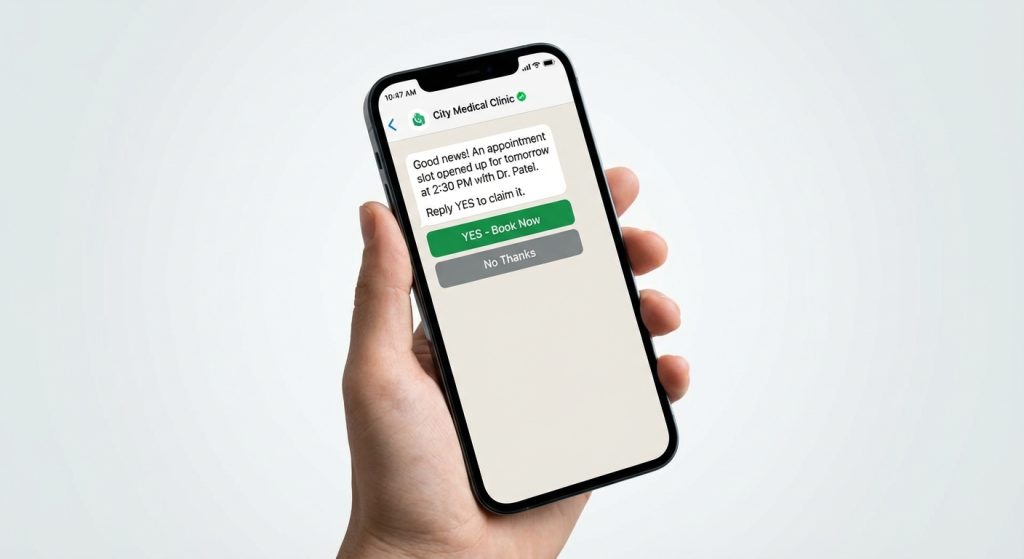
Chatbots flip this process on its head. When a cancellation occurs, the system instantly messages everyone on the waitlist simultaneously:
“Good news! An appointment slot opened up for tomorrow at 2:30 PM with Dr. Patel. Reply YES to claim it. First response gets the spot.”
The first patient to respond gets the appointment. Others receive a follow-up thanking them and confirming they’re still on the waitlist.
Why it works: Speed matters. Instant outreach to multiple patients maximizes the chances of filling cancelled slots. The competitive “first come, first served” element also motivates quick responses.
4. Pre-Appointment Preparation Instructions
Many no-shows aren’t about forgetting. They’re about anxiety. Patients don’t know what to expect, what to bring, or how to prepare. This uncertainty creates a mental barrier that makes skipping the appointment feel easier than showing up.
Chatbots address this by sending detailed preparation information:
- What documents to bring (insurance card, ID, referral forms)
- Any fasting or medication requirements
- What to wear for certain procedures
- How long the appointment will take
- What will happen during the visit
- Parking instructions and office location within the building
For first-time patients, the chatbot can send a virtual tour of the clinic, introduce the doctor they’ll be seeing, or share what previous patients have said about the experience.
Why it works: Prepared patients are confident patients. When they know exactly what to expect, the appointment transforms from an uncertain commitment into a concrete, manageable task.
5. Two-Way Confirmation Conversations
Traditional reminder systems broadcast information. The patient receives a message, and that’s it. There’s no engagement, no dialogue, no opportunity for the patient to ask questions or voice concerns.
Conversational chatbots change this dynamic. When a patient receives a reminder, they can respond naturally:
Patient: “Can I bring my kids?”
Chatbot: “Yes, children are welcome in our waiting area. We have a small play corner with books and toys. Would you like me to note that you’ll have children with you so we can prepare?”
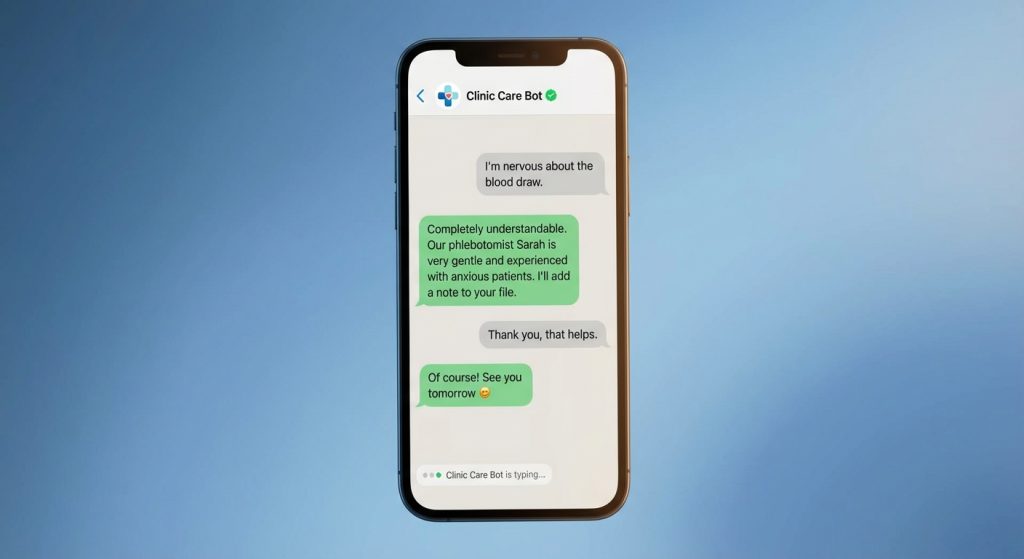
Patient: “Yes please. Also, I’m nervous about the blood draw.”
Chatbot: “Completely understandable. Our phlebotomist Sarah is very gentle and experienced with anxious patients. I’ll add a note to your file so she knows to take extra care. Is there anything else I can help with before your visit?”
This two-way dialogue surfaces concerns that would otherwise lead to last-minute cancellations or no-shows. The patient feels heard and supported, making them more committed to attending.
Why it works: Dialogue creates connection. When patients can ask questions and receive immediate answers, they feel more invested in the appointment and more confident about showing up.
6. Post-Missed Appointment Recovery
Despite the best efforts, some patients will still miss appointments. What happens next matters enormously for long-term retention and future no-show rates.
Chatbots can reach out immediately after a missed appointment:
“We missed you at your 10:00 AM appointment today. We hope everything is okay. Would you like to reschedule? Here are the next available slots this week.”
The tone is understanding, not accusatory. The message acknowledges that life happens while making rescheduling effortless.
For patients who miss multiple appointments, the chatbot can escalate to a more personalized approach:
“We noticed you’ve had to miss a few appointments recently. Is there anything making it difficult to visit us? We want to help you get the care you need. Reply with what works better for you: earlier times, later times, different days, or telehealth options.”
Why it works: Recovery messaging turns a negative situation into an opportunity for engagement. Patients appreciate the understanding approach, and the clinic gains valuable feedback about barriers to attendance.
7. 24/7 Appointment Booking and Questions
Phone lines have limited hours. Patients do not.
Someone who wakes up at 2 AM with concerns about a health issue shouldn’t have to wait until 9 AM to book an appointment. By morning, they might have talked themselves out of going, found a different provider, or simply forgotten.
Chatbots provide round-the-clock access to:
- Book new appointments
- Check available time slots
- Ask basic questions about services
- Get directions and parking information
- Confirm insurance acceptance
- Learn about preparation requirements
Every inquiry handled at 2 AM is a patient who doesn’t have to call during busy daytime hours, freeing staff for higher-value work while capturing appointments that might otherwise be lost.
Why it works: Meeting patients when and where they need help removes barriers to booking. The easier it is to schedule, the more likely patients are to follow through.

Implementation: Getting Started
Implementing these strategies doesn’t require a massive technology overhaul. Modern chatbot platforms designed for healthcare offer:
- Pre-built templates for appointment reminders, confirmations, and rescheduling flows
- Calendar integrations that sync with existing practice management systems
- HIPAA-compliant messaging across WhatsApp, SMS, and web chat
- Easy customization to match your clinic’s voice and specific needs
Most clinics start with basic reminders and expand from there. A typical implementation timeline:
- Week 1: Set up confirmation and reminder sequences
- Week 2: Add rescheduling options and preparation messages
- Week 3: Implement waitlist management
- Week 4: Enable 24/7 booking and two-way conversations
The results compound over time. As patients become accustomed to the convenience of chatbot interactions, engagement rates climb and no-show rates drop further.
The Bottom Line
No-shows are not an unsolvable problem. They’re a communication problem, and chatbots offer a solution that scales.
The clinics seeing 30% to 40% reductions in no-shows aren’t doing anything revolutionary. They’re simply meeting patients where they are, when they need it, with information that makes showing up easier than not showing up.
The question isn’t whether chatbots can reduce your no-show rate. The question is how much revenue and patient care are you losing while you wait to implement them.
Ready to reduce no-shows at your clinic?
ChatMaxima’s healthcare chatbot solution helps clinics automate appointment reminders, enable easy rescheduling, and engage patients 24/7 across WhatsApp, SMS, and web chat. Book a demo to see how it works for your practice.