The numbers are in, and they paint a picture that every business leader needs to study carefully. According to Pew Research Center’s February 2026 report, 64% of US teens aged 13-17 have now used AI chatbots, with 28% using them daily and 16% engaging with these tools several times a day or almost constantly. This is not a niche behavior confined to tech-savvy early adopters. This is a generational shift in how young people search for information, solve problems, and communicate, and it carries enormous implications for how businesses will need to engage customers in the years ahead. The teens using ChatGPT today are the consumers, employees, and decision-makers of tomorrow, and they are forming expectations about digital interaction that will reshape every industry.
Understanding what Gen Z wants from AI-powered conversations is no longer optional for businesses investing in customer experience. The Pew data gives us the clearest window yet into those expectations, from the channels they prefer to the trust they place in automated interactions. If your business still relies on email forms, phone trees, or static FAQ pages as primary customer touchpoints, this data should serve as a wake-up call. The generation that grew up with AI chatbots will not settle for outdated communication tools, and the businesses that adapt now will build loyalty that lasts decades.
The Numbers: How Teens Actually Use AI Chatbots
Pew Research Center surveyed 1,458 US teens aged 13-17 in late 2025 and published their findings in February 2026. The headline statistic, that 64% of teens have used AI chatbots, understates the depth of adoption among active users. Among those who use chatbots, daily engagement is the norm rather than the exception. Usage rates are even higher among older teens aged 15-17 and among Black and Hispanic teens, suggesting that AI chatbot adoption is broadening across demographics rather than concentrating in any single group. Awareness is nearly universal: 95% of all teens surveyed said they had at least heard of AI chatbots, meaning the remaining 36% who have not used them are choosing not to rather than being unaware of the option.
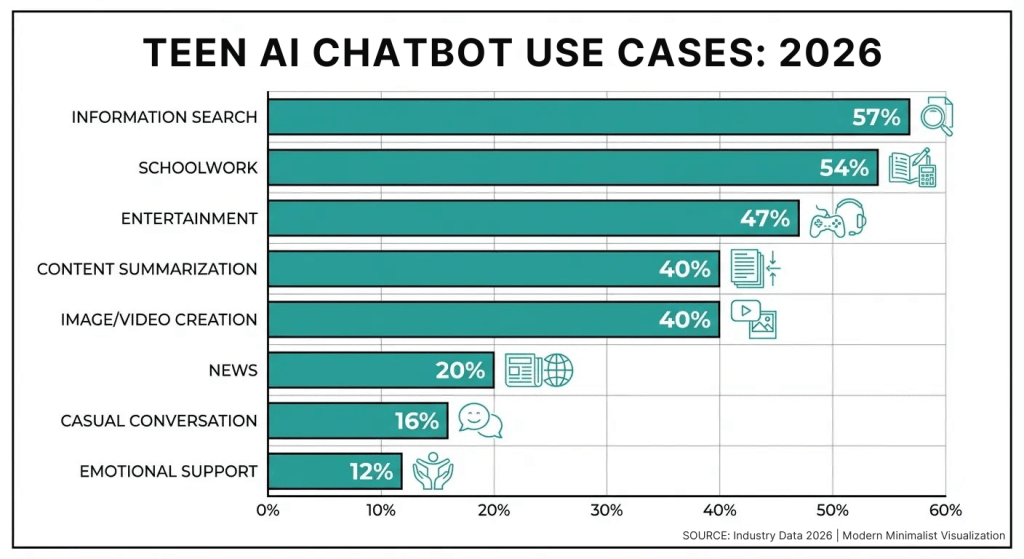
The use cases reveal a generation that treats AI chatbots as versatile tools rather than single-purpose novelties. Information search leads the pack at 57%, followed closely by schoolwork help at 54% and entertainment at 47%. Roughly 40% of teen chatbot users leverage these tools to summarize content or create and edit images and videos, demonstrating comfort with multimodal AI capabilities that many businesses have not yet deployed in their customer-facing tools. Around 20% use chatbots to get news, 16% engage in casual conversation, and 12% turn to chatbots for emotional support or advice. That last figure, representing millions of teenagers seeking emotional guidance from AI, carries significant implications for businesses that handle sensitive customer interactions.
ChatGPT dominates the market with 59% of teen chatbot users, while Google Gemini comes in second at 23%. This concentration around a few major platforms means teens are developing specific expectations shaped by the quality of responses, conversational fluidity, and personalization that these leading AI tools deliver. As one teen boy told Pew researchers: “Artificial intelligence will be able to be a force multiplier in terms of efficiency and accuracy. We are in very early stages at this point. Everyone’s going to have to know how to use AI or they’ll be left behind.” Another teen boy captured the sentiment more bluntly: “It will meet the needs of almost everything. Answers to the hardest questions. No need for research!” These are not casual observations. They reflect a mindset that will carry directly into how this generation evaluates business interactions.
Gen Z’s Chatbot Expectations Are Becoming Customer Expectations
Every generation’s early technology habits predict their later consumer behavior. Millennials grew up with Google Search and expected every answer to be one query away. Gen Z is growing up with conversational AI and expects every answer to arrive through natural dialogue, instantly, without forms, without hold music, and without the friction of navigating complex website menus. The Pew data shows that 54% of teens already use chatbots to help with tasks that require comprehension, analysis, and problem-solving. When these same users encounter a business that forces them to fill out a contact form and wait 24-48 hours for a response, the disconnect will feel jarring, even disqualifying.
The shift from “text me, don’t call me” to “chat with my AI, don’t make me wait” is already underway. Traditional customer support channels like phone trees, email-only support, and static FAQ pages are becoming the digital equivalent of asking someone to send a fax. Teens who are accustomed to getting nuanced, contextual answers from ChatGPT in seconds will not accept scripted responses or being bounced between departments. They expect a conversational AI assistant that understands context, remembers previous interactions, and resolves issues without unnecessary steps.
Businesses that deploy AI-powered chatbot platforms today are not just solving today’s customer service challenges. They are training the next generation of loyal customers. When a 15-year-old has a positive experience with a brand’s chatbot on WhatsApp or Instagram, that interaction shapes their expectations and brand affinity for years to come. Companies that wait until Gen Z becomes the dominant purchasing demographic will find themselves playing catch-up against competitors who built conversational muscle memory early. The question is not whether your business needs conversational AI. The question is whether you will be ready before this generation’s expectations become the baseline.
The Channels Gen Z Lives On
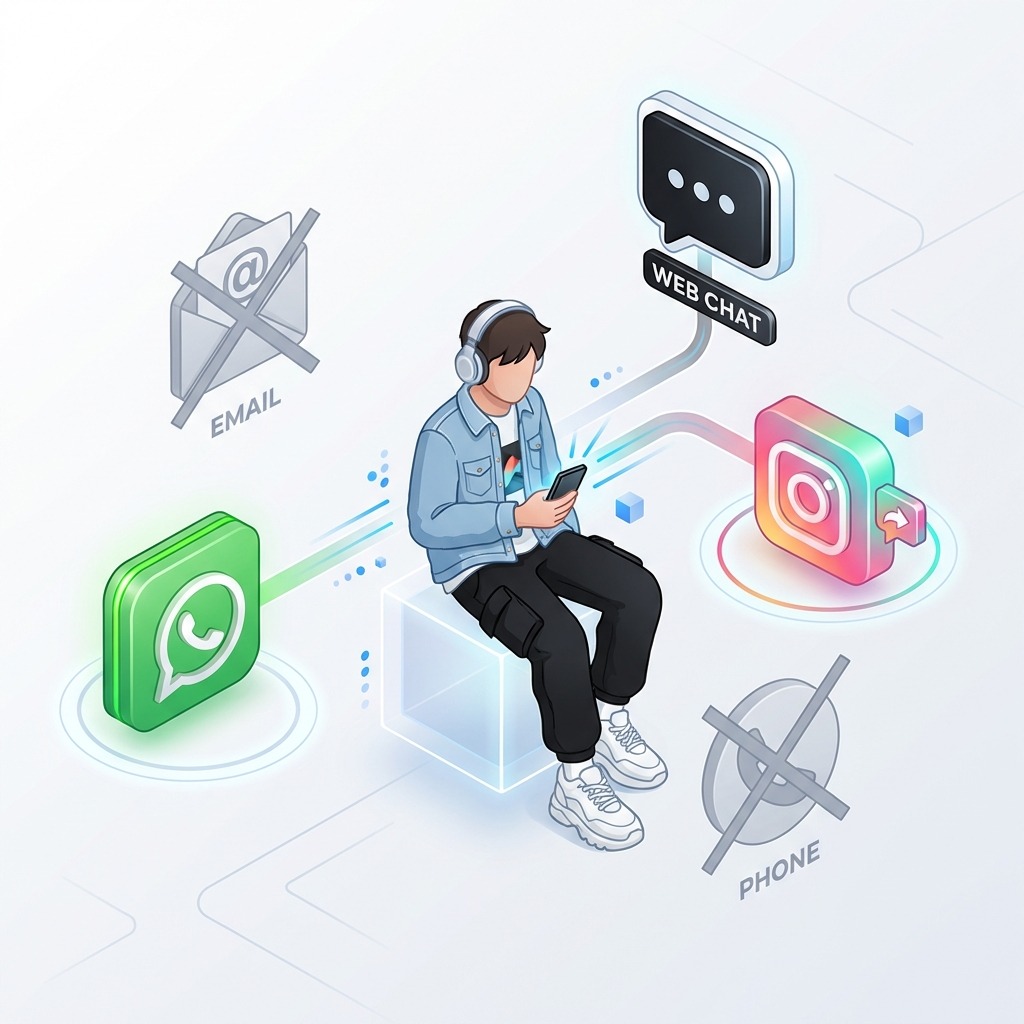
Understanding what Gen Z expects from chatbots matters little if businesses deploy those chatbots on channels Gen Z does not use. This generation’s communication preferences are unambiguous: messaging apps first, social media DMs second, and traditional channels like email and phone calls as distant last resorts. WhatsApp dominates across Asia, Latin America, Europe, and India, making it the single most important channel for businesses with global or diverse customer bases. A WhatsApp chatbot is not a nice-to-have for companies targeting younger demographics. It is foundational infrastructure.
Instagram DMs have evolved from a social messaging feature into a full commerce and brand discovery channel. Gen Z discovers products through Reels and Stories, then slides into DMs to ask questions, request pricing, or initiate purchases. Businesses that treat Instagram as a broadcast-only platform are missing the most engaged touchpoint in their funnel. Meanwhile, web chat remains essential for on-site experiences, particularly for SaaS, e-commerce, and service businesses where customers need answers while actively browsing.
What Gen Z does not do is email a support address and wait, or call a 1-800 number and navigate automated phone menus. The Pew data reinforces what every behavioral study of this generation has shown: they communicate through the same channels they use to talk with friends. An omnichannel team inbox that unifies WhatsApp, Instagram, web chat, and other messaging platforms into a single dashboard is not a luxury. It is the minimum viable infrastructure for engaging the generation that will drive consumer spending within the next few years. Meeting Gen Z on their preferred channels is not about chasing trends. It is about basic accessibility, and businesses that fail to provide it will simply not exist in Gen Z’s consideration set.
What Gen Z Expects from a Business Chatbot
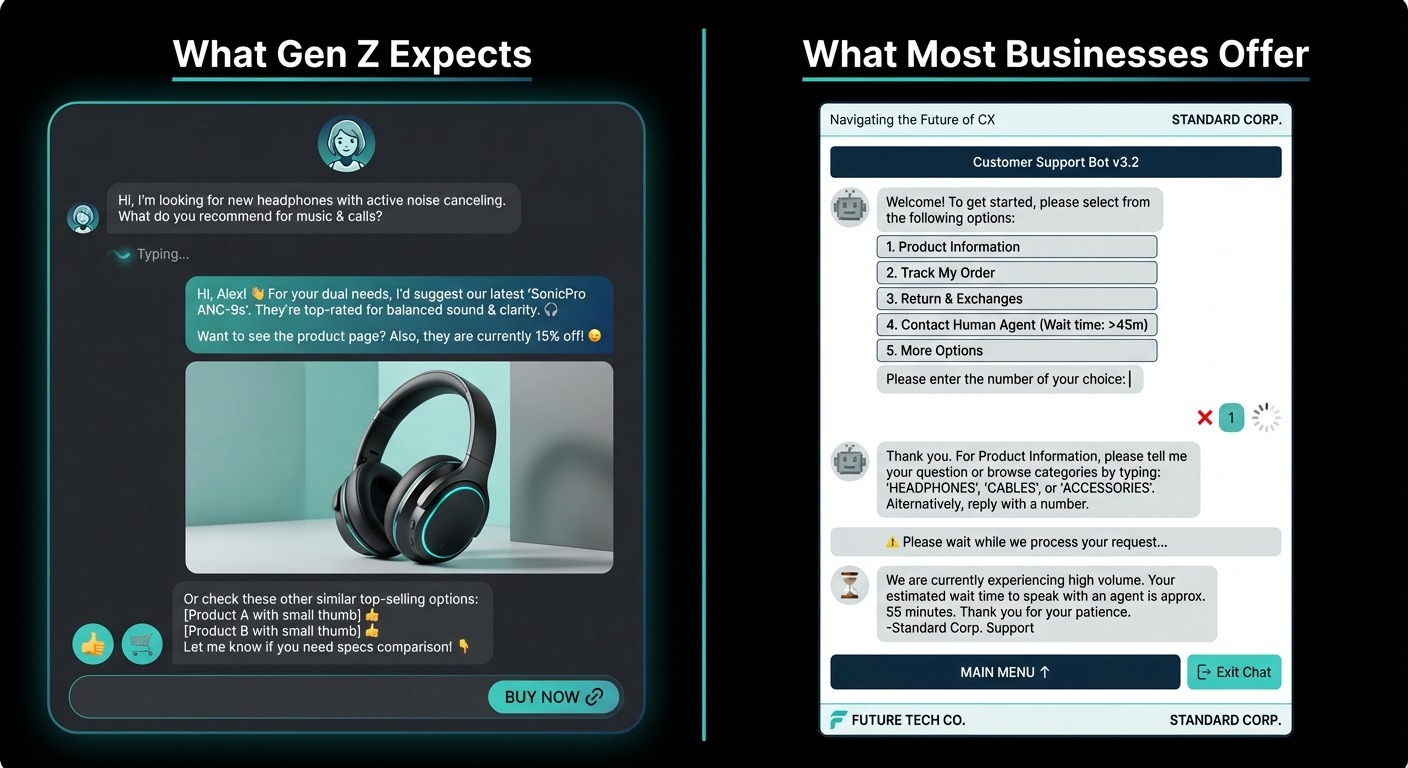
The Pew data makes it possible to reverse-engineer Gen Z’s chatbot expectations with precision. When 57% of teens use chatbots to search for information and 54% use them for complex schoolwork, they are training on interactions that deliver instant, contextual, and accurate responses. They will expect nothing less from a business chatbot. The era of “Thank you for contacting us, a representative will be with you shortly” is ending. Gen Z expects real-time resolution, and any response time measured in hours, let alone days, will feel like a failure.
Natural conversation is equally non-negotiable. Teens interacting with ChatGPT and Gemini are accustomed to fluid, human-like dialogue that adapts to their tone, understands follow-up questions, and handles ambiguity gracefully. Robotic, decision-tree chatbots that force users into rigid menu selections will feel broken to a generation raised on large language models. The conversational AI models powering modern chatbots have matured enough to deliver this natural experience, but businesses need to actually implement them rather than relying on legacy chatbot frameworks.
Personalization is another core expectation. As one teen boy told Pew: “It has the ability to help me learn things faster and better. As it gets to know me, it can fit me better.” This expectation of adaptive, personalized interaction will transfer directly to commercial contexts. Gen Z will expect business chatbots to remember their order history, understand their preferences, and proactively suggest relevant products or solutions. Multimodal capabilities matter too: with roughly 40% of teens already using AI to create or edit images and videos, they will naturally expect business chatbots to handle rich media, not just text. A customer should be able to send a photo of a defective product and receive instant guidance, or share a screenshot of an error message and get troubleshooting help. Finally, 24/7 availability is assumed, not appreciated. Gen Z does not distinguish between business hours and personal hours. The best conversational AI apps operate around the clock, and any business chatbot that goes offline at 6 PM will lose customers to competitors that do not.
The Trust Gap: Safety, Privacy and Transparency
The Pew data reveals a nuanced relationship between Gen Z and AI trust that businesses cannot afford to oversimplify. While teens are generally optimistic about AI’s impact on their personal lives (36% positive versus 15% negative), they are more cautious about AI’s societal effects (31% positive versus 26% negative). Among those who anticipate negative impacts, 34% cite overreliance and loss of critical thinking, 25% worry about job displacement, and roughly 10% flag misinformation risks. This is not a generation of uncritical AI enthusiasts. They are pragmatic users who recognize both the power and the risks of the tools they use daily.
The fact that 12% of teens use chatbots for emotional support and advice places a particular responsibility on businesses deploying conversational AI. Any company whose chatbot might encounter a customer in distress, whether a frustrated buyer, a confused patient, or a vulnerable individual seeking help, needs robust protocols for escalation to human agents. The human-in-the-loop approach to customer support is not just a feature. It is an ethical requirement. The FTC launched an inquiry in September 2025 into seven AI chatbot companies including OpenAI, Meta, and Google regarding teen safety practices, signaling that regulatory scrutiny of AI chatbot interactions is intensifying.
There is also a significant parental awareness gap that carries implications for B2C businesses. Pew’s companion report on parents found that while 64% of teens have used AI chatbots, only 51% of parents are aware of this usage. For businesses serving families or younger demographics, transparent data handling and clear disclosure of when customers are interacting with a bot versus a human agent are not optional. They are trust-building requirements that will differentiate responsible businesses from those that cut corners. Privacy-first design, transparent data policies, and easy access to human support are the pillars of trust that Gen Z, and their parents, will demand from every brand they interact with.
How Businesses Should Prepare for the AI-Native Customer
Preparing for the AI-native customer is not a future initiative. It is a present-tense operational priority. The first and most critical step is deploying conversational AI across the channels Gen Z actually uses. This means WhatsApp automation for commerce and support, Instagram DM automation for brand engagement, and intelligent web chat for on-site conversion. Businesses that silo their chatbot on a single channel are leaving engagement on the table. The goal is a unified experience where a customer can start a conversation on Instagram, continue it on WhatsApp, and resolve it through web chat without repeating themselves, all managed through a single omnichannel platform.
AI chatbots should handle first-touch support, lead qualification, FAQ resolution, and routine transactions, the high-volume, lower-complexity interactions that consume the majority of support team bandwidth. This is where the efficiency gains are massive: a well-trained chatbot can handle thousands of simultaneous conversations while maintaining the natural, contextual dialogue that Gen Z expects. For businesses exploring this approach, building a WhatsApp chatbot without code has become straightforward with modern no-code platforms, eliminating the need for expensive custom development.
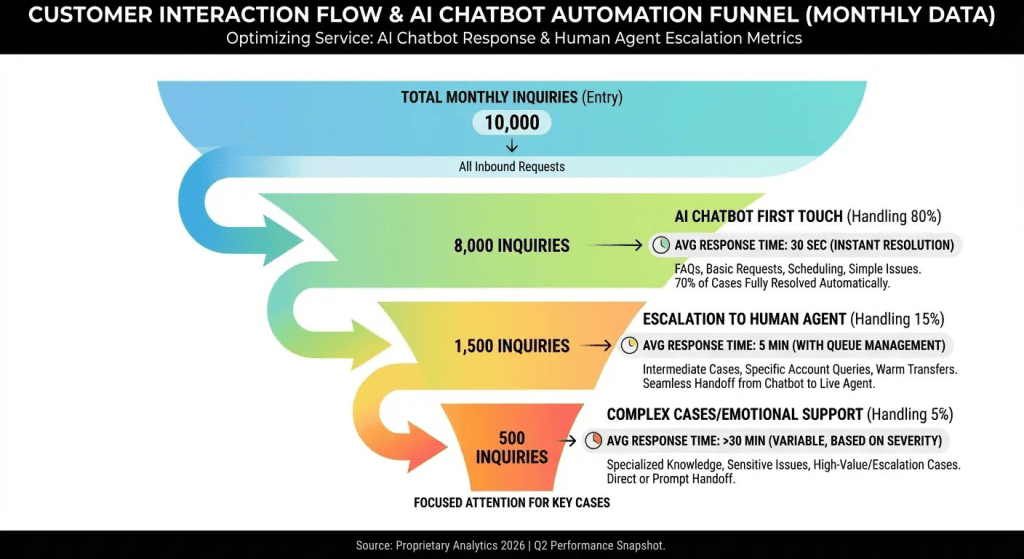
However, the human element remains essential. Complex issues, emotionally charged conversations, and situations requiring judgment should seamlessly escalate to human agents. The best implementations use AI to gather context and qualify the issue before handoff, so the human agent can resolve the problem faster and with full conversation history. The key is making the transition feel natural rather than jarring. Gen Z does not object to talking with AI. They object to talking with bad AI, or being trapped in a chatbot loop when they clearly need human help. Platforms like ChatMaxima offer this balance through AI-powered customer support with built-in human handoff workflows, available across all channels starting at $19/month.
The final preparation element is tone and personality. Gen Z can detect corporate speak instantly, and they disengage from it just as fast. Business chatbots need to feel conversational, helpful, and authentic without being unprofessional. The brands that get this right will not just retain Gen Z customers. They will earn organic advocacy from a generation that shares exceptional experiences across their social networks.
The Opportunity Window: Act Now or Catch Up Later
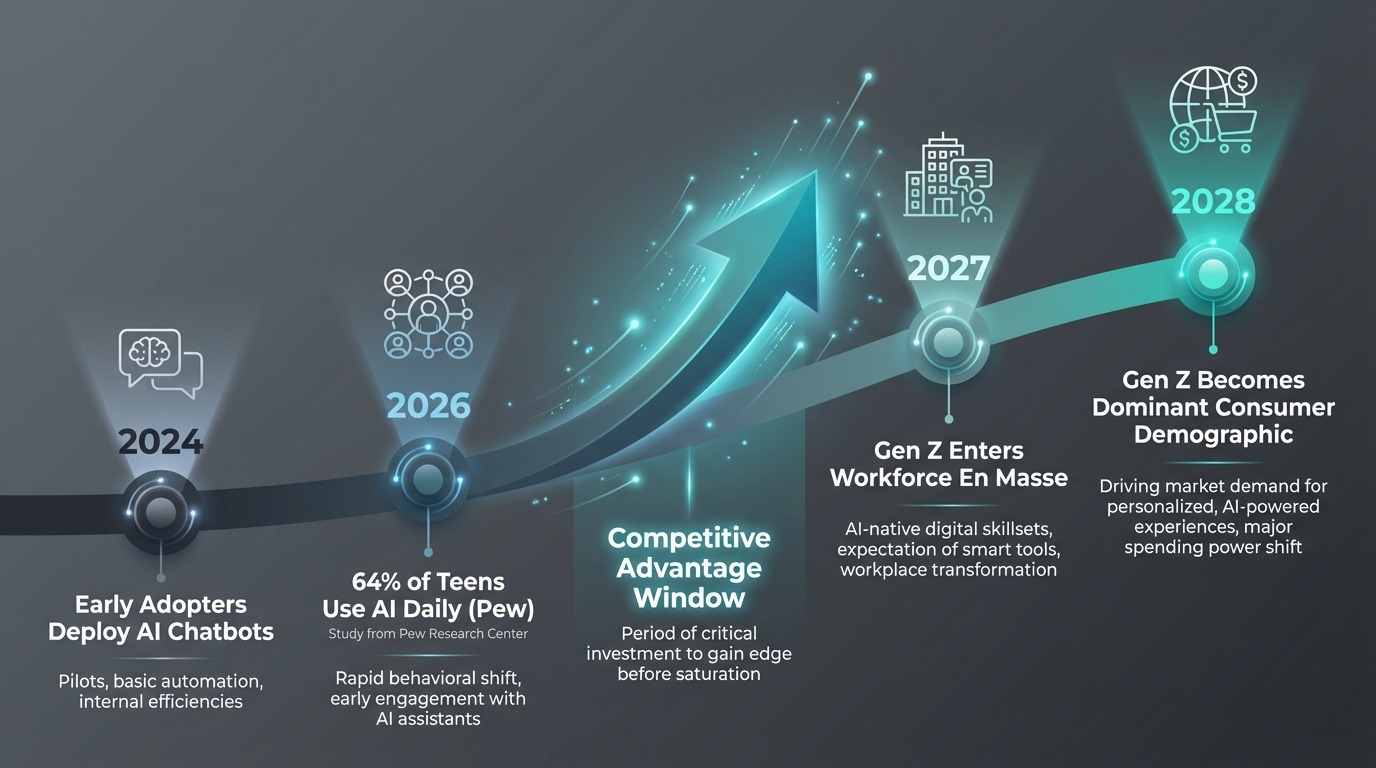
The window for early-mover advantage in conversational AI is closing faster than most businesses realize. The Pew data confirms what forward-thinking companies have already bet on: conversational AI is not a trend. It is the new baseline for customer interaction. Businesses deploying AI chatbots today are building institutional expertise, refining their conversational workflows, training their AI on real customer data, and developing the operational muscle memory that will separate leaders from laggards. This compounding advantage means that companies starting in 2026 will be measurably ahead of those that wait until 2028 or 2029 to begin.
Consider the trajectory. By 2028, the oldest members of Gen Z will be in their early 30s, entering peak consumer spending years, buying homes, starting families, and making major purchasing decisions. The youngest will be in their early twenties, entering the workforce and selecting the tools and services they will use professionally. A generation that reports 28% daily AI chatbot usage at age 13-17 will have even higher expectations at 25-30. As one teen girl told Pew: “It will do tasks that can be automated and allow people more time to do what they like.” This philosophy of automation-as-standard will define how Gen Z evaluates every business they interact with. Companies that lack conversational AI capabilities will feel as outdated as companies without websites did in 2010, or companies without mobile apps did in 2015.
The Pew data, media coverage from outlets like CBS News and Mashable, and the FTC’s regulatory attention all point to the same conclusion: AI chatbots are central to how the next generation communicates, learns, and makes decisions. The businesses that thrive will be those that deploy conversational AI across every customer touchpoint, maintain human oversight for complex interactions, and build trust through transparency and responsible AI practices.
The cost of inaction is not stagnation. It is irrelevance. Start with the channels your customers already use, deploy an AI chatbot that can handle first-touch interactions naturally, maintain human agents for the moments that matter most, and iterate continuously based on real conversation data. The technology is accessible, the pricing is approachable starting at $19/month with platforms like ChatMaxima, and the competitive landscape rewards speed. Gen Z is not waiting for businesses to catch up. They are choosing the brands that already speak their language, literally and conversationally.
The question is no longer whether AI chatbots will reshape business messaging. The Pew data makes that question settled science. The only question left is whether your business will be ready when Gen Z comes looking for you, and whether they will find a conversation worth having.