The way businesses talk to customers has changed. Conversational AI apps now handle everything from WhatsApp support tickets to outbound sales calls, and the technology behind them has moved well beyond scripted chatbot trees. In 2026, these tools use natural language understanding and generation to hold real conversations, take actions inside business systems, and learn from every interaction. If you are evaluating conversational AI apps for your team, this guide breaks down the 12 best options by category, pricing, and fit so you can pick the right one without wasting weeks on demos.
According to No Jitter, conversational AI is now “foundational to customer experience in 2026,” a shift that reflects how mainstream these tools have become for companies of every size. Whether you need to deflect support tickets, qualify leads over Instagram DMs, or automate phone calls in multiple languages, there is a conversational AI app built for that exact job.
What Are Conversational AI Apps?
Conversational AI apps are software applications that use natural language understanding (NLU) and natural language generation (NLG) to carry on human-like conversations with users. Unlike rule-based chatbots that follow rigid decision trees and break the moment a user phrases something unexpectedly, conversational AI apps interpret intent, maintain context across multiple turns, and generate responses that feel natural. They power the chat widgets on websites, the automated replies in your WhatsApp Business inbox, the voice agents that answer phone calls, and the internal assistants that help employees find HR policies.
The distinction between a rule-based chatbot and a conversational AI app matters because it determines what the tool can actually do. A rule-based bot can answer “What are your hours?” if you program that exact path. A conversational AI assistant understands variations like “Are you open on Sundays?” or “Can I visit after 6pm?” without needing a dedicated flow for each phrasing. That flexibility is what makes conversational AI apps useful for real business scenarios where customers do not follow scripts.
The biggest shift in 2026 is the move from chatbots that only answer questions to AI agents that take actions. Agentic workflows allow conversational AI apps to look up order status in your CRM, schedule appointments on a calendar, process refunds, and escalate complex issues to a human, all within the same conversation. This evolution means businesses are no longer choosing between automation and quality. The best AI models powering these apps, from OpenAI’s GPT series to Anthropic’s Claude, are capable enough to handle nuanced interactions that would have required a human agent just two years ago.
Types of Conversational AI Apps by Use Case
Not all conversational AI apps solve the same problem. Understanding the categories helps you narrow your search before you start comparing individual tools.
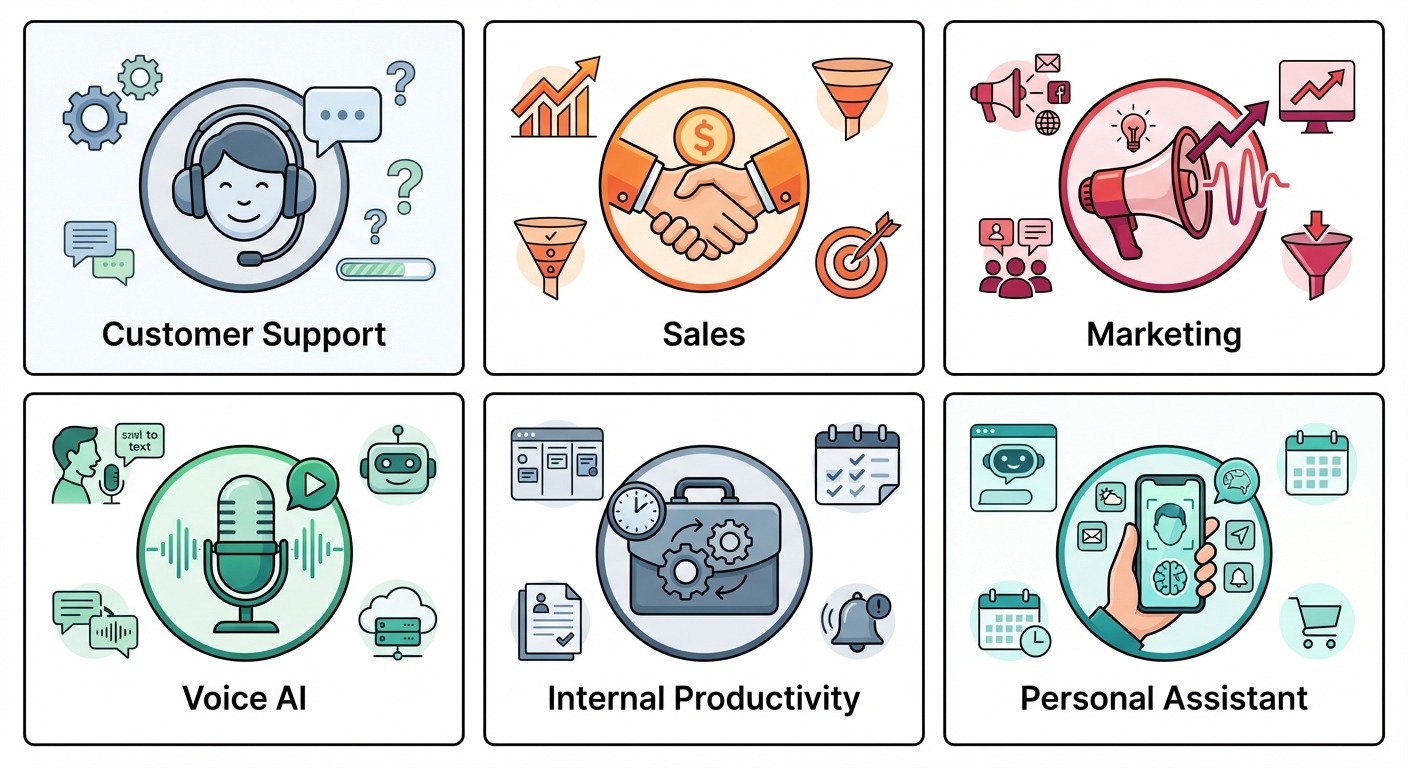
Customer support is the most common use case. Conversational AI apps handle ticket deflection by answering frequently asked questions instantly, route complex issues to the right human agent, and provide 24/7 availability that a staffed team cannot match. Businesses using platforms like ChatMaxima report significant reductions in first response time because the AI handles the initial conversation and only escalates when necessary.
Sales and lead generation apps qualify prospects through automated conversations. Instead of a static form, a conversational AI app asks qualifying questions, scores the lead, books an appointment, and pushes the data into your CRM. This works particularly well on channels like WhatsApp and Instagram where customers expect instant replies.
Marketing automation through conversational AI includes WhatsApp broadcast campaigns, Instagram DM sequences, and drip messaging that feels personal rather than mass-produced. The key difference from traditional email marketing is the two-way nature of the conversation and the dramatically higher open rates on messaging channels.
Voice AI has matured rapidly. Conversational AI apps now handle inbound and outbound phone calls with voices that sound remarkably human. These tools replace legacy IVR systems, automate appointment reminders, and conduct surveys, all without requiring the caller to “press 1 for support.” Companies focused on Indian markets are using multilingual voice models from providers like Sarvam AI to serve customers in Tamil, Hindi, and other regional languages.
Internal productivity tools use conversational AI to help employees search knowledge bases, submit IT tickets, check leave balances, and onboard new hires. These apps reduce the load on HR and IT teams by handling repetitive questions that consume hours every week.
Personal assistants like ChatGPT, Claude, and Gemini sit in a separate category. They are general-purpose conversational AI apps designed for individual productivity rather than business-specific workflows. However, many businesses use them as a foundation, building custom GPTs or integrating their APIs into specialized tools.
12 Best Conversational AI Apps for Business in 2026
Rather than ranking these tools in a flat list, they are grouped by the problem they solve best. This makes it easier to find options relevant to your specific use case.
Customer Support and CX
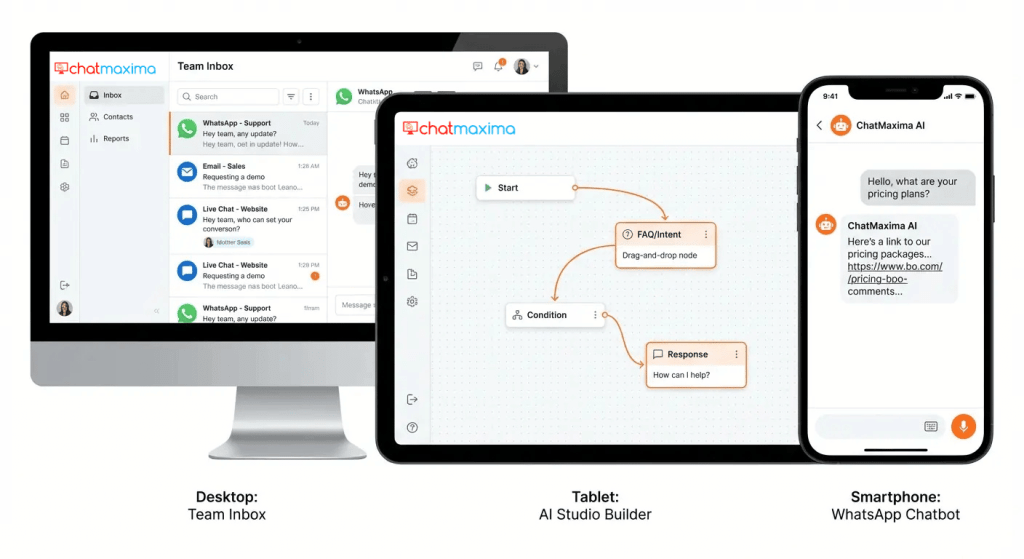
ChatMaxima is an omnichannel conversational AI platform built for SMBs and growing teams that need to manage customer conversations across WhatsApp, web chat, Instagram, Facebook Messenger, Telegram, and email from a single interface. The platform includes a no-code AI Studio chatbot builder that lets you design conversation flows visually, a shared team inbox where agents collaborate on conversations, and native integrations with CRMs like HubSpot, Salesforce, and Zoho. ChatMaxima supports multiple AI models including OpenAI GPT, Anthropic Claude, and Google Gemini, so you can pick the model that fits your use case. Plans start at $19/month with unlimited AI conversations, which makes it one of the most affordable options for businesses that want enterprise-level features without enterprise pricing. Check the pricing page for current plans.
Strengths: True omnichannel coverage, no-code builder, multi-model AI support, affordable flat pricing with unlimited conversations.
Weaknesses: Less suited for companies that only need voice AI or only internal tools.
Best for: SMBs and mid-market teams that interact with customers across multiple messaging channels and need both automation and human handoff.
Intercom Fin is an AI agent built on top of Intercom’s customer messaging platform. Fin uses your existing help center content to answer customer questions and can handle multi-step resolution flows. It integrates deeply with Intercom’s ticketing, product tours, and customer data platform. The AI quality is strong, and Fin can resolve a meaningful percentage of conversations without human involvement. However, pricing is oriented toward mid-market and enterprise teams, with per-resolution charges that can add up quickly at scale. If you are exploring options beyond Intercom, see how ChatMaxima compares as an Intercom alternative.
Strengths: Deep integration with Intercom ecosystem, strong AI resolution quality.
Weaknesses: Expensive per-resolution pricing, locked into Intercom platform.
Best for: Teams already using Intercom that want to add AI to their existing workflow.
Zendesk AI brings artificial intelligence into the Zendesk support suite through automated ticket routing, AI-suggested replies for agents, and a bot that handles common inquiries. The strength of Zendesk AI is its integration with one of the largest customer support ecosystems in the world. The weakness is complexity and cost. Zendesk’s pricing tiers can be confusing, and the AI features often require higher-tier plans. For businesses that do not need the full Zendesk suite, the overhead may not be worth it.
Strengths: Massive ecosystem, strong ticket routing, enterprise-grade.
Weaknesses: Complex pricing, AI features gated behind higher plans.
Best for: Large support teams already invested in the Zendesk ecosystem.
Sales and Marketing
Drift (now Salesloft) pioneered conversational marketing and continues to be a strong player in the sales acceleration space. Drift’s conversational AI qualifies website visitors, books meetings for sales reps, and integrates with revenue intelligence tools. The platform is designed for B2B sales teams that want to convert website traffic into pipeline. Pricing is on the higher end, aimed at mid-market and enterprise. Businesses looking for more affordable conversational marketing should compare Drift alternatives.
Strengths: Strong B2B sales focus, revenue attribution, meeting scheduling.
Weaknesses: Expensive, B2B-centric features may not fit B2C.
Best for: B2B sales teams focused on converting website visitors into qualified pipeline.
ManyChat dominates Instagram and WhatsApp DM automation for creators, D2C brands, and SMBs running social media marketing campaigns. ManyChat makes it easy to build automated DM flows that respond to story mentions, comments, and keywords. The platform is accessible, affordable, and effective for marketing use cases. It is less suited for complex customer support workflows or omnichannel management. For teams that need both marketing automation and support, explore ManyChat alternatives that offer broader functionality.
Strengths: Excellent Instagram and WhatsApp DM automation, beginner-friendly.
Weaknesses: Limited customer support features, not truly omnichannel.
Best for: Creators and D2C brands running social media-driven sales funnels.
Voice AI
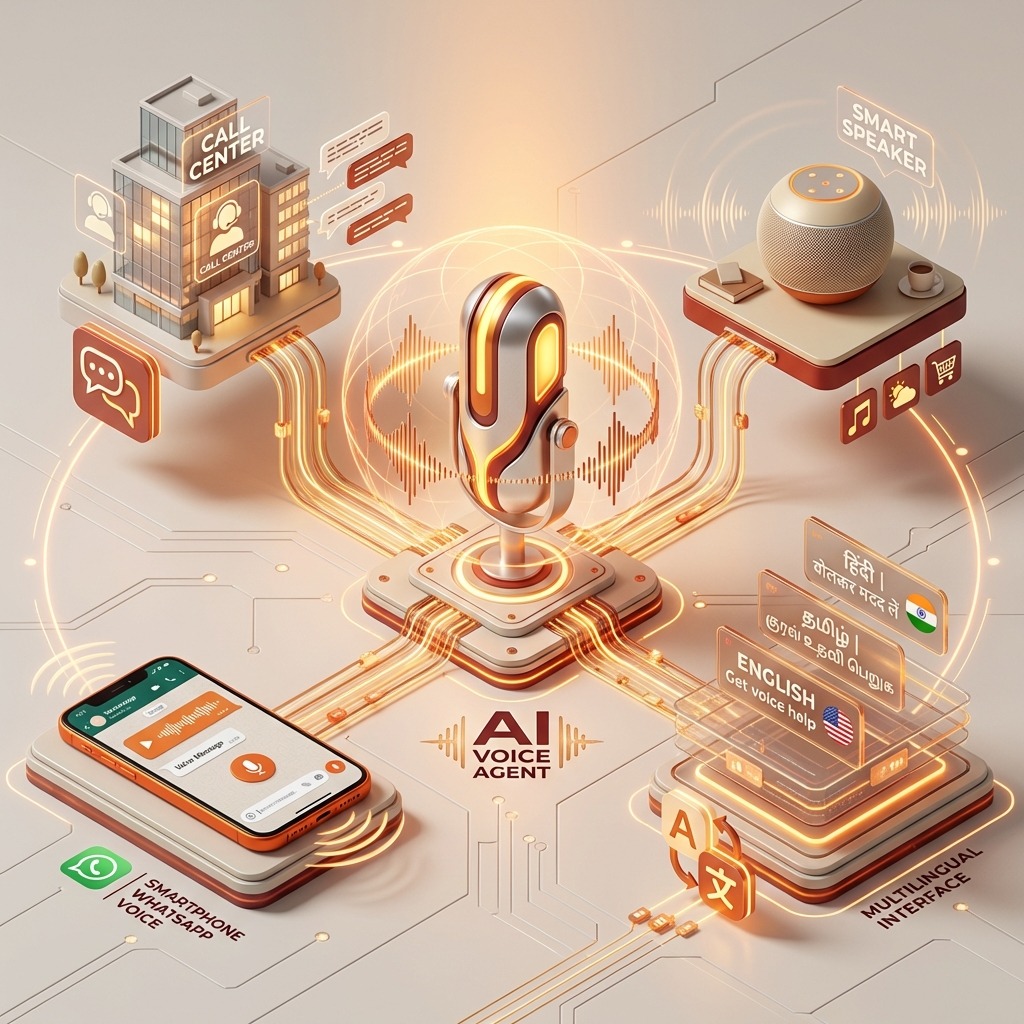
Retell AI is a voice agent platform that lets businesses build AI-powered phone agents capable of making and receiving calls. Retell provides low-latency voice synthesis, turn-taking that feels natural, and the ability to integrate with telephony systems. The platform is developer-friendly and focused specifically on the voice channel. Businesses using Retell build agents for appointment scheduling, outbound sales calls, customer service lines, and after-hours support.
Strengths: Low-latency voice, natural turn-taking, telephony integrations.
Weaknesses: Requires technical setup, voice-only focus.
Best for: Businesses that need AI phone agents for call automation.
Sarvam AI focuses on multilingual voice AI for Indian languages and has built models specifically for Hindi, Tamil, Telugu, Kannada, and other regional languages. Sarvam’s voice models power government services, healthcare helplines, and financial services in India. The company represents the “sovereign AI” movement, building foundational models tuned for specific markets rather than relying on English-first global models. ChatMaxima integrates Sarvam AI models for businesses that need multilingual voice capabilities.
Strengths: Best-in-class Indian language support, government and enterprise trust.
Weaknesses: Limited outside India, narrower general-purpose capabilities.
Best for: Businesses serving Indian customers in regional languages.
Platforms and Builders
Google Dialogflow CX is Google’s enterprise conversational AI platform. It provides a visual flow builder, native integration with Google Cloud services, and support for both text and voice channels. Dialogflow CX is powerful but complex, designed for teams with dedicated developers who can build and maintain conversational flows. For a deep dive, see our Google conversational AI guide. Pricing is usage-based, which can become expensive at high volumes.
Strengths: Google ecosystem integration, enterprise scalability, multilingual.
Weaknesses: Steep learning curve, requires developers, usage-based pricing. Best for: Enterprise teams building custom conversational AI solutions on Google Cloud.
Rasa is an open-source conversational AI framework that gives developers full control over the model stack. Rasa allows you to use custom NLU models, connect to any backend, and deploy on-premise or in your own cloud. The trade-off is that Rasa requires significant engineering resources to set up and maintain. It is not a no-code tool.
Strengths: Full control, open source, on-premise deployment. Weaknesses: Requires engineering team, no visual builder for non-technical users. Best for: Companies with developer teams that need full customization and data control.
Botpress is an open-source chatbot builder that has evolved into a more accessible platform with a visual flow editor and built-in NLU. Botpress sits between Rasa’s developer-heavy approach and fully managed platforms like ChatMaxima. It offers a self-hosted option alongside a cloud version and is popular with teams that want more control than a SaaS tool but less complexity than building from scratch.
Strengths: Open source with visual builder, self-hosted option. Weaknesses: Smaller ecosystem than commercial platforms, limited native channel integrations. Best for: Technical teams that want an open-source foundation with a visual interface.
General Purpose
ChatGPT by OpenAI needs little introduction. As the most widely used conversational AI app globally, ChatGPT handles everything from writing assistance to coding to research. For businesses, custom GPTs allow teams to create specialized assistants trained on company data. The platform’s plugin ecosystem extends functionality into browsing, data analysis, and third-party integrations.
Strengths: Most capable general-purpose AI, huge plugin ecosystem, custom GPTs.
Weaknesses: Not designed for customer-facing deployment, no native omnichannel support.
Best for: Internal productivity, research, content creation, prototyping.
Claude by Anthropic is known for strong reasoning, long-context analysis (up to 200K tokens), and careful, nuanced responses. Claude excels at tasks that require understanding large documents, writing with precision, and coding. For businesses, Claude’s API powers many customer-facing applications through platforms like ChatMaxima that integrate Anthropic models.
Strengths: Superior reasoning, long-context support, thoughtful responses.
Weaknesses: Smaller plugin ecosystem than ChatGPT, not a standalone customer-facing tool.
Best for: Complex analysis, coding, and as a backend model for business applications.
How to Choose the Right Conversational AI App
Selecting the right conversational AI app depends on five factors: your business size, primary communication channel, budget, technical capability, and the core problem you need to solve. So how do you actually figure out which tool matches your needs?
If you need omnichannel customer support and you are an SMB, ChatMaxima is the strongest fit. It covers WhatsApp, web, Instagram, Messenger, Telegram, and email in one platform with AI and human handoff, starting at $19/month. You do not need developers to set it up.
If you are already on Intercom or Zendesk, adding their native AI features makes sense because switching platforms is expensive. Intercom Fin or Zendesk AI will integrate seamlessly with your existing workflows.
If your primary need is Instagram or WhatsApp DM marketing, ManyChat is purpose-built for that workflow. It is affordable and easy to learn, though you will need a separate tool for support.
If you need AI phone agents, Retell AI is the specialist. For Indian language voice, Sarvam AI is the clear leader.
If you are a developer team building custom solutions, Dialogflow CX, Rasa, or Botpress give you the control you need, but expect significant setup time.
If you need general-purpose AI for internal use, ChatGPT or Claude covers most scenarios, and both offer team plans with data privacy controls.
The mistake most businesses make is choosing a tool based on a feature list rather than the problem they need to solve. Start with the channel your customers use most, then pick the platform that serves that channel best while fitting your budget and technical resources.
Conversational AI Apps: Pricing Comparison
Pricing is where conversational AI apps diverge dramatically. Some charge per seat, others per conversation, and a few offer flat-rate plans. Hidden costs like per-message fees, model usage charges, and premium feature gates can make an affordable-looking tool expensive at scale.
ToolStarting PricePricing ModelFree TierHidden CostsChatMaxima$19/moFlat plan, unlimited AI7-day trialNone significantIntercom Fin~$74/mo + $0.99/resolutionPer seat + per resolutionNoResolution fees add upZendesk AI~$55/agent/moPer agentNoAI features on higher tiersDrift (Salesloft)Custom pricingPer seat, enterpriseNoImplementation feesManyChatFree / $15/moSubscriber tiersYes (1,000 contacts)Fees above tier limitsRetell AIUsage-basedPer minute of call timeLimited free creditsVoice minutes at scaleSarvam AICustom pricingEnterprise/APINoVolume-dependentDialogflow CXUsage-basedPer request$300 creditCosts scale with volumeRasaFree (open source)Self-hosted or enterpriseYes (open source)Infrastructure and dev costsBotpressFree / paid tiersUsage-basedYesCosts at scaleChatGPTFree / $20/mo (Plus)Per userYesAPI usage separateClaudeFree / $20/mo (Pro)Per userYesAPI usage separate
The value proposition of flat-rate pricing, like ChatMaxima’s $19/month unlimited plan, becomes clear when you compare it against per-resolution or per-agent models. A business handling 5,000 conversations per month on Intercom Fin could pay thousands in resolution fees alone. With ChatMaxima, that same volume costs $19/month regardless of conversation count. For growing businesses, predictable pricing prevents budget surprises.
Trends Shaping Conversational AI Apps in 2026
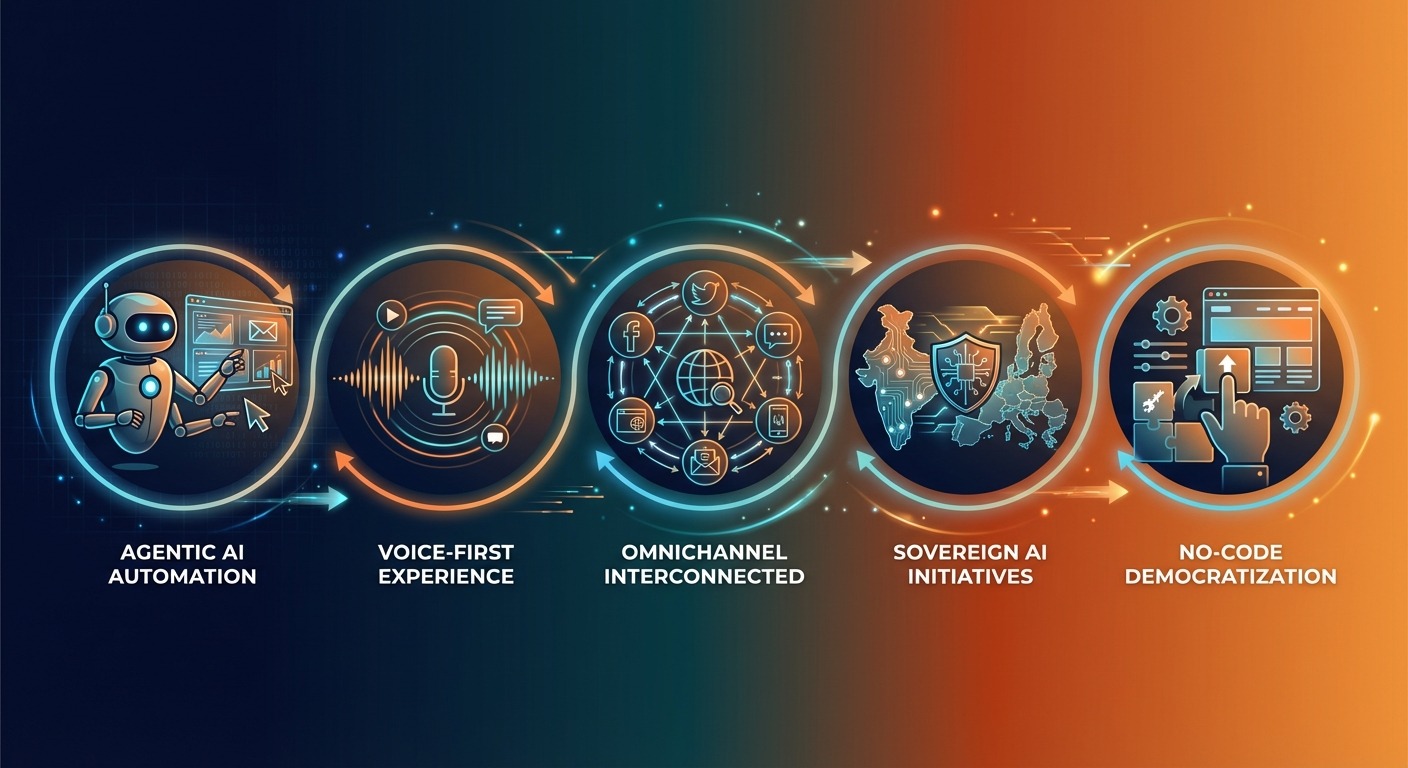
Agentic AI is the defining trend of 2026. Conversational AI apps are evolving from tools that answer questions to agents that complete tasks. An agentic AI assistant does not just tell a customer their order is delayed; it checks the warehouse system, initiates a reshipment, sends a tracking link, and applies a discount code, all within the same conversation. Platforms like ChatMaxima are integrating agentic workflows into their AI Studio builder, making this capability accessible without custom development.
Voice-first experiences are expanding beyond call centers. WhatsApp voice messages, smart speaker integrations, and voice-enabled web widgets are creating new interaction surfaces. Businesses that only offer text-based chat are missing customers who prefer speaking. The availability of low-latency voice models from providers like Sarvam AI, ElevenLabs, and Deepgram has made voice AI practical for businesses of all sizes.
Omnichannel convergence continues to accelerate. Customers expect to start a conversation on Instagram, continue it on WhatsApp, and resolve it over email without repeating themselves. Conversational AI apps that support a unified omnichannel inbox are replacing the patchwork of single-channel tools that many businesses still use. This is not just a convenience feature but a competitive requirement in 2026.
Sovereign AI reflects the growing demand for language models trained on specific markets. Sarvam AI building foundational models for Indian languages, Mistral serving the European market, and regional players emerging across Southeast Asia and the Middle East, all signal that one-size-fits-all English models are not enough. Businesses serving multilingual populations need conversational AI apps that understand local languages, cultural context, and regulatory requirements.
No-code builders are democratizing access to conversational AI. Tools like ChatMaxima’s visual AI Studio and Botpress’s flow editor let business teams build sophisticated conversational workflows without writing code. This shift means the bottleneck is no longer technical skill but rather conversation design, understanding how to structure a dialogue that solves the customer’s problem efficiently. The teams that invest in conversation design rather than just tool selection will see the best results.
What Should You Do Next?
Conversational AI apps in 2026 are practical, affordable, and ready for deployment across every business function. The 12 tools in this guide cover the full spectrum from enterprise platforms to open-source frameworks, from voice specialists to omnichannel powerhouses. Your choice depends on where your customers are, what problem you are solving, and how much you want to spend.
If you need a conversational AI app that covers multiple channels, supports the best AI models, and does not charge per conversation, start a free trial with ChatMaxima. You can build and deploy your first AI chatbot across WhatsApp, web, and Instagram in under five minutes, with no coding and no surprise fees.