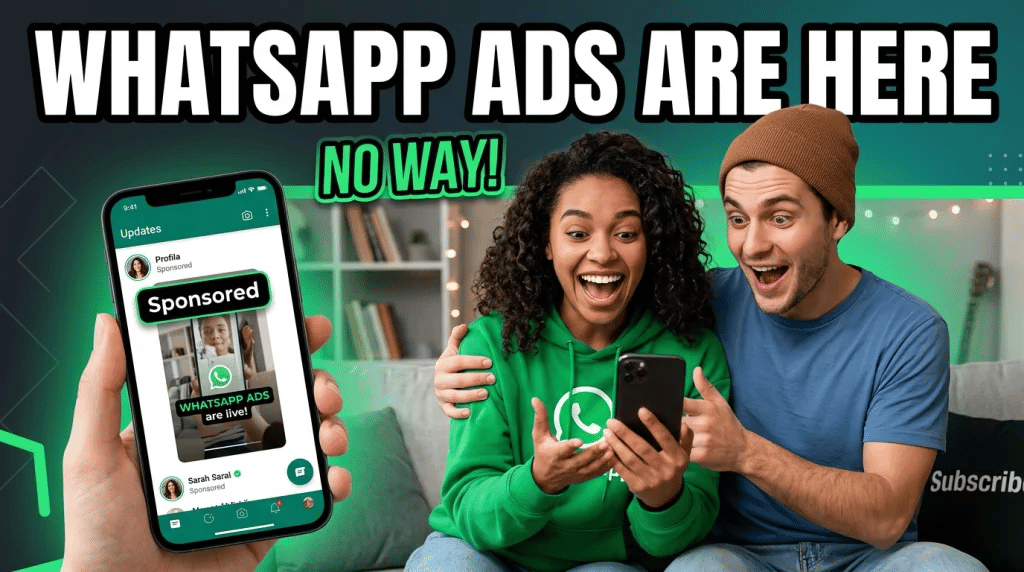
For over a decade, WhatsApp has been the one major social platform where users never encountered an advertisement. That era is officially over. In February 2026, Meta confirmed the global rollout of WhatsApp Status Ads and Promoted Channels, bringing paid advertising to the messaging app used by more than three billion people worldwide.
If you run a business that communicates with customers on WhatsApp, this changes your playbook. There is now a paid acquisition channel sitting inside the same app where your support agents handle tickets and your chatbots qualify leads. The businesses that understand how these ad formats work, and move early, will have a significant advantage.
This post breaks down exactly what is launching, how the ad formats function, what data WhatsApp uses for targeting, and how you can build a full-funnel strategy that connects WhatsApp ads to automated conversations using a platform like ChatMaxima.
WhatsApp’s Ad-Free Era Is Officially Over
Meta acquired WhatsApp in 2014 for $19 billion, making it one of the largest tech acquisitions in history. At the time, WhatsApp co-founders Jan Koum and Brian Acton were vocal about keeping the platform ad-free. That promise held for years, even as Meta searched for ways to justify the price tag through business messaging APIs and catalog features.
The first real attempt at WhatsApp advertising came in 2018, when Meta announced plans to place ads inside WhatsApp Status. The backlash was swift. Privacy advocates pushed back, and both co-founders eventually departed. Meta quietly shelved the project.
Now, eight years later, the ads are back. According to WABetaInfo, Meta began testing Status Ads and Promoted Channels in select markets throughout late 2025. As of February 2026, both formats are rolling out globally. Industry analysts at Invezz estimate that WhatsApp ad revenue could reach $6 billion in 2026 alone, as reported by TradingView.
The key detail that separates this rollout from the failed 2018 attempt: ads appear only in the Updates tab, which houses Status posts and Channels. Private chats, group conversations, and voice calls remain completely ad-free and end-to-end encrypted. Meta has drawn a clear line between the social/broadcast layer and the private messaging layer.
How Status Ads Work
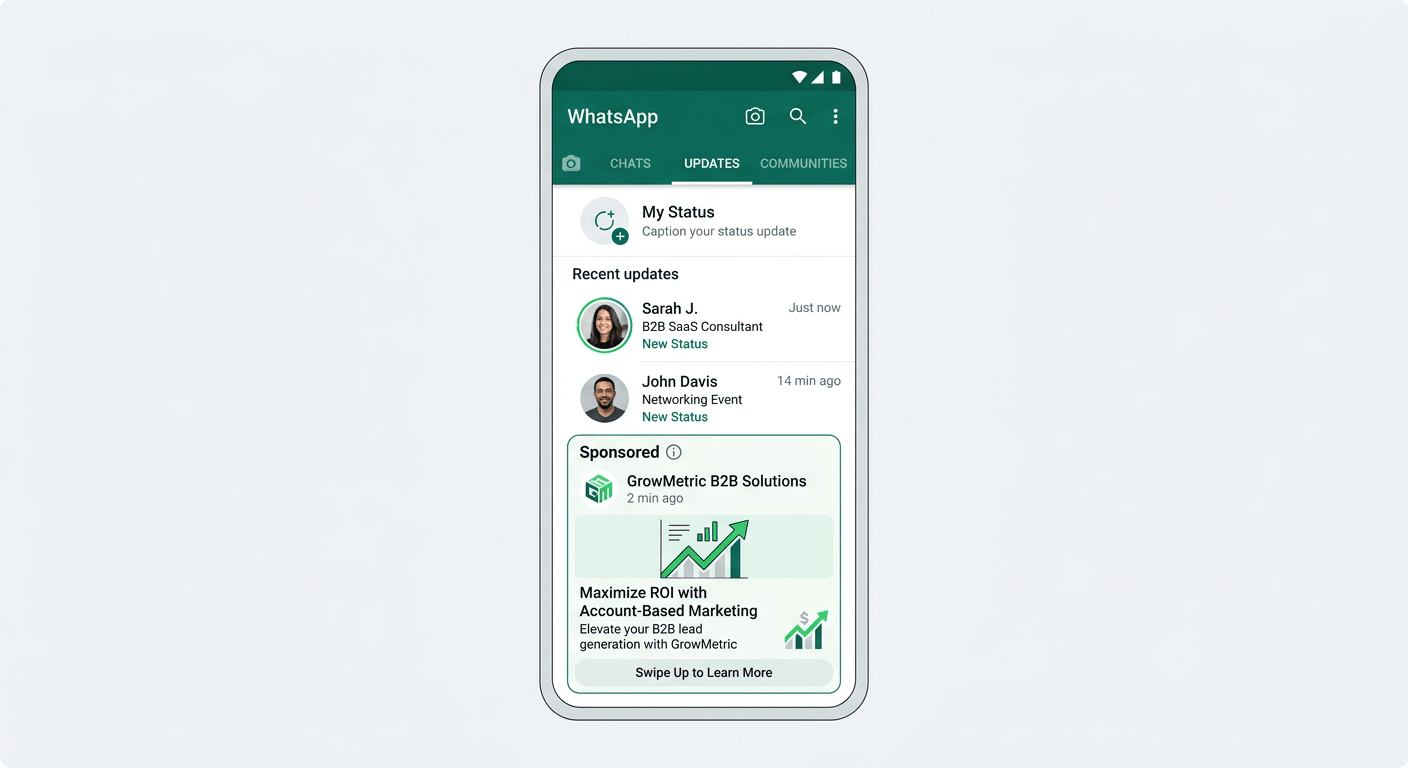
WhatsApp Status Ads follow the same model that has been wildly successful on Instagram Stories and Facebook Stories. They appear between regular status posts from your contacts as you tap through updates.
Format and appearance. Status Ads look like regular status posts. They fill the screen, support images and video, and include a clear “Sponsored” label at the top. Businesses can include a call-to-action button, and the most powerful option is “Message Business,” which opens a direct WhatsApp conversation with the advertiser.
User controls. WhatsApp has built in several controls to keep the experience from feeling intrusive. Users can skip any ad by swiping, which takes less than a second. Through the three-dot menu, users can block specific advertisers entirely or hide their ads from future rotation. According to Exchange4Media, these controls are prominent and easy to access.
How businesses create them. Status Ads are managed through Meta Ads Manager, the same platform you already use for Facebook and Instagram advertising. You select WhatsApp Status as a placement, upload your creative, define your audience, set your budget, and launch. If you have run Instagram Stories ads before, the workflow is nearly identical.
Ad frequency. Meta has not published exact frequency caps, but early reports suggest a conservative approach. Users are seeing roughly one sponsored status for every five to seven organic status updates from contacts. This is noticeably less aggressive than Instagram Stories ad frequency.
For businesses already running Meta ad campaigns, adding WhatsApp Status as a placement is straightforward. For businesses new to Meta advertising, this is a compelling reason to start. The combination of WhatsApp’s massive user base and the high engagement rate of status content creates an opportunity that did not exist six months ago.
How Promoted Channels Work
The second ad format, Promoted Channels, operates differently from Status Ads. Instead of appearing in the status feed, Promoted Channels receive highlighted placement in the Channels directory.
WhatsApp Channels launched in 2023 as a one-to-many broadcast feature. Businesses, creators, and organizations can publish updates to followers who subscribe to their channel. The Channels directory is where users discover new channels to follow.
With Promoted Channels, businesses pay to appear at the top or in featured positions within this directory. A small “Promoted” label distinguishes paid placements from organic results, maintaining transparency for users.
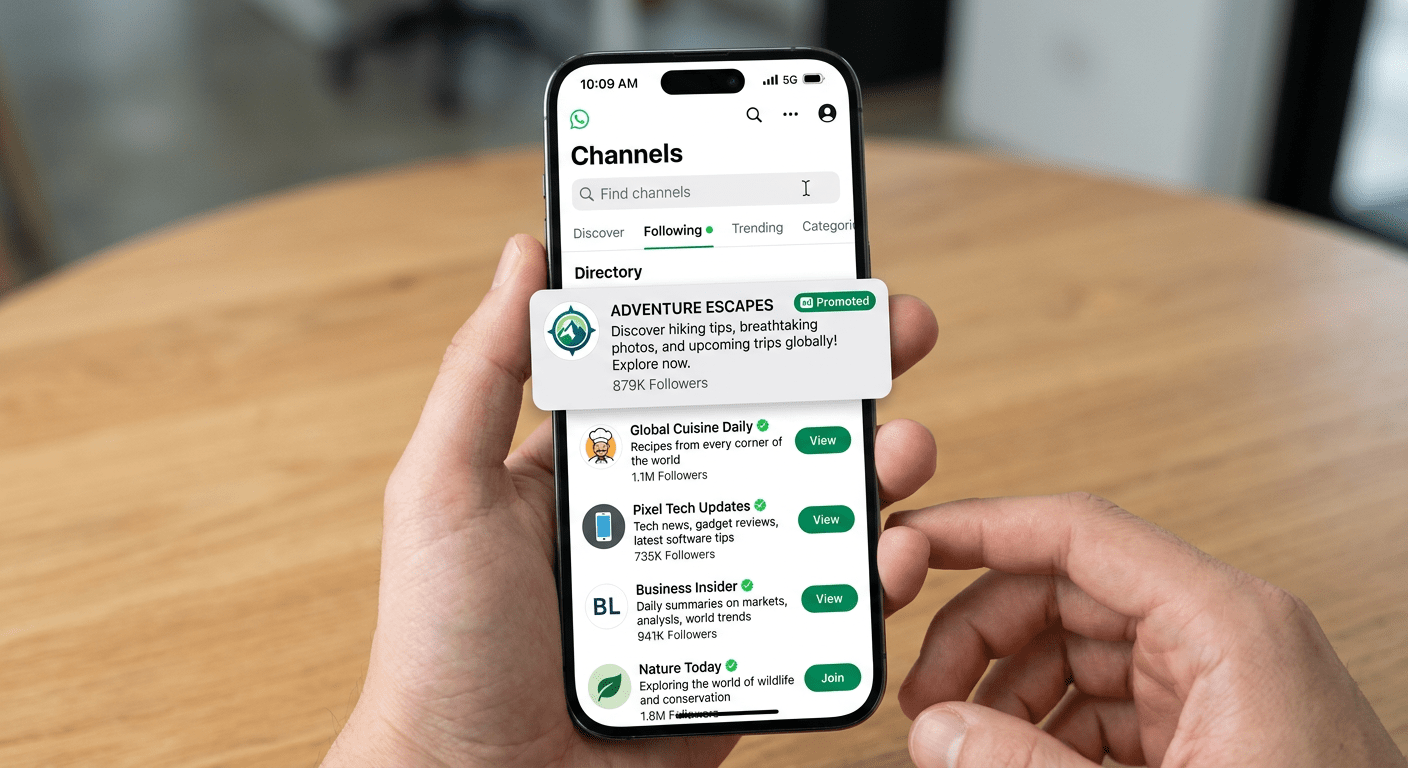
Local targeting. One of the most interesting features of Promoted Channels is geographic targeting at the city and neighborhood level. A local restaurant, gym, or retail store can promote their channel specifically to WhatsApp users in their area. This is a capability that WhatsApp has never offered before, and it fills a gap that Google Local and Facebook Local ads have dominated.
Use cases. Promoted Channels work well for building an ongoing audience. Once a user follows your channel, you can send them updates without paying per message. Think of it as building an email list, but inside WhatsApp, where open rates consistently exceed 90%. Local businesses, media outlets, e-commerce brands, and creators all stand to benefit from this format.
For businesses already using the WhatsApp Business API, Promoted Channels add a new dimension to your WhatsApp presence. You can run Promoted Channels for top-of-funnel awareness while using the API for transactional messages and support.
Privacy and Targeting: What Data WhatsApp Uses
The biggest question users and businesses have about WhatsApp ads is about data. WhatsApp has built its reputation on privacy, and Meta knows that mishandling the ad targeting model could erode trust in the platform.
Here is what WhatsApp has confirmed about how ad targeting works:
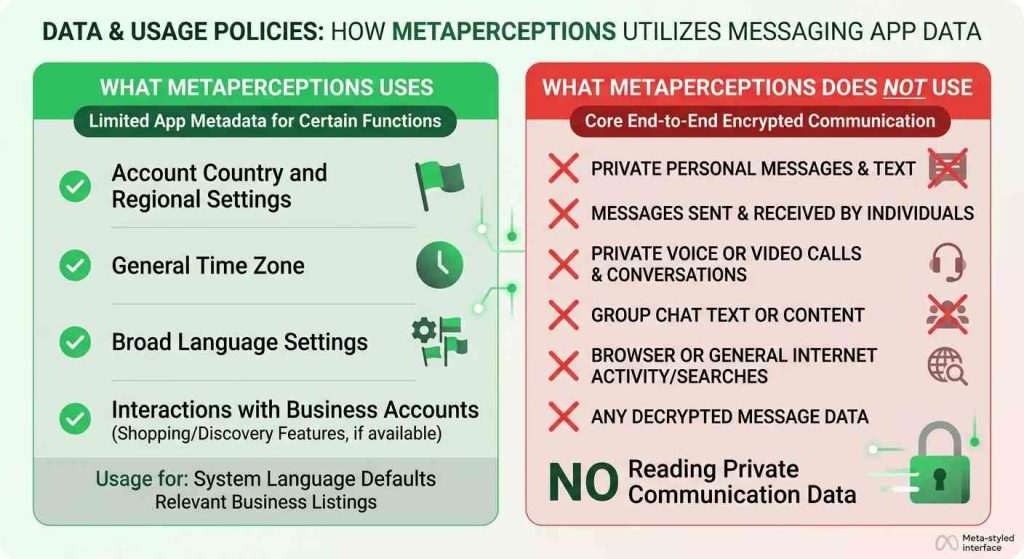
Limited signal targeting. WhatsApp Status Ads and Promoted Channels use a deliberately restricted set of signals for ad targeting. These include the user’s language setting, country, and how they interact with ads (whether they tap, skip, or block them). This is a far narrower data set than what Facebook or Instagram use for ad targeting.
No private data. WhatsApp does not use the content of private messages, call logs, or group activity for ad targeting. This is a hard line that Meta has drawn, and it is reinforced by end-to-end encryption on private chats. Your conversations remain private.
Accounts Center integration. For users who have connected their WhatsApp account to Meta’s Accounts Center (which links WhatsApp, Instagram, and Facebook profiles), ad targeting can additionally use ad preferences and information from connected Meta accounts. This means if you have shown interest in fitness products on Instagram, you might see relevant WhatsApp Status Ads. However, this connection is optional.
EU subscription option. In compliance with European Digital Markets Act regulations, users in the European Union have a choice: use WhatsApp for free with ads, or pay for an ad-free subscription. Pricing varies by platform and location. This model follows the same approach Meta introduced for Facebook and Instagram in Europe, as Social Media Today detailed in their coverage.
How this compares to other Meta platforms. If you are familiar with Instagram or Facebook ad targeting, WhatsApp’s approach is significantly more conservative. Facebook uses hundreds of data points including browsing history, purchase behavior, and detailed demographic information. WhatsApp uses a handful of signals. The result is broader, less granular targeting, but it operates within a context (messaging) where user intent is often higher.
What This Means for Business Messaging Strategy
The introduction of Status Ads and Promoted Channels completes something that was previously impossible: a full marketing funnel entirely within WhatsApp.
Before February 2026, businesses could use WhatsApp for mid-funnel and bottom-funnel activities. You could send broadcast campaigns to existing contacts, handle customer support through the omnichannel team inbox, and deploy AI chatbots for automated conversations. But acquiring new customers required driving them to WhatsApp from external channels like Google Ads, Instagram, or your website.
Now the funnel looks like this:
Top of funnel: Discovery and awareness. Status Ads put your brand in front of WhatsApp users who have never interacted with your business. The “Message Business” CTA immediately opens a conversation, eliminating the friction of landing pages and form fills.
Mid-funnel: Audience building. Promoted Channels let you build a subscriber base inside WhatsApp. Users who follow your channel receive your updates directly. This creates an owned audience asset similar to an email list, but with dramatically higher open and engagement rates.
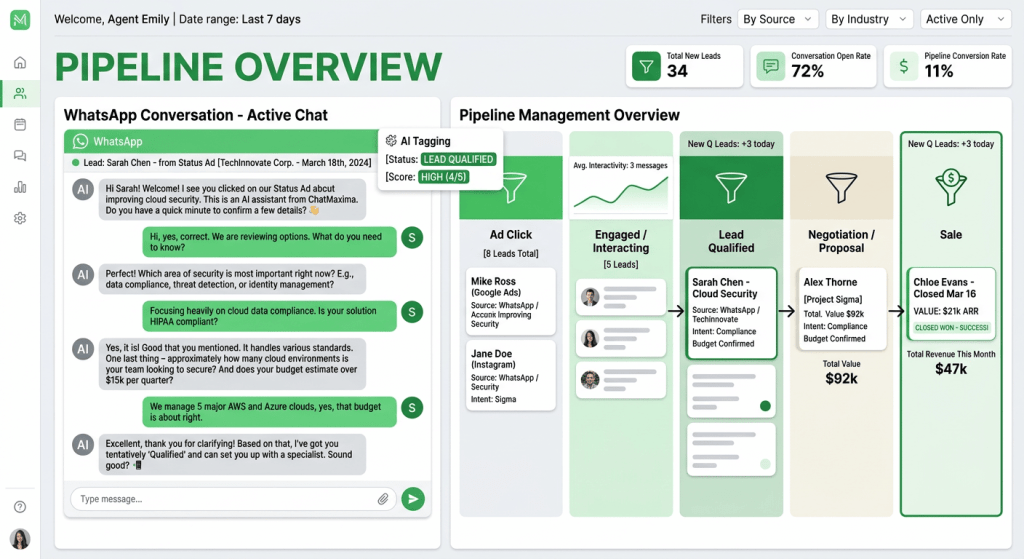
Bottom of funnel: Conversations, support, and sales. The WhatsApp Business API, combined with platforms like ChatMaxima, handles the conversion. AI chatbots qualify leads, answer product questions, process orders, and route complex queries to human agents.
This full-funnel capability is new. It means businesses can acquire, nurture, and convert customers without ever leaving WhatsApp. For markets where WhatsApp is the dominant communication channel (India, Brazil, Indonesia, much of Europe, the Middle East, and Africa), this is transformative.
The businesses that have already invested in WhatsApp automation and conversational commerce are best positioned to capitalize. If you have been running WhatsApp chatbots and building conversation workflows, Status Ads become the acquisition layer that feeds those workflows.
How to Leverage WhatsApp Ads with ChatMaxima
Understanding the ad formats is only half the equation. The real value comes from what happens after someone taps your ad. A Status Ad that drives users to a conversation with no one on the other end wastes your ad spend. Here is how to build the system that turns ad clicks into revenue.
Run Status Ads with “Message Business” CTAs. Create Status Ads in Meta Ads Manager with the objective of driving WhatsApp conversations. When a user taps the CTA, they land directly in a WhatsApp chat with your business number.
Let ChatMaxima’s AI chatbot handle the first response. The moment a user messages you from an ad, ChatMaxima’s AI-powered chatbot engages them instantly. No wait time, no missed leads. The chatbot greets the user, understands their intent, and begins qualifying them. For an e-commerce brand, this might mean asking about product preferences and budget. For a service business, it could be collecting appointment details or answering pricing questions.
Automate lead qualification from ad clicks. Every conversation that starts from a Status Ad can be automatically tagged, scored, and routed. ChatMaxima’s workflow builder lets you define qualification criteria. Leads that meet your threshold get routed to your sales team in the team inbox. Leads that need nurturing get added to automated drip sequences.
Go omnichannel. The same prospects seeing your WhatsApp Status Ads might also encounter your Instagram ads or visit your website. ChatMaxima’s omnichannel platform unifies conversations across WhatsApp, Instagram DM, Facebook Messenger, email, and web chat. A customer who starts on WhatsApp and follows up on Instagram sees a seamless experience. Your team sees one unified conversation thread.
Track the full pipeline. With ChatMaxima’s reporting and analytics, you can measure the entire journey from ad impression to conversation to qualified lead to sale. This data feeds back into your Meta Ads campaigns, allowing you to optimize targeting and creative based on which ads drive the highest-quality conversations.
Handle volume at scale. When you start running ads on a platform with three billion users, conversation volume can spike rapidly. ChatMaxima’s team inbox allows multiple agents to handle conversations simultaneously, with AI assistance for suggested replies, automatic language translation, and intelligent routing based on topic and priority.
Should You Advertise on WhatsApp Status?
Not every business should rush into WhatsApp Status Ads on day one. Here is an honest assessment of who should move fast and who should wait.
Who should start now
E-commerce and D2C brands. If you sell products directly to consumers and your audience is active on WhatsApp, Status Ads are a natural fit. The “Message Business” CTA lets customers ask about products, check availability, and place orders in a single conversation. Combine this with automated e-commerce workflows and you have a powerful sales channel.
Local businesses. Promoted Channels with city and neighborhood targeting are built for local businesses. Restaurants, salons, fitness studios, real estate agents, and service providers can reach nearby customers in a way that feels organic. The cost of building a local WhatsApp audience through Promoted Channels will likely be significantly lower than equivalent Google Local or Facebook Local campaigns in the early months.
Agencies managing client accounts. If you run a marketing agency, WhatsApp ads represent a new service offering for your clients. Being early means you can build expertise and case studies before the market gets crowded. Platforms like ChatMaxima offer multi-brand management that makes it practical to manage WhatsApp automation across multiple client accounts.
Brands already invested in WhatsApp Business API. If you already have WhatsApp Business API set up with conversation workflows, chatbots, and a team inbox, adding Status Ads is the logical next step. Your infrastructure is ready to handle the inbound conversations that ads will generate. Check the latest WhatsApp pricing model to understand how ad-driven conversations fit into your cost structure.
Who should wait
B2B enterprise with long sales cycles. If your average deal size is six figures and your sales cycle is six months, WhatsApp Status Ads are unlikely to be your primary acquisition channel. The targeting is too broad for niche B2B audiences. That said, Promoted Channels could work for industry thought leadership and community building.
Businesses in markets with low WhatsApp adoption. In markets where WhatsApp penetration is low (parts of East Asia, for example, where LINE or WeChat dominate), the reach simply is not there yet to justify the investment.
Budget considerations
WhatsApp Status Ads are priced through Meta Ads Manager’s auction system, the same model used for Instagram and Facebook. Early data suggests CPMs (cost per thousand impressions) are competitive with Instagram Stories, but with potentially higher engagement rates due to the novelty factor and WhatsApp’s intimate user behavior.
Comparing ROI across formats:
-
- WhatsApp Status Ads deliver conversations, not clicks. The value of a direct WhatsApp conversation is typically higher than a website visit because the user has already committed to engaging with you.
- Instagram Stories Ads offer broader creative options (polls, stickers, swipe-up links) but land users on external pages where drop-off is common.
- Facebook Stories Ads have the largest reach but the lowest engagement rates of the three platforms.
For businesses focused on conversational commerce, WhatsApp Status Ads will likely deliver the best cost-per-qualified-lead among these three options. The key is having the automation in place to handle the conversations efficiently. If you are evaluating your options, comparing WhatsApp solutions like Wati vs ChatMaxima can help you find the right platform for your needs.
What Happens Next
WhatsApp advertising is in its earliest days. The formats will evolve. Targeting will become more sophisticated. New placements may emerge. Meta has been carefully watching user sentiment, and the conservative rollout (ads only in Updates, not in chats) suggests they are committed to protecting the core messaging experience.
For businesses, the signal is clear: WhatsApp is no longer just a support channel. It is becoming a full marketing and sales platform. The combination of Status Ads for acquisition, Promoted Channels for audience building, and the Business API for conversations creates an ecosystem that rivals any digital marketing channel available today.
The businesses that treat WhatsApp as a complete platform, rather than just a place to send order confirmations, will be the ones that win in 2026 and beyond.
If you are ready to connect WhatsApp ads to automated, intelligent conversations, explore ChatMaxima’s WhatsApp solutions or check out pricing to get started. The ad-free era is over. The conversational commerce era is just beginning.