On March 16, 2026, Jensen Huang walked onto the GTC stage and announced what he called an “open-sourced operating system of agentic computers.” That product is NVIDIA NemoClaw — an open-source AI agent platform that adds enterprise-grade security, privacy, and policy controls on top of the OpenClaw autonomous agent framework. For anyone building or buying customer support AI in 2026, this announcement reshapes the playing field.
NemoClaw is not a chatbot. It is not a helpdesk. It is infrastructure — the kind of infrastructure that will power the next generation of autonomous customer service agents. And whether you run a 10-person support team or a 10,000-seat contact center, understanding what NemoClaw means for your business is no longer optional.
This article breaks down exactly what NemoClaw is, why NVIDIA built it, how it impacts customer support operations, and what business leaders should do right now to stay ahead.
What Exactly Is NVIDIA NemoClaw?
NemoClaw is an open-source security and privacy layer that sits on top of the OpenClaw autonomous agent framework. With a single CLI command, it installs NVIDIA’s Nemotron language models alongside a new sandboxed runtime called OpenShell, transforming personal AI agents into enterprise-ready, policy-controlled systems.
Think of it this way: OpenClaw provides the autonomous agent brain. NemoClaw wraps that brain in a compliance-ready, security-hardened shell that enterprises actually trust enough to deploy.
The core components include:
-
- NVIDIA OpenShell — an isolated sandbox runtime that enforces policy-based security, network access controls, and privacy guardrails
- Privacy Router — a data flow controller that prevents sensitive information from leaking to cloud-based LLMs while still allowing agents to access frontier models when needed
- Local-first inference using NVIDIA Nemotron models, reducing both cost and data exposure
- Hardware-agnostic deployment — it runs on NVIDIA, AMD, and Intel processors, from consumer GeForce RTX GPUs up through enterprise DGX systems
The platform launched in early preview on March 16, 2026. It is free and open-source with no licensing fees. The cost comes from the hardware you run it on, with NVIDIA’s DGX Spark available at $3,999 as an entry-level dedicated AI compute option.

Why NVIDIA Built an AI Agent Platform
NVIDIA has spent decades building the GPUs that power AI training and inference. But with NemoClaw, the company is making a deliberate move up the stack — from hardware provider to platform provider for autonomous AI agents.
Jensen Huang’s keynote message was unambiguous: “Every SaaS company will become an agentic company.” That is not a prediction about some distant future. It is a statement about the competitive shift already underway in 2026.
The reasoning is straightforward. Today’s enterprise software delivers features through static interfaces — dashboards, forms, workflows. Tomorrow’s enterprise software delivers outcomes through autonomous agents that act on behalf of users. The company that controls the agent runtime controls the next era of enterprise computing.
NVIDIA is not building this alone. NemoClaw is a joint open-source effort with the OpenClaw community, and the partner ecosystem already includes heavyweights like Adobe, Salesforce, SAP, ServiceNow, Siemens, Cisco, and Google. Salesforce is already running Nemotron models in production. Adobe announced a strategic partnership for agentic creative and marketing workflows on the same day.
This level of enterprise backing tells you something important: NemoClaw is not a side project. It is a platform play with the full weight of a $3 trillion company behind it.
How NemoClaw Impacts Customer Support AI
Here is where things get practical for CX leaders. NemoClaw explicitly targets customer support as a primary use case. The platform documentation and partner announcements reference several specific capabilities that map directly to support operations.
Autonomous Tier-1 Ticket Handling
NemoClaw-powered agents can handle first-line customer inquiries without human intervention. Unlike traditional chatbots that follow scripted decision trees, these are autonomous agents that reason through problems, access internal systems, and resolve issues end-to-end.
The difference matters. A scripted chatbot can answer “What are your business hours?” An autonomous agent can diagnose why a customer’s integration is failing, check their account configuration, identify the misconfigured API key, and walk them through the fix — all within a single conversation.
Secure Data Handling with the Privacy Router
One of the biggest barriers to deploying AI in customer support has been data security. Support conversations contain account numbers, personal information, order details, and sometimes financial data. Sending all of that to a cloud LLM is a compliance nightmare for regulated industries.
NemoClaw’s Privacy Router addresses this directly. It controls the data flow between local Nemotron models (which process sensitive information on-premises) and cloud frontier models (which handle complex reasoning tasks). The router enforces policies about what data can leave the local environment, giving compliance teams the controls they need to approve deployment.
For industries like healthcare, finance, and government — where customer support AI adoption has lagged specifically because of data concerns — this is a significant unblocking event.
Seamless Human Handoff with Full Context
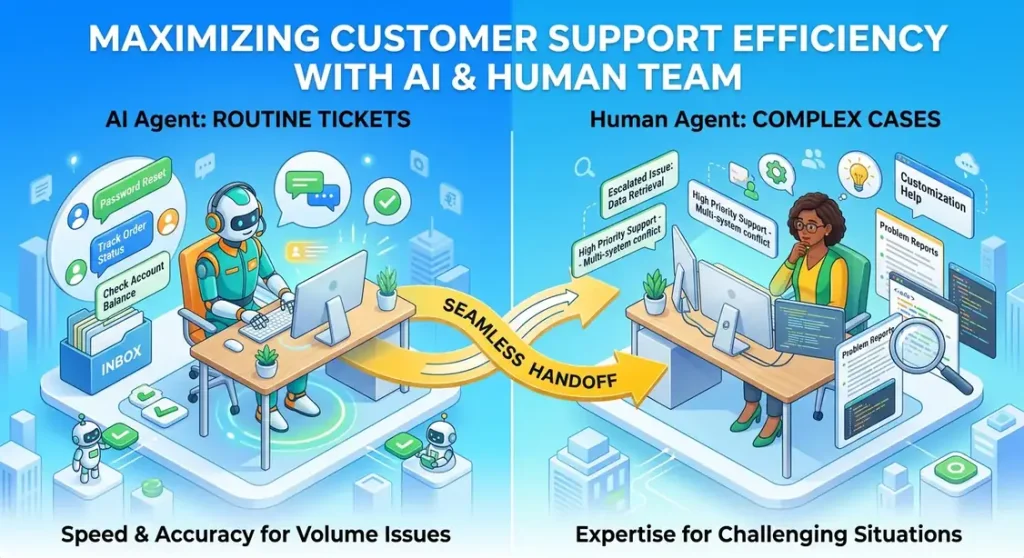
When an autonomous agent reaches the limits of its capability, it needs to escalate to a human. NemoClaw supports context-rich handoff, passing the complete conversation history, diagnostic steps already taken, and relevant account information to the human agent.
This eliminates the most frustrating part of AI-assisted support: the customer having to repeat everything when they get transferred. The human agent picks up exactly where the AI left off, with full visibility into what was already tried.
Multilingual, Always-On Global Support
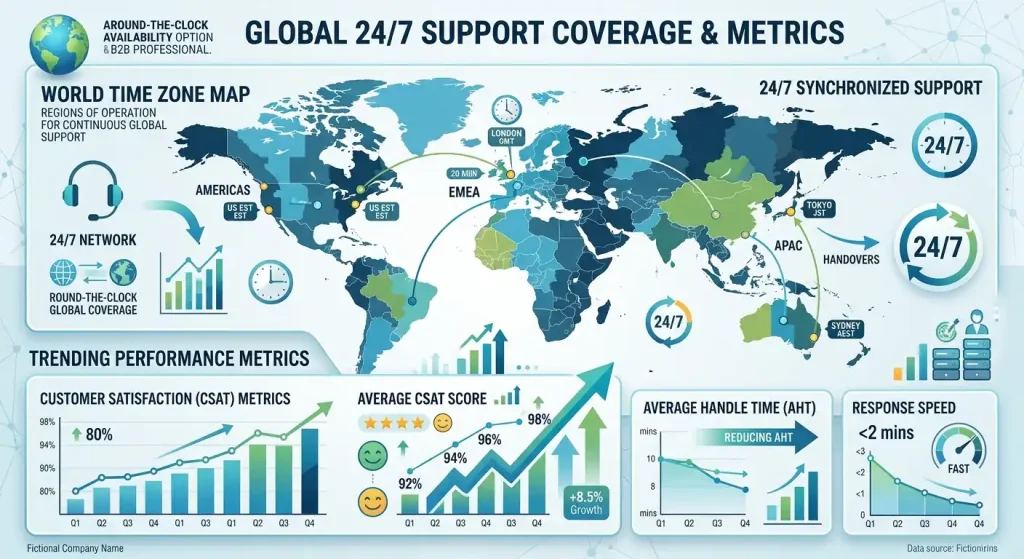
NemoClaw agents run 24/7 and support multilingual interactions out of the box. For businesses serving global customers across time zones, this means consistent support quality at 3 AM on a Saturday — something that has traditionally required expensive follow-the-sun staffing models.
The Enterprise Partners Already Building on NemoClaw
The partner list for NVIDIA’s Agent Toolkit and NemoClaw reads like an enterprise software who’s who. Understanding what these partners are doing reveals where customer support AI is heading.
Salesforce is integrating Nemotron models into its Agentforce platform. This means Salesforce customers could soon run autonomous support agents powered by NVIDIA’s infrastructure, with enterprise security controls baked in. If your CRM is Salesforce, NemoClaw-powered agents may arrive through your existing vendor relationship.
ServiceNow is another key partner. Their IT service management and customer service management platforms handle millions of support tickets daily across enterprises. NemoClaw integration could transform ServiceNow from a ticket routing system into an autonomous resolution platform.
Adobe is focused on agentic creative and marketing workflows, but the customer experience implications are clear. Imagine support agents that can not only resolve technical issues but also generate personalized onboarding materials or troubleshooting guides on the fly.
The pattern across all these partnerships is consistent: established enterprise platforms are adding autonomous agent capabilities powered by NemoClaw’s secure infrastructure. The support tool landscape is shifting from “software that helps humans help customers” to “software that autonomously helps customers, with humans as the escalation layer.”
What This Means for SMBs and Mid-Market Companies
Here is the question every small and mid-market business leader should be asking: Does NemoClaw matter to us, or is this just an enterprise play?
The honest answer is both.
NemoClaw itself is enterprise infrastructure. Installing it requires CLI commands, GPU hardware, and technical expertise that most SMBs do not have in-house. A 50-person e-commerce company is not going to self-host an OpenShell sandbox running Nemotron models on a DGX Spark. That is simply not realistic.
But the downstream effects of NemoClaw will absolutely reach SMBs. Here is how.
The Technology Trickles Down Through Platforms
When NVIDIA builds secure agent infrastructure and partners like Salesforce and ServiceNow adopt it, the technology eventually reaches SMBs through the platforms they already use. The same autonomous agent capabilities that a Fortune 500 company deploys on dedicated hardware today will be available as managed cloud features from SaaS providers within 12 to 18 months.
For SMBs, the strategic move is not to adopt NemoClaw directly. It is to choose platforms positioned to integrate with this new infrastructure while keeping deployment simple and accessible.
No-Code Platforms Become More Valuable, Not Less
Some might assume that open-source agent infrastructure makes no-code chatbot platforms obsolete. The opposite is true. As the underlying AI infrastructure becomes more powerful and more complex, the value of platforms that abstract away that complexity increases.
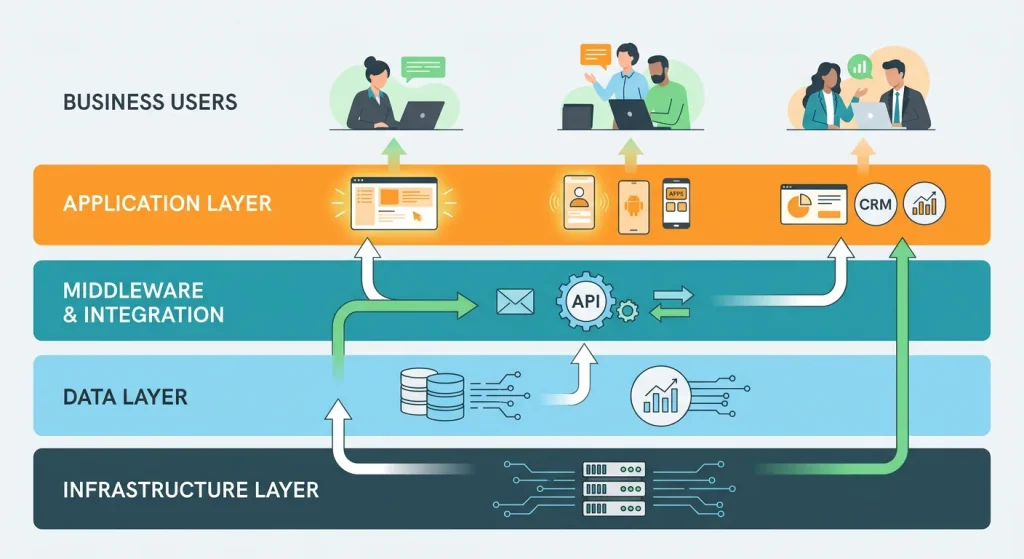
Consider the analogy: AWS made cloud computing infrastructure available to everyone. But Shopify — which runs on AWS — became a $100 billion company by making e-commerce accessible to people who would never configure an EC2 instance. The infrastructure layer and the application layer serve different customers.
Platforms like ChatMaxima operate at the application layer. They provide no-code chatbot builders, multichannel deployment across WhatsApp, web, and social media, and integrations with existing business tools. NemoClaw operates at the infrastructure layer. These are complementary, not competing.
The businesses that win in 2026 are the ones that get autonomous AI agent capabilities without needing a DevOps team to deploy them. That is exactly the gap that no-code platforms fill.
The Competitive Landscape Is Shifting Fast
NemoClaw does not exist in a vacuum. Every major AI company is racing to own the autonomous agent layer, and the implications for customer support AI are significant.
OpenAI is pushing cloud-hosted AI agents through its Operator platform. The approach is fundamentally different from NemoClaw’s local-first, open-source model. OpenAI’s agents run in the cloud on proprietary infrastructure. NemoClaw’s agents run locally with open-source models, connecting to the cloud only when needed and only within policy constraints.
Microsoft Copilot Studio targets the enterprise agent builder market directly. It integrates deeply with the Microsoft 365 ecosystem, giving it a natural advantage for companies already committed to Microsoft’s stack. But it is a closed platform tied to Azure infrastructure.
Anthropic’s Claude and its Model Context Protocol (MCP) compete at the model and protocol layer. MCP is gaining traction as a standard for how agents interact with external tools, and some see it as a potential rival to NemoClaw’s approach to agent-tool integration.
For customer support teams evaluating their options, the key question is not “which agent platform wins?” It is “how do we get autonomous AI support capabilities in a way that is secure, affordable, and does not lock us into one vendor?”
This is where the open-source nature of NemoClaw becomes strategically important. Because it is open-source and hardware-agnostic, NemoClaw reduces vendor lock-in risk. Businesses — and the platforms that serve them — can build on NemoClaw without being trapped in a single ecosystem.
What the “Agents-as-a-Service” Shift Means for Your CX Strategy
Jensen Huang’s framing of “every SaaS company becoming an agentic company” deserves unpacking. He is describing a fundamental change in how software delivers value.
Today, your customer support stack probably includes a helpdesk (Zendesk, Freshdesk, Intercom), a chatbot tool, maybe a knowledge base, and some workflow automation. These tools give your team capabilities — the ability to route tickets, deflect common questions, and track metrics.
In the agentic model, your support stack includes autonomous agents that deliver outcomes — resolved tickets, satisfied customers, proactive issue detection — with your team overseeing and handling edge cases.
This shift has specific implications for how you should think about your CX investments in 2026:
Invest in Platforms That Can Evolve
The worst position to be in is locked into a static chatbot tool that cannot integrate with autonomous agent infrastructure as it matures. When evaluating customer support AI platforms, ask vendors directly: What is your roadmap for autonomous agent capabilities?
Platforms like ChatMaxima that already combine AI-powered chatbots with multichannel deployment and flexible integrations are better positioned to add autonomous agent capabilities than platforms built around rigid scripted workflows.
Prioritize Data Readiness
Autonomous agents are only as good as the data they can access. If your knowledge base is outdated, your customer data is siloed, and your internal documentation is scattered across Google Docs and Notion, no agent platform — NemoClaw-powered or otherwise — will perform well.
The most impactful thing you can do right now is consolidate and clean your support knowledge base. Structure your FAQs, document your processes, and organize your customer data. This is the foundation that any autonomous agent will need.
Plan for Human-Agent Collaboration, Not Replacement
NemoClaw’s architecture explicitly includes human handoff as a core feature. This is not accidental. Even the most capable autonomous agents need human oversight, especially in customer support where empathy, judgment, and exception handling matter.
The businesses that get the best results from AI support will be the ones that design their workflows around human-agent collaboration: agents handle the routine volume while humans focus on complex, high-value, and emotionally sensitive interactions.
Five Actions CX Leaders Should Take Right Now
NemoClaw is in early preview. You do not need to adopt it today. But you do need to start positioning your customer support operation for the agentic future it represents.
1. Audit Your Current AI Support Capabilities
Map out what your existing chatbot or AI support tool can actually do today versus what an autonomous agent could do. Identify the gaps — chances are, your current tool handles FAQ deflection but cannot perform multi-step troubleshooting, access backend systems, or hand off context cleanly. Understanding these gaps tells you where to focus investment.
2. Evaluate Platforms on Integration Flexibility
Whether you are already using a platform like ChatMaxima or evaluating alternatives to your current provider, prioritize integration flexibility. Can the platform connect to your CRM, your knowledge base, your order management system? Can it support new AI models as they emerge? Platforms with open architectures will adapt to the agentic shift faster than closed ecosystems.
3. Start Small with Autonomous Workflows
You do not need NemoClaw to begin experimenting with autonomous support workflows. Identify one high-volume, low-complexity support category — password resets, order status inquiries, account updates — and deploy an AI agent that handles it end-to-end. Measure resolution rates, customer satisfaction, and escalation frequency. Build organizational confidence with data.
4. Address Data and Knowledge Base Gaps
As discussed above, autonomous agents need clean, structured, accessible data. Dedicate resources to knowledge base maintenance now. It will pay dividends regardless of which agent platform you eventually adopt.
5. Monitor NemoClaw’s Progression from Alpha to GA
NemoClaw is alpha software today. Track its official documentation and the partner ecosystem announcements. When it reaches general availability, the customer support AI market will accelerate rapidly. Being prepared beats being reactive.
The Bottom Line for Customer Support in 2026
NVIDIA NemoClaw represents a structural shift in customer support AI, not a product launch to react to. It signals that the infrastructure for autonomous AI agents is becoming open-source, enterprise-grade, and available to every platform builder in the ecosystem.
For enterprises with the engineering resources to self-host, NemoClaw offers a path to secure, policy-controlled autonomous agents running on local hardware. For the vast majority of businesses — the SMBs and mid-market companies that power the global economy — the impact will come through the platforms they already use as those platforms integrate NemoClaw’s capabilities into managed, accessible experiences.
The strategic response is clear. Choose customer support platforms that are built for integration and evolution. Invest in data readiness. Start experimenting with autonomous workflows today. And position your team for a future where AI agents handle the volume while humans handle the moments that matter.
If you are evaluating your customer support AI options for 2026, ChatMaxima offers a no-code platform with multichannel deployment and flexible integrations — exactly the kind of accessible, adaptable tool that bridges today’s chatbot capabilities with tomorrow’s autonomous agent future.
The agentic era of customer support is not coming. It arrived on March 16, 2026. The question is whether your business is ready for it.