
Every business that discovers WhatsApp marketing goes through the same arc. The first campaign gets open rates email marketers dream about. The second and third do too. So the calendar fills up, the broadcasts get bigger, and a few weeks later messages stop delivering, the quality rating turns yellow, and someone is searching “why is my WhatsApp number blocked.”
The frustrating part is that none of it is random. Meta publishes the rules, enforces them mechanically, and gives you dashboards that show trouble coming days before it arrives. WhatsApp campaign frequency is a solved problem if you understand the three systems watching every broadcast: your messaging limit tier, your quality rating, and the per-user frequency caps Meta applies on the customer’s behalf.
This guide covers all three, gives you concrete frequency benchmarks by audience type, and lists the warning signs to act on before a block ever happens.
The Three Systems That Decide Your Fate
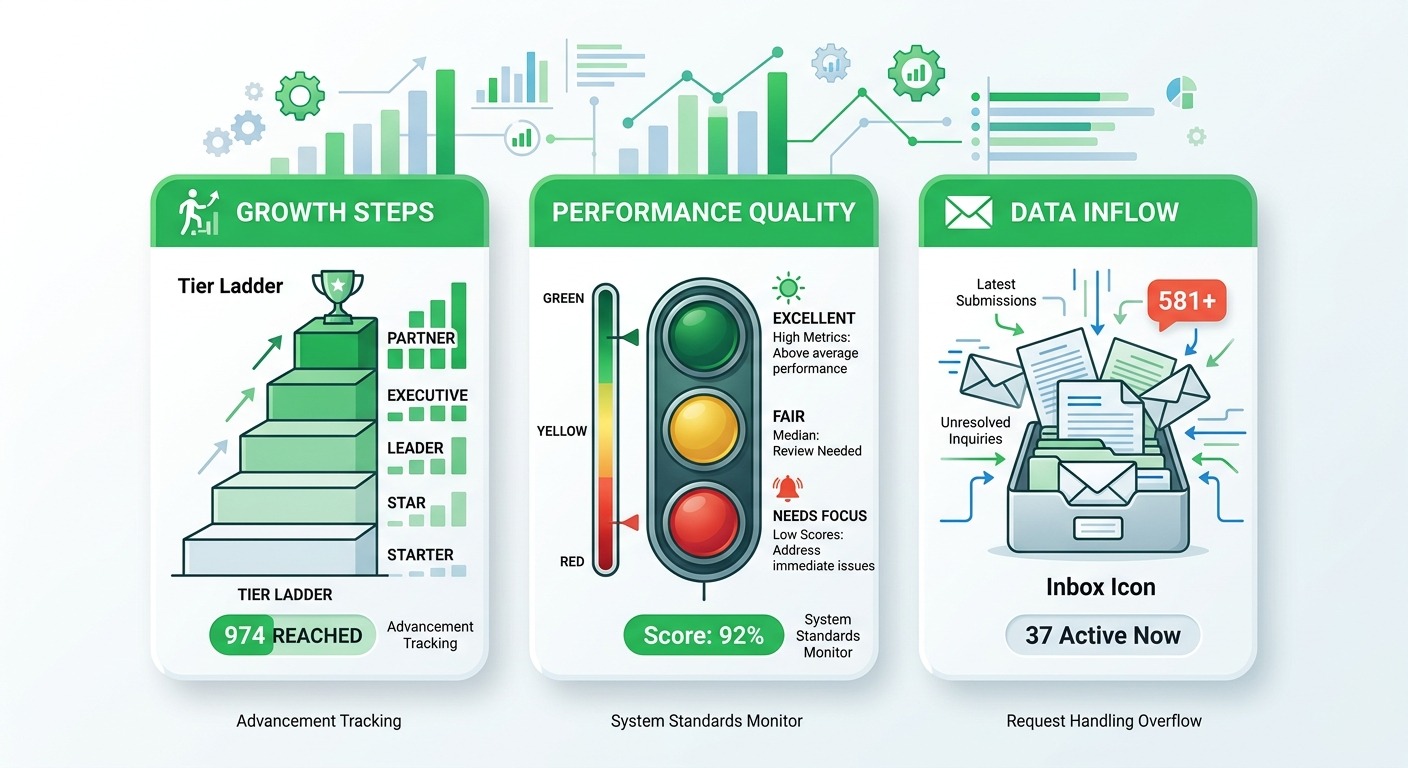
1. Messaging limit tiers. Every WhatsApp Business number has a rolling 24-hour cap on how many unique customers it can open marketing conversations with. Unverified accounts start at 250 unique users per day; verified business portfolios start around 1,000 and can climb to 10,000, 100,000, and effectively unlimited. Upgrades happen automatically as you message more users with sustained quality, with reviews on a cycle of hours, not weeks. Downgrades happen the same way, in reverse, when quality slips.
2. Quality rating. Your number carries a quality state (green, yellow, red) driven by how recipients react to your messages: blocks, reports, and increasingly whether people actually read what you send. Sustained negative signals pause individual templates, cap your tier, and in the worst case restrict the number. Meta has also become aggressive at the template level: a campaign can be sampled as it sends, and a template that draws poor engagement in the first slice of sends can be paused before the rest of your list receives it.
3. Per-user frequency caps. This is the one most marketers have never heard of, and it explains the mystery failures. Meta limits how many marketing template messages any individual user receives per day, summed across every business messaging them. When a customer has hit their ceiling, your message is silently dropped with error 131049 (“message not delivered to maintain a healthy ecosystem”). You did nothing wrong; the customer’s marketing inbox was simply full. Highly engaged customers have looser ceilings; users who rarely engage with marketing have tight ones.
The strategic takeaway from all three systems is identical: Meta rewards messages people want and punishes messages people ignore. Frequency is just the dial that controls which side you are on.
The Honest Frequency Benchmarks
There is no single magic number, but after enough campaigns across enough industries the ranges are clear. Calibrate by relationship depth, not by how much you have to announce:
Cold-ish lists (opted in, but little engagement history): 2 to 4 campaigns per month. One campaign a week is the ceiling here, and even that assumes each message carries genuine value: an offer, restock, or update the customer plausibly wants. This is where most businesses should start.
Engaged customers (recent purchases, active conversations): 4 to 8 per month. Customers who buy from you and reply to you tolerate, and often welcome, weekly-plus contact. Their engagement also protects you: reads and replies feed your quality rating.
Transactional-plus (order updates with a marketing angle, replenishment reminders): governed by the event, not a calendar. A reorder reminder timed to when the product runs out does not feel like marketing, and its engagement numbers prove it.
Hard ceiling for everyone: if two consecutive campaigns to a segment go unread by most of it, stop sending to that segment. Read-rate decay is now a direct quality input, which means continuing to blast an unengaged segment actively damages your ability to reach the engaged one.
Two structural rules matter more than any weekly count:
- Segment before you schedule. The same message at the same frequency is spam to one segment and service to another. Frequency planning per segment is the entire game
- Suppress ruthlessly. Remove non-readers from marketing lists after 60 to 90 days of silence. A smaller list that reads you is worth more, in deliverability terms, than a big one that ignores you
The Warning Signs, in the Order They Appear
Blocks almost never come out of nowhere. The sequence is predictable, and each stage gives you time to react:
Stage 1: Read rates sag. Your campaigns still deliver, but the read percentage slides. This is the earliest and most recoverable signal. Fix: tighten segments, improve the first line (it is your preview text), rethink timing.
Stage 2: 131049 errors climb. A growing share of sends silently fail on per-user caps. Your audience is being marketed to death, by you or by everyone. Fix: reduce frequency, lean on engaged segments, move promotional weight into conversations customers already opened.
Stage 3: Quality rating turns yellow. Blocks and reports are accumulating. Fix: pause marketing sends for several days, let the rating recover, and audit which campaign or segment triggered the damage before resuming at lower frequency.
Stage 4: Templates get paused. A specific template drew enough negative signal that Meta stopped it mid-flight. Fix: do not clone the template with new wording and resend, which Meta detects and treats as evasion. Rewrite the offer itself.
Stage 5: Tier downgrade or number restriction. The account-level penalty. At this point recovery takes weeks of small, high-quality sending. Everything in this guide exists to keep you out of stage 5.
Monitor the first two stages weekly in your dashboard. Businesses that watch read rates and delivery errors essentially never reach stage 5.
Frequency Tactics That Buy You Headroom
Ride the 24-hour window. When a customer replies or messages you, a service window opens where conversation is free-form and does not consume marketing template quota. A campaign designed to start conversations (a question, a choice, a “reply YES for the catalog”) converts one paid marketing touch into a full dialogue, and replies are the strongest positive quality signal there is. Our Click-to-WhatsApp ads playbook is built on the same principle from the ads side.
Let AI answer the replies you generate. The flip side of conversation-starting campaigns is reply volume. If campaign replies sit unanswered overnight, the engagement you paid for dies; an AI agent that qualifies and responds instantly is what makes high-frequency conversational campaigns operationally survivable, as we covered in how AI agents qualify ad leads 24/7.
Schedule for the customer’s clock. Delivery at 9 pm local versus 9 am changes read rates materially, and read rates are now a survival metric. Spread sends across time zones and test day-of-week per segment rather than blasting everyone at your office hour.
Mind the US pause. Marketing templates to US (+1) numbers have been paused by Meta since April 2025. If your list spans geographies, US contacts need utility and conversational strategies instead; budget and frequency plans should exclude them from marketing broadcasts entirely.
Use pricing to your advantage. Frequency discipline pairs with cost discipline: Meta’s newer bidding options can cut your per-message marketing costs substantially, which we broke down in the WhatsApp Max-Price bidding guide. Cheaper sends are not a license to send more; they are margin you keep when you send right.
A Sane Weekly Rhythm to Copy
For a typical SMB with an engaged list, this cadence stays comfortably inside every limit:
- Week 1: One value campaign to the full engaged list (new arrivals, genuinely useful content)
- Week 2: One targeted campaign to a behavioral segment (browsers, past buyers of a category)
- Week 3: One conversational campaign designed to elicit replies, with AI or agents ready to respond
- Week 4: No broadcast. Transactional and event-triggered messages only, plus list hygiene: suppress the silent, review read rates, check error trends
That is 3 broadcasts a month to any individual customer at most, each to a progressively sharper audience, with a built-in cooldown and maintenance week. Businesses running this rhythm see quality ratings stay green while their reachable audience grows, which is the actual goal: frequency is not how often you are allowed to send, it is how often you remain welcome.
Getting the Infrastructure Right
Everything above is easier with tooling that shows you the signals: per-campaign read rates, delivery errors broken out by code, quality rating history, and segments built on real conversation behavior rather than static tags. ChatMaxima’s campaign tools handle segmented broadcasts, scheduled sends across time zones, and AI agents that pick up every reply your campaigns generate, so the engagement you earn actually compounds. If your current setup shows you little more than “sent,” have a look at our plans before your next campaign goes out.