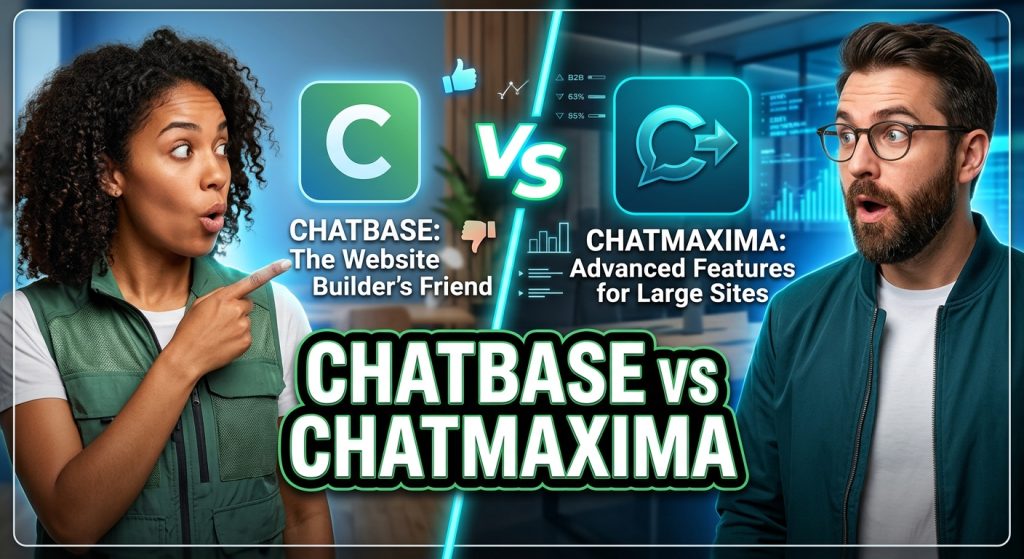
If you are weighing ChatMaxima vs Chatbase, you are probably at the point where a website Q&A bot is no longer enough. Chatbase does one thing well: it trains an AI agent on your documents and drops a chat widget on your site. That is a clean starting point. The trouble starts when your support and sales conversations spill onto WhatsApp, Instagram, and Facebook, when your message-credit bill starts climbing, and when you need a human to step in mid-conversation.
This is a focused head-to-head between the two platforms. If you are still building a shortlist and want to see how ChatMaxima stacks up against the whole field, read our roundup of the best Chatbase alternatives first, then come back here for the direct comparison.
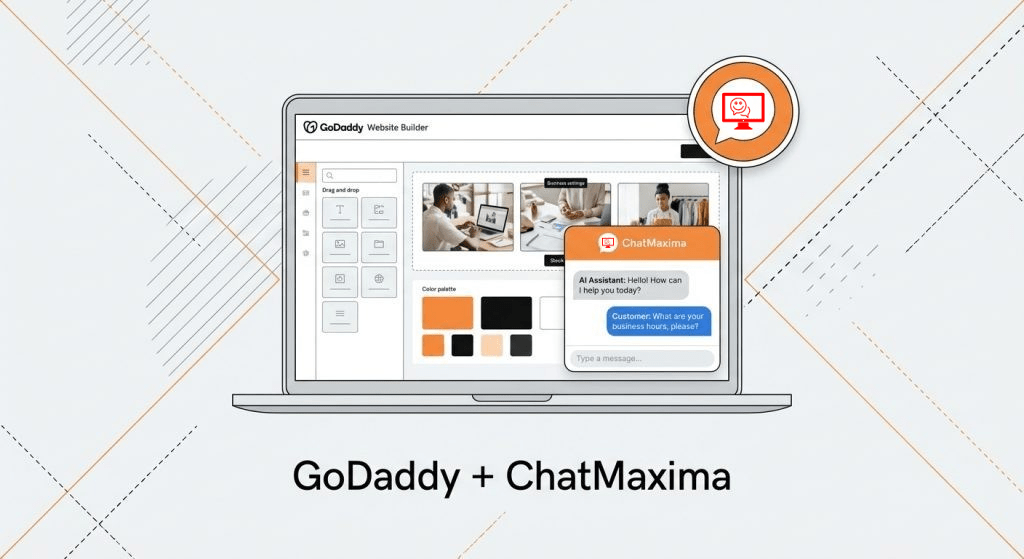
ChatMaxima is a full omnichannel conversational platform: an AI chatbot builder, a shared team inbox, a lightweight CRM, and native WhatsApp Business API access in one place. Chatbase is a strong website-support agent. ChatMaxima is the system you graduate to when the whole customer conversation, across every channel, has to work.
This guide breaks down 10 concrete reasons growing businesses choose ChatMaxima over Chatbase in 2026, with an honest look at where Chatbase still makes sense. No fluff, just the differences that change your monthly bill and your customer experience.
ChatMaxima vs Chatbase at a glance
Here is the short version before we get into the detail.
| ChatMaxima | Chatbase | |
|---|---|---|
| Best for | Omnichannel support, sales, and lead capture | Website Q&A and doc-based support agents |
| Channels | WhatsApp, Instagram, Messenger, website, Telegram, web widget | Website widget first, limited channels |
| Pricing model | Predictable plans, not metered per message | Message credits that scale with volume |
| Free plan | Yes, with real channel access | Yes, roughly 50 message credits, 1 agent |
| Human handoff and shared inbox | Built in, with team roles | Limited, add-on dependent |
| WhatsApp Business API | Native and official | Bolt-on, not the core focus |
| Visual flow builder | Drag and drop, no-code plus AI | AI answers, lighter flow control |
| Built-in CRM and lead capture | Yes | No, needs external tools |
| Voice and mobile app SDK | Yes | No |
| Real-time language translation | Built in | Limited |
| Ready-made templates and marketplace | Yes | No |
Now the reasons behind those rows.
1. ChatMaxima is truly omnichannel, Chatbase is website-first
Chatbase was built around a single idea: a chat widget on your website, answering from your knowledge base. It has added a few channels over time, but the product still centers on the website use case. If most of your customers reach you on WhatsApp or Instagram DMs, you are fitting a website-shaped tool onto a messaging-shaped problem.
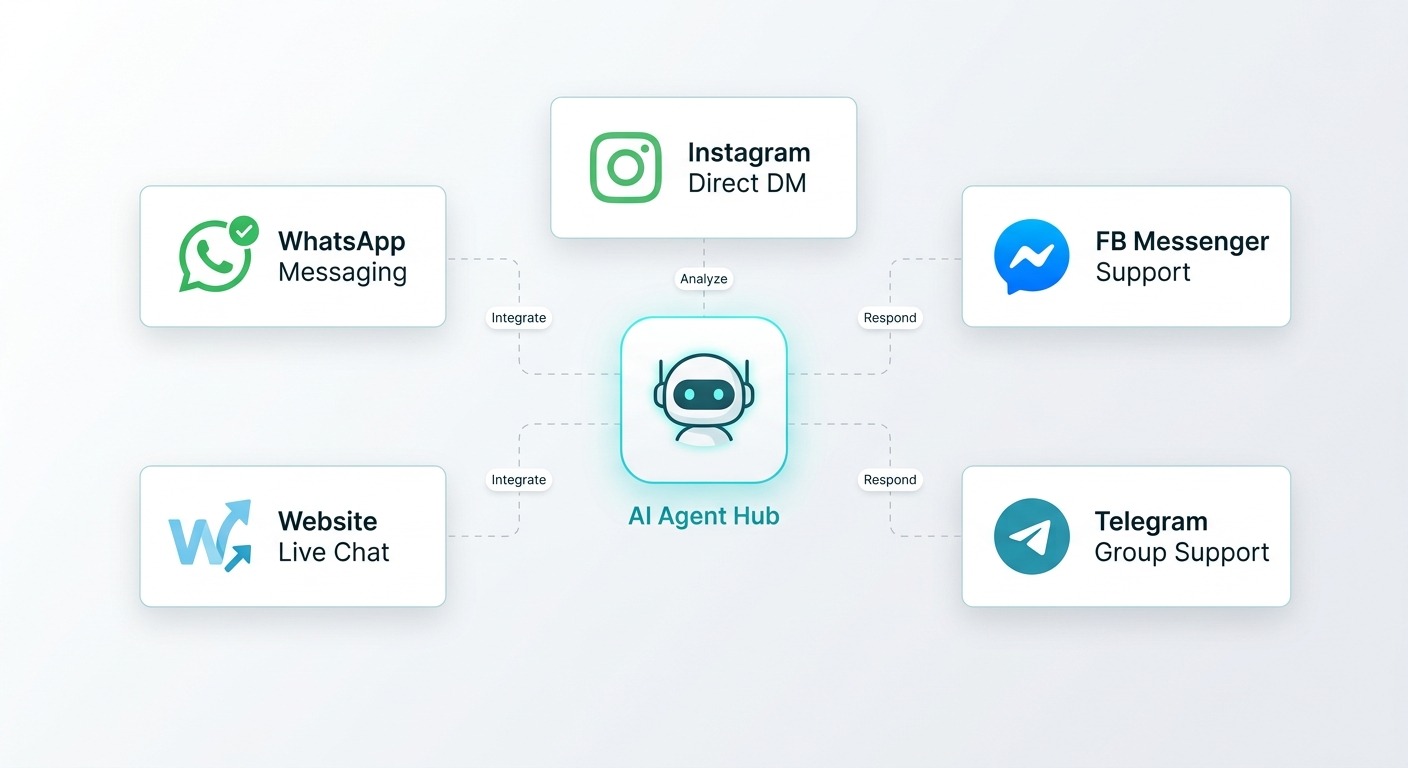
ChatMaxima treats every channel as first class. The same AI agent and the same team inbox handle WhatsApp, Instagram, Facebook Messenger, Telegram, your website widget, and more without you rebuilding the bot for each one. A customer can start on your website, continue on WhatsApp two days later, and your team sees one continuous conversation.
For most growing businesses in 2026, this is the deciding factor. Your customers are already on messaging apps. A platform that meets them there, instead of pulling them back to a web widget, wins more conversations. If you want to see how this plays out against other well-known tools, our ChatMaxima vs Intercom vs Tidio comparison walks through the same omnichannel logic.
2. Predictable pricing beats message credits that balloon
This is where the Chatbase pricing model quietly hurts at scale. Chatbase sells message credits. Public plans run from a free tier with a handful of credits, to Hobby around 40 dollars a month, Standard around 150 dollars a month for roughly 4,000 message credits, and Pro in the several-hundred-dollar range, plus add-ons like extra credits, custom domains, white label, and analytics that stack on top.
Do the math on the Standard plan and you land near 0.0375 dollars per message. That has been a recurring complaint in public discussions about Chatbase costs, where users point out the markup over raw model costs once volume grows. The problem with credit-metered pricing is that your bill is tied to your success. The more customers you help, the more you pay per conversation, and busy months bring surprise overages.
Play it forward with a simple scenario. Say you run 10,000 AI conversations in a busy month. On a credit-metered model, that volume eats through your included credits and pushes you into overage pricing, and the add-ons you switched on for custom domains, white label, and analytics are still billing on top. Your invoice for a good month is higher than your invoice for a quiet one, which is the opposite of what you want when you are trying to scale support without scaling cost.
ChatMaxima uses predictable plan-based pricing rather than per-message metering, so your cost does not spike every time a campaign lands or a product goes viral. You can budget for the year instead of watching a credit meter, and the shared inbox, CRM, and channels are part of the plan rather than a stack of separate add-ons. Check the current numbers on the ChatMaxima pricing page, but the structural point stands: growing volume should lower your cost per conversation, not raise it.
What Chatbase actually costs in 2026
To be concrete, here is roughly how Chatbase pricing is structured at the time of writing. Chatbase publishes tiered plans and sells message credits, with several capabilities parked behind paid add-ons. Exact numbers shift, so treat this as the shape of the model rather than a locked quote.
| Chatbase plan | Approx. price | Included message credits | Notes |
|---|---|---|---|
| Free | $0/mo | ~50 credits, 1 AI agent | Testing only, not for production |
| Hobby | ~500 credits | 1 agent, limited members | |
| Standard | ~4,000 credits | Small team, ~$0.0375 per message | |
| Pro | Larger credit pool | For higher volume | |
| Enterprise | Custom | Custom | Contact sales |
On top of the plan, common add-ons include extra message credits (around $12 per 1,000), a custom domain (around $59/mo), white-label branding removal (around $39/mo), and extra analytics (around $39/mo). Individually these look small. Together, on a Standard or Pro plan with real traffic, they quietly turn a $150 headline into a much larger effective bill, which is exactly the pattern users flag in public pricing threads.
The takeaway is not that Chatbase is overpriced for what it does. It is that the cost is variable and add-on heavy, so your bill is hardest to predict precisely when your business is doing well. A plan-based platform where channels, inbox, CRM, and analytics are included removes that uncertainty.
3. Native WhatsApp Business API, not a bolt-on
WhatsApp is the primary support and sales channel for a huge share of businesses, especially outside North America. Chatbase can touch WhatsApp, but it is not the heart of the product, and the setup reflects that.
ChatMaxima is built as an official WhatsApp Business API platform. That means verified business sending, template messages, broadcast campaigns, click-to-WhatsApp ad handling, and the full 2026 messaging rules handled for you. Your AI agent qualifies leads inside WhatsApp, hands off to a human when needed, and everything is logged against the same contact record.
If WhatsApp is anywhere near the center of your customer conversations, this alone settles the ChatMaxima vs Chatbase question. A website Q&A tool with a WhatsApp bolt-on cannot match a platform that was designed around the WhatsApp API from day one.
It also changes what your AI can do proactively. Because ChatMaxima owns the WhatsApp connection, you can run outbound template campaigns, re-engage abandoned carts, and handle click-to-WhatsApp ads with the same AI agent that answers inbound questions. The conversation is two-way and continuous, not just a reactive widget waiting for someone to visit your site.
4. A visual builder that goes beyond document Q&A
Chatbase is excellent at one behavior: read the docs, answer the question. That covers a lot of support tickets. But real customer journeys are not just questions and answers. They branch. They collect information. They book appointments, send invoices, route to the right team, and trigger follow-ups.
ChatMaxima pairs AI answers with a drag-and-drop visual flow builder. You can design multi-step flows without code: capture a lead, ask qualifying questions, check availability, take a payment, or escalate to a human, all in one canvas. The AI handles the open-ended conversation, and the flow handles the structured steps. You are not limited to whatever the model decides to say.
This matters when your bot has a job beyond answering FAQs. A lead-qualification flow, a booking assistant, or a checkout helper needs deterministic steps. Our lead generation chatbot setup guide shows the kind of structured flow that a pure Q&A tool cannot build.

5. Human handoff and a shared team inbox are built in
Ask any support leader what breaks their AI chatbot rollout, and it is the handoff. The bot handles the easy 70 percent, then a hard question arrives and the customer needs a person. If that handoff is clumsy, the whole experience collapses.
Chatbase is agent-first, and full live-agent workflows lean on add-ons and integrations. ChatMaxima ships a shared team inbox as a core feature. When the AI reaches its limit, it hands the conversation to a human on your team, with full context, on the same screen. Agents have roles and assignments, conversations can be transferred, and nothing gets dropped between the bot and the human.
This is the difference between an AI widget and an AI-first support desk. If you want the reasoning behind moving your whole support operation onto this model, read our take on AI-first customer support replacing ticketing systems. The short version: the bot and the humans have to live in one inbox, or the seams show.
6. A built-in CRM keeps every lead in one place
Here is a quiet cost of the website-Q&A model. Chatbase answers the question, but the lead data often lives nowhere useful. You end up exporting, syncing, or wiring the bot into a separate CRM to actually follow up.
ChatMaxima includes a built-in CRM and lead capture system. Every conversation, on every channel, is attached to a contact record with attributes, tags, and history. The AI qualifies the lead, the CRM stores it, and your sales team works it, without a third tool in the middle. For a growing business, that is fewer subscriptions and one source of truth for who your customers are.
That connected data also makes your AI smarter over time, because it can reference past conversations and known attributes instead of starting cold every session. A standalone Q&A bot with no memory of the customer cannot do that.
7. Deeper automation and integrations for real workflows
Answering questions is table stakes. The value in 2026 is in what happens after the answer: creating a ticket, updating a spreadsheet, charging a card, triggering an email, or kicking off a workflow in another system.
ChatMaxima connects to your stack through native integrations, webhooks, and automation tools including n8n, so your chatbot is an action layer, not just a talking layer. It can push data to your other apps, pull live data back into the conversation, and automate the follow-through. Chatbase focuses on the conversation itself and leans on you to bridge the rest.
If you are the kind of team that would otherwise consider building this yourself on raw model APIs, it is worth reading ChatMaxima vs building your own chatbot on the OpenAI API before you commit engineering time. The automation and integration plumbing is most of the work, and it is exactly what a platform saves you.
8. Voice and a mobile app SDK extend beyond chat
Text chat is not the whole picture anymore. Customers call, and increasingly they expect support inside your mobile app, not just on your marketing site.
ChatMaxima extends past the chat widget with voice capabilities and a mobile app SDK, so you can embed AI-powered support directly inside your iOS and Android apps and handle voice interactions, not just typed messages. Chatbase does not offer this. For product-led and app-first businesses, in-app AI support is quickly becoming a requirement rather than a nice-to-have.
The mobile SDK point deserves a beat of its own. If you have an app, your most engaged customers already live inside it, and bouncing them out to a browser widget or an email form to get help is friction you can feel in your retention numbers. In-app AI support keeps the whole interaction inside your product, with the customer’s context already loaded. That is a category of experience a website-first tool simply cannot reach.
9. Your AI speaks every customer’s language
Growing businesses rarely serve one language. You might sell across regions, or serve a single city where customers message in three different languages depending on the hour. Chatbase can answer in multiple languages, but ChatMaxima builds the multilingual experience into the conversation itself.
ChatMaxima offers real-time automatic translation so a customer can write in their own language and your human agent can reply in theirs, with translation happening in the middle. The AI understands and responds across languages, and when a person takes over, the language barrier does not come back with them. This is a meaningful edge on WhatsApp, where an agent in one country routinely handles customers writing in half a dozen languages.
The practical effect is reach without headcount. You do not need a separate support team per language to deliver a native-feeling conversation. One team, one inbox, and the platform handles the translation layer so nobody on either side has to switch tools or copy text into a translator. For a business expanding into new markets, that is the difference between launching a region next quarter and launching it next year.
10. Ready-made templates and a marketplace get you live in minutes
The last reason is about time to value. With Chatbase, you train an agent on your docs and you are mostly building the behavior yourself. That is fine for a simple FAQ bot, but if you want a booking assistant, a lead-qualification agent, or an ecommerce helper, you start from a blank canvas every time.
ChatMaxima ships ready-made industry templates and a bot marketplace so you can start from a proven flow instead of a blank page. Real estate lead capture, healthcare appointment booking, restaurant ordering, ecommerce support: you pick a template close to your use case, adjust it, connect your channels, and you are live. The chatbot marketplace guide walks through how this shortens deployment from weeks to an afternoon.
There is also a builder angle that matters for technical teams. ChatMaxima can be driven through the Model Context Protocol, which means you can build chatbots directly from Claude, ChatGPT, or Gemini. You describe the bot you want in plain language inside your AI assistant, and it constructs the flow in ChatMaxima. That is a very different starting line from configuring a widget by hand, and it is the kind of forward-looking capability that tells you which platform is investing in where conversational AI is going.
This is the pattern across all 10 reasons. Chatbase solves the website question narrowly and well. ChatMaxima solves the whole customer conversation, wherever, however, and in whatever language it happens.
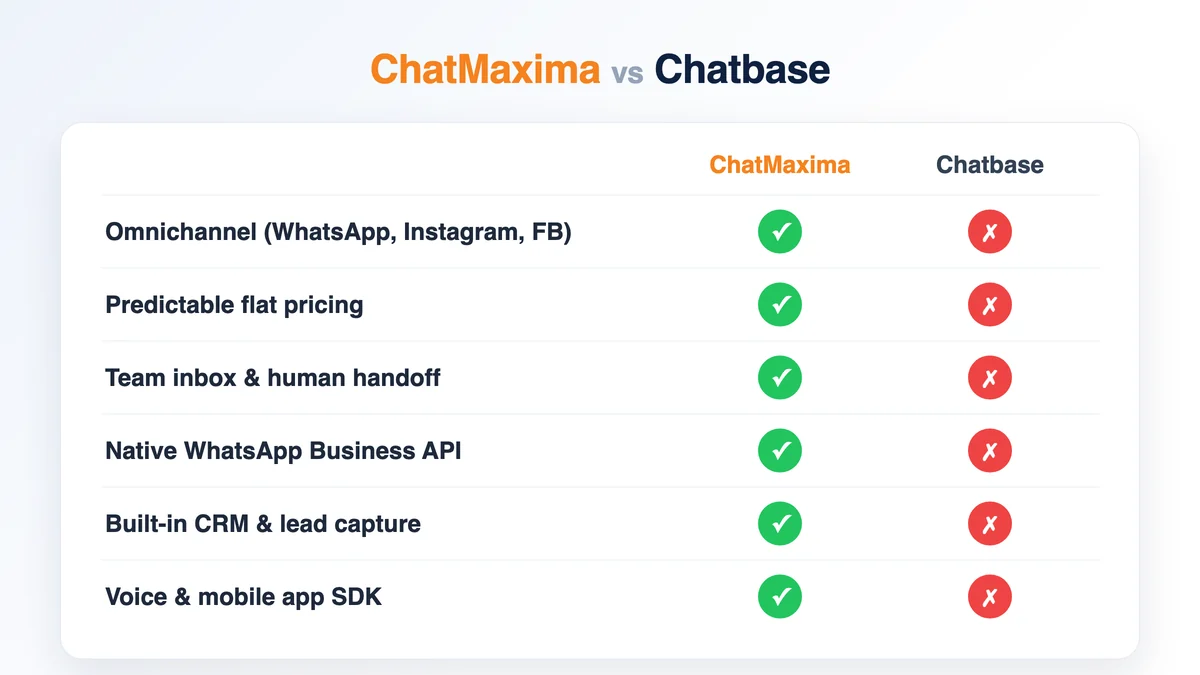
Who should switch from Chatbase to ChatMaxima
Not every business needs to move. But specific profiles almost always outgrow a website Q&A tool, and if you see yourself below, a platform built for the whole conversation will pay for itself quickly.
Ecommerce and WhatsApp-first brands. If customers ask about orders, sizing, and returns on WhatsApp and Instagram, you need native messaging channels, broadcast campaigns, and cart-recovery flows, not a web widget. ChatMaxima runs all of it from one inbox with the AI qualifying and answering before a human steps in.
Agencies and teams managing multiple clients or brands. A per-agent, credit-metered model gets expensive and messy across many accounts. A platform with a shared inbox, team roles, and predictable plans scales without a spreadsheet of credit balances per client.
Support teams that need real human handoff. If your bot has to escalate hard cases to named agents with full context, you need the AI and the humans in the same inbox. This is a core feature in ChatMaxima and an add-on-and-integration exercise in a Q&A-first tool.
Multi-region and multilingual businesses. If your customers write in several languages, real-time translation and one multilingual inbox beat staffing a separate team per language.
App-first and product-led companies. If your most engaged users live inside your mobile app, in-app AI support through an SDK keeps help where the customer already is, instead of bouncing them to a browser.
If none of these describe you, and you genuinely only want a smart FAQ box on a marketing site, you may not need to switch at all. Honesty matters more than a hard sell here.
How to switch from Chatbase to ChatMaxima
Migrating is more of an upgrade than a rip-and-replace, and most teams complete it in a day or two. Here is the practical sequence.
- Bring your knowledge over. Point ChatMaxima at the same sources you trained Chatbase on: your website, help docs, PDFs, and FAQs. The AI agent trains on this content the same way, so your answer quality carries across.
- Start flows from templates. Instead of rebuilding logic from scratch, pick the closest template for your use case and adapt it. This is where a booking, lead-capture, or ecommerce flow gets built in minutes rather than hours.
- Connect your channels. Turn on the ones Chatbase could not fully cover: WhatsApp Business API, Instagram, Messenger, Telegram, and your website widget. This is usually the moment teams realize how much conversation was happening off the website all along.
- Set up human handoff and team roles. Configure who receives escalations, add your agents to the shared inbox, and define assignment rules so nothing gets dropped between the AI and a person.
- Wire up your CRM and integrations. Map the attributes you want captured, then connect the downstream tools, webhooks, or n8n automations that should fire when a conversation reaches a certain point.
- Test both paths, then flip the widget. Run a real conversation through the AI and through a live handoff. Once both feel right, swap your website snippet and keep your new channels running in parallel. There is no hard cutover date you have to hit.
Because you are adding capability rather than losing it, there is little downside risk. Worst case, you run ChatMaxima alongside Chatbase for a week and compare the experience and the bill directly.
When Chatbase might still be the better fit
A fair comparison names the cases where the other tool wins. Chatbase is genuinely good, and for some teams it is the right call.
Choose Chatbase if your needs are narrow: you only want a website Q&A bot trained on your docs, you do not care about WhatsApp or Instagram, you have low and predictable message volume, and you do not need a shared human inbox or a CRM. Its onboarding is quick and its answer quality on documentation is strong. For a solo founder who just wants a smart FAQ widget on a marketing site, Chatbase can be all you need.
The moment any of those constraints break, though, growing businesses hit the ceiling. More channels, more volume, human agents, lead follow-up, real workflows: that is when a switch stops being optional. If you want to compare the full shortlist rather than just this head-to-head, our roundup of the best Chatbase alternatives ranks ChatMaxima against the wider market.
Common questions about switching from Chatbase
Does ChatMaxima have a free plan? Yes. ChatMaxima offers a free tier with real channel access, so you can test AI conversations and the shared inbox before paying, rather than being capped at a few dozen credits.
Is migrating from Chatbase hard? No. Your knowledge base, FAQs, and support content move over as training material, and you rebuild flows in the visual builder. Because ChatMaxima adds channels and a CRM, most teams treat the switch as an upgrade rather than a like-for-like port, and they turn on WhatsApp and the shared inbox at the same time.
Will my AI answers be as good? Yes. ChatMaxima trains AI agents on your content the same way, then adds structured flows, live handoff, and CRM context on top, so answers get better as the system learns each customer.
Is ChatMaxima cheaper than Chatbase? For growing volume, the predictable plan model usually works out cheaper per conversation than message credits plus add-ons. The exact comparison depends on your volume, so check the pricing page against your current Chatbase bill.
The verdict on ChatMaxima vs Chatbase
Chatbase is a capable website Q&A agent, and if that is all you need, it is a reasonable choice. But growing businesses rarely stay in that box. They add channels, they add volume, they add human agents, and they need every conversation to feed one system.
That is why the ChatMaxima vs Chatbase decision keeps landing on ChatMaxima in 2026: omnichannel coverage instead of website-first, predictable pricing instead of ballooning message credits, native WhatsApp instead of a bolt-on, a visual builder and CRM instead of Q&A alone, and human handoff built into the same inbox. It is the platform you do not outgrow after the first busy quarter.
If you are weighing ChatMaxima vs Chatbase, start free, connect WhatsApp and your website, and put a real conversation through both the AI and the human handoff. See the current plans on the ChatMaxima pricing page and build your first AI agent today.