
Just days after WhatsApp opened username reservations worldwide, India has hit the pause button. On July 1, 2026, the Ministry of Electronics and Information Technology, better known as MeitY, issued a formal notice directing Meta not to roll out the WhatsApp username feature in India until consultations are complete and the government’s concerns are addressed. Meta has been given three days to explain, in detail, how the feature works and what safeguards it carries.
This is a significant development for anyone tracking the rollout, and especially for businesses in India that run customer conversations on WhatsApp. The username feature was one of the biggest privacy changes in the app’s history, letting people connect without sharing phone numbers. Now its arrival in India, the platform’s single largest market, is on hold pending a regulatory review.
This post breaks down exactly what the notice says, why the Indian government is worried, what a pause means versus a ban, and what Indian businesses and ChatMaxima customers should actually do while the dust settles. If you want the full background on how usernames work in the first place, start with our complete guide on the WhatsApp username feature and BSUID, then come back here for the India angle.
What MeitY Actually Ordered
The core of the notice is straightforward. MeitY has told Meta to halt the rollout of WhatsApp usernames in India and to explain the feature’s safeguards within three days. An official framed it plainly: Meta “cannot go ahead unless they can assure and convince” the government that the feature will not create new avenues for abuse.
Two things are worth reading carefully here. First, this is a pause tied to a consultation, not a permanent block. The government wants a detailed report on how the privacy update works before it will allow the feature to reach Indian users. Second, the clock is short. A three-day deadline signals that MeitY wants answers quickly rather than letting the matter drift, which suggests the government intends to make a decision on a compressed timeline rather than sitting on it indefinitely.
The notice does not affect how usernames work elsewhere. WhatsApp opened reservations globally on June 29, 2026, and the first country activation waves were scheduled through July, with most of the world following from September. India’s activation is the piece now in question. The reservation mechanics and the underlying business identifier changes are global and continue regardless of this notice.
Why India Is Concerned
The government’s worry is specific and, from a law-enforcement point of view, understandable. The central concern is impersonation and traceability. If people can be reached by a handle instead of a phone number, the government fears that fraudsters could create fake profiles that mimic officials, government agencies, banks, or well-known businesses, then use those handles to run scams. The concern is sharpened by the possibility of doing this with international numbers, which are already a common vector for fraud calls and messages in India and are harder for domestic agencies to trace.
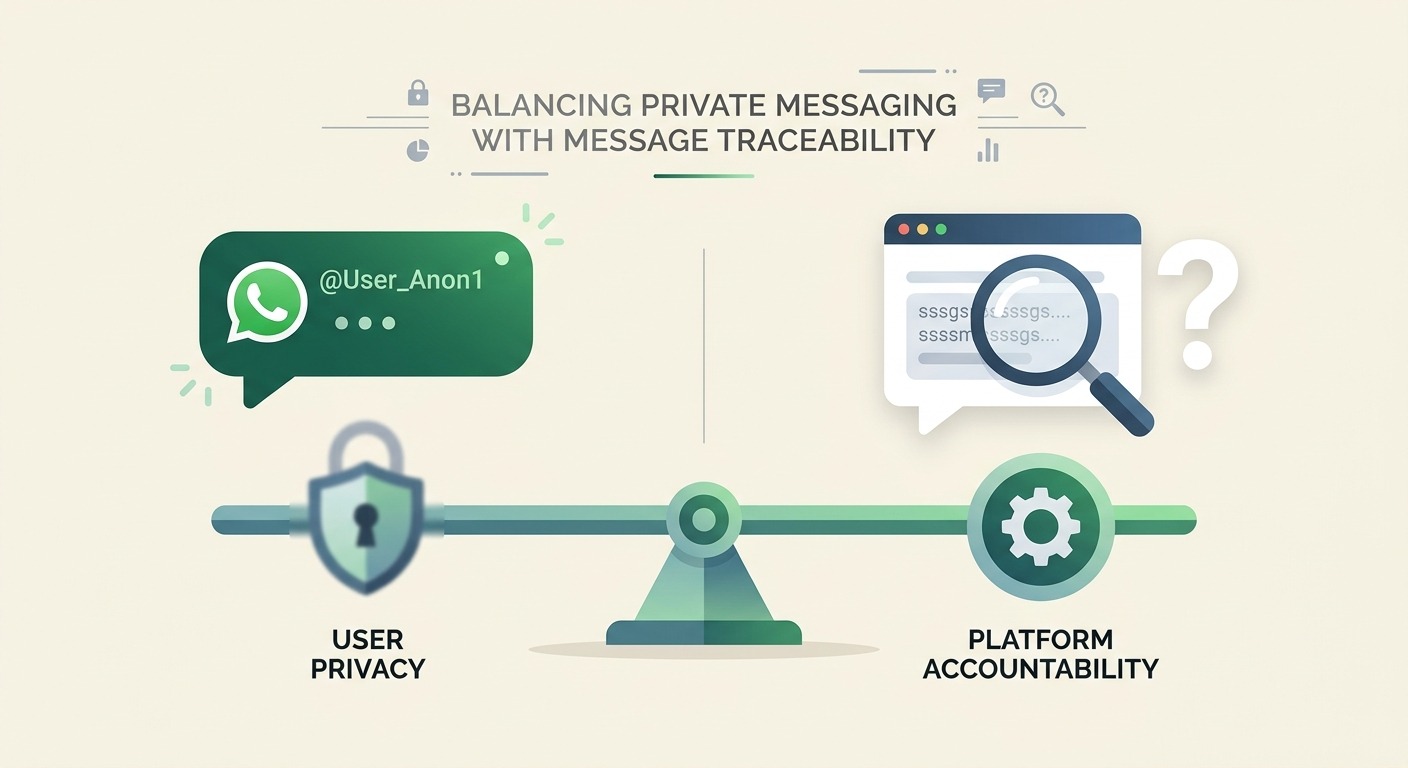
Put simply, the phone number has been doing double duty. It is a privacy liability for ordinary users, which is exactly why WhatsApp built usernames to hide it. But it is also an anchor for accountability, because a number ties an account, however loosely, to a verified SIM and a traceable identity. India’s fear is that removing the number from view in first contact, even though the number still exists behind the scenes, weakens the practical ability to trace a bad actor quickly, and gives impersonators a cleaner surface to operate on.
This is not a fringe worry in the Indian context. Digital payment fraud, fake-KYC scams, and impersonation of government departments are persistent problems, and messaging apps are the delivery channel for many of them. Any change that could make impersonation easier or tracing harder is going to draw regulatory attention. India has shown before that it will move fast on messaging platforms when public-safety concerns arise, as seen when authorities acted against specific channels during sensitive events, a pattern we covered in our look at the Telegram channel ban in India. The username notice fits squarely in that established posture.
The Traceability Tension
To understand why this became a flashpoint, it helps to see the deeper tension. India’s IT Rules require significant social-media intermediaries to enable the identification of the first originator of a message when lawfully ordered. The entire regulatory framework in India leans toward traceability as a precondition for operating at scale. WhatsApp usernames, by design, lean the other way, toward minimizing the personal identifiers that flow between users.
These two directions are not necessarily in conflict, because a username does not actually make an account anonymous. As we explained in the main guide, usernames are contact privacy, not anonymity. WhatsApp and Meta still know the phone number behind every account, a number is still required to register, and lawful processes still run through the company. But the government’s concern is less about the theoretical existence of the number and more about the practical friction of tracing quickly, and about the perception that handles make impersonation easier for the average scam victim to fall for.
That gap between what is technically true, that identity still exists behind the scenes, and what is practically true, that a victim seeing a convincing handle may have less immediate signal that something is off, is exactly what the consultation will have to bridge. MeitY is asking Meta to prove that the safeguards close that gap.
Pause, Not Ban: Why the Distinction Matters
It is easy to read a headline about a government notice and assume the feature is dead in India. That is not what has happened, and the distinction matters for planning.
A pause tied to consultation means the feature is being held at the door while the government reviews it, with a clear path to approval if Meta can address the concerns. Meta has strong incentives to find that path, because India is its largest user base and a market it cannot afford to treat as an afterthought. The most likely outcomes are that the feature launches in India later than in other countries, possibly with additional safeguards specific to the Indian market, such as stronger anti-impersonation checks on handles that resemble government or financial entities, tighter rules around international numbers, or clearer in-app signals that distinguish a verified business from a lookalike.
An outright, permanent ban is the less likely outcome, though it cannot be ruled out if the consultation breaks down. For businesses, the practical takeaway is to plan for a delay in India, not a cancellation. Build on the assumption that usernames will eventually arrive here, just on a later timeline and possibly with India-specific guardrails.
What This Means for the Global Rollout
Nothing about the India notice changes the global picture, and this is an important point that gets lost in the coverage. Username reservations remain open worldwide. The first international activation waves continue on their original schedule. Most critically for businesses, the Business-Scoped User ID change is global and is not paused.
That last point deserves emphasis. The username feature that MeitY halted is the consumer-facing part, the ability for a user to display a handle instead of a phone number. The infrastructure change underneath it, where inbound messages carry a business-scoped identifier and the phone number can be absent, is a separate, platform-wide shift with its own compliance timeline. Even if usernames never activated in India, businesses on the WhatsApp Business API would still need to handle the new identifier, because the change to webhooks and message identity applies regardless of any single country’s rollout status. Our WhatsApp Business API guide covers how the API is structured and why identity changes ripple through every integration.
So the India pause slows one visible piece of the feature in one market. It does not slow the deeper re-architecture of WhatsApp identity that businesses everywhere are adapting to.
What Indian Businesses Should Do Now
If you run customer conversations on WhatsApp from India, here is the honest, practical guidance while the consultation plays out.
First, you do not need to panic or undo anything. No existing WhatsApp Business setup breaks because of this notice. Your bots, broadcasts, and inbox continue to work exactly as before. The notice is about a future consumer feature, not about anything live in your account today.
Second, reserving a business username is still worthwhile. Reservation is a business-side action handled through Meta’s tools, and claiming your brand handle early protects it from squatters and impersonators regardless of when the consumer feature goes live in India. The activation, meaning when users can actually see and use handles, is what the pause affects. Locking in your name is a separate step you can still take, and given that the government’s biggest fear is impersonation, having your legitimate brand handle reserved is a defensive move that aligns with the regulatory intent rather than against it.
Third, prepare your systems for the identifier change anyway. The business-scoped identifier is coming to your webhooks and customer records no matter what happens with the consumer username feature in India. If you or your platform key customer identity off the phone number today, that work needs doing on the global timeline. Treat the India pause as extra breathing room, not as a reason to stop preparing.
Fourth, watch for India-specific rules. If the feature launches here with additional guardrails, there may be new requirements around business verification, handle approval, or how businesses present themselves. Staying close to the announcements means you adapt on day one rather than scrambling later.
What This Means for ChatMaxima Customers
For businesses running WhatsApp through ChatMaxima, the India notice changes very little in practical terms, and we want to be clear about that.
The Reserve Username capability we recently added, which lets you claim and manage your WhatsApp business username directly from your WhatsApp settings, continues to work. Reserving a handle goes through Meta’s Username API and is a claim on your brand name, which stays useful whether the consumer feature activates in India next month or later in the year. If anything, the government’s impersonation concern is a reason to reserve your exact brand handle sooner, so a bad actor cannot register something close to it.
On the identity side, the work is the same as it was before this notice. ChatMaxima is adapting to the business-scoped identifier so that when a contact arrives without a visible phone number, your inbox, contact records, and automations handle it cleanly. That adaptation is driven by the global platform change, not by any single country’s rollout date, so the India pause neither speeds it up nor slows it down. The way modern WhatsApp tooling anchors a customer to a durable contact record rather than a raw phone number, the same principle behind a good WhatsApp CRM, is exactly what makes this transition smooth on our side.
In short, keep using WhatsApp through ChatMaxima exactly as you do today. Reserve your business username if you have not. And know that the platform work to handle the new identity model is happening in the background regardless of the regulatory timeline in India.
What to Watch Next
A few signals will tell you where this is heading over the coming weeks.
The first is Meta’s response to the three-day deadline. What safeguards the company presents, and whether they satisfy MeitY, will shape whether India gets the feature on a short delay or a long one. The second is whether any India-specific conditions emerge, such as extra checks on handles that mimic government or financial entities, or restrictions tied to international numbers, which were a named concern. The third is the broader consultation, which may pull in other stakeholders and set a template for how India treats identity-privacy features on messaging platforms going forward.
For businesses, none of these require action today beyond the sensible steps already outlined: keep operating normally, reserve your brand handle, and prepare your systems for the identifier change on the global timeline.
How Long Could the Pause Last
Nobody can put a firm date on it, but the structure of the notice hints at the range. A three-day deadline for Meta to explain safeguards is short, which cuts two ways. It shows the government wants to move quickly rather than let the issue linger, but it also means the real timeline depends on how many rounds of back-and-forth follow that first response. If Meta’s safeguards satisfy MeitY in the first pass, India could see the feature within weeks, likely trailing the global September window rather than being cut out of it. If the government asks for structural changes, such as new anti-impersonation checks specific to handles that resemble official or financial entities, the timeline stretches while Meta builds and demonstrates those controls.
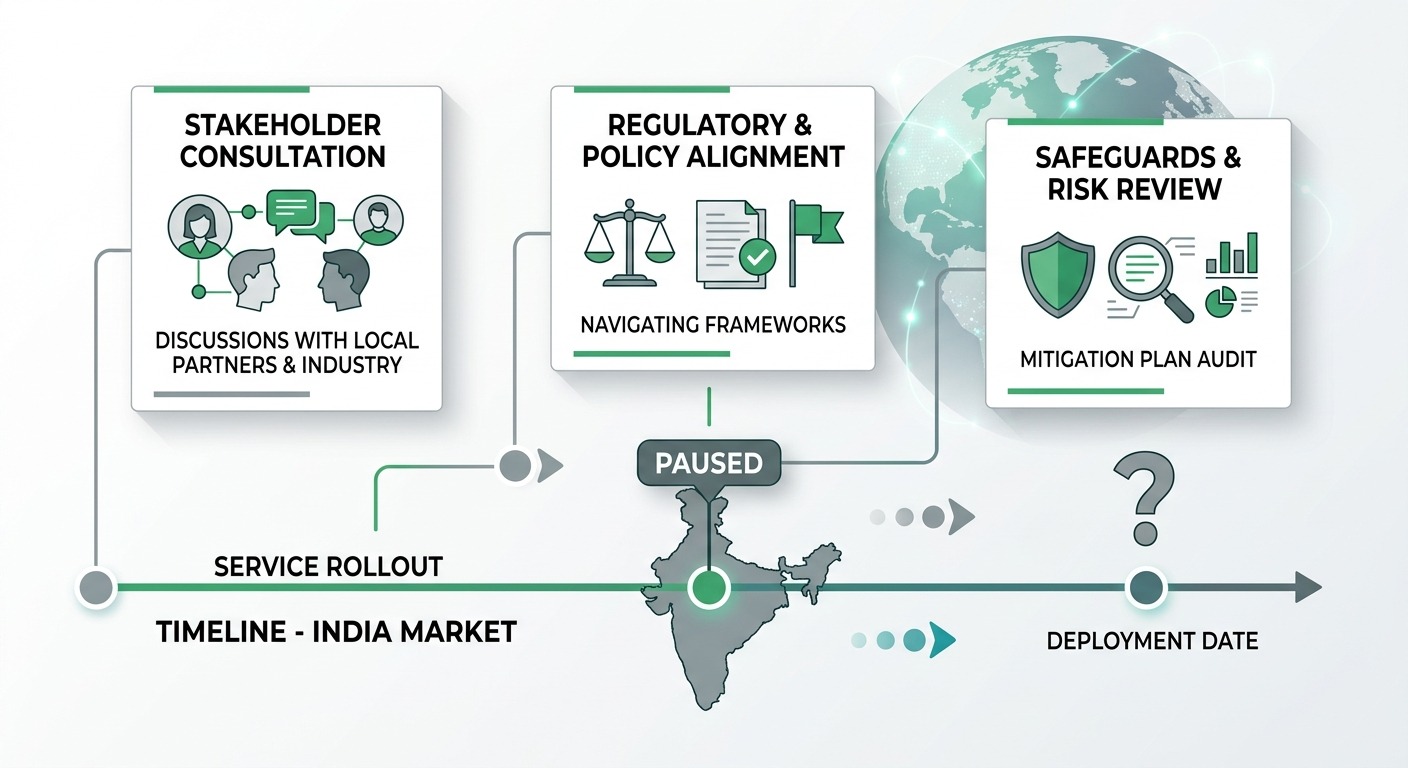
History suggests a negotiated outcome rather than a standoff. India and Meta have a long track record of friction followed by workable compromise on privacy and traceability questions, because both sides have too much at stake to walk away. The realistic planning assumption for businesses is a delay measured in weeks to a few months, with a meaningful chance of India-specific safeguards attached when the feature finally lands. That is enough time to reserve your brand handle and prepare your systems, and not enough time to justify ignoring the change altogether.
The Bottom Line
India has not banned WhatsApp usernames. It has paused their rollout and asked Meta to prove the feature is safe, with a specific focus on impersonation, fraud, and traceability, and a short window to respond. For the world outside India, reservations and the underlying identity changes continue unchanged. For India, expect a delay rather than a cancellation, and possibly some local guardrails when the feature does arrive.
For businesses, the message is calm and practical. Nothing in your WhatsApp setup breaks. Reserving your business username remains a smart, defensive move that actually aligns with the government’s anti-impersonation concern. And the deeper identity change underneath usernames is global, so the preparation you should be doing is unaffected by the India pause. If you want to get your team ready for the WhatsApp of the next year, the pricing page is a good place to see how ChatMaxima approaches it. The regulatory conversation in India is just beginning, and it is worth watching, but it is not a reason to change course.
Sources: Deccan Herald, The Tribune, WION.