Sarvam AI held its first Epoch conference in Bengaluru on 30 July 2026, and the headline wrote itself: a one trillion-plus parameter foundation model, built from scratch in India, shipping within six months. That number is doing a lot of work in the press coverage. It is also the least useful number in the entire announcement if you run a business.
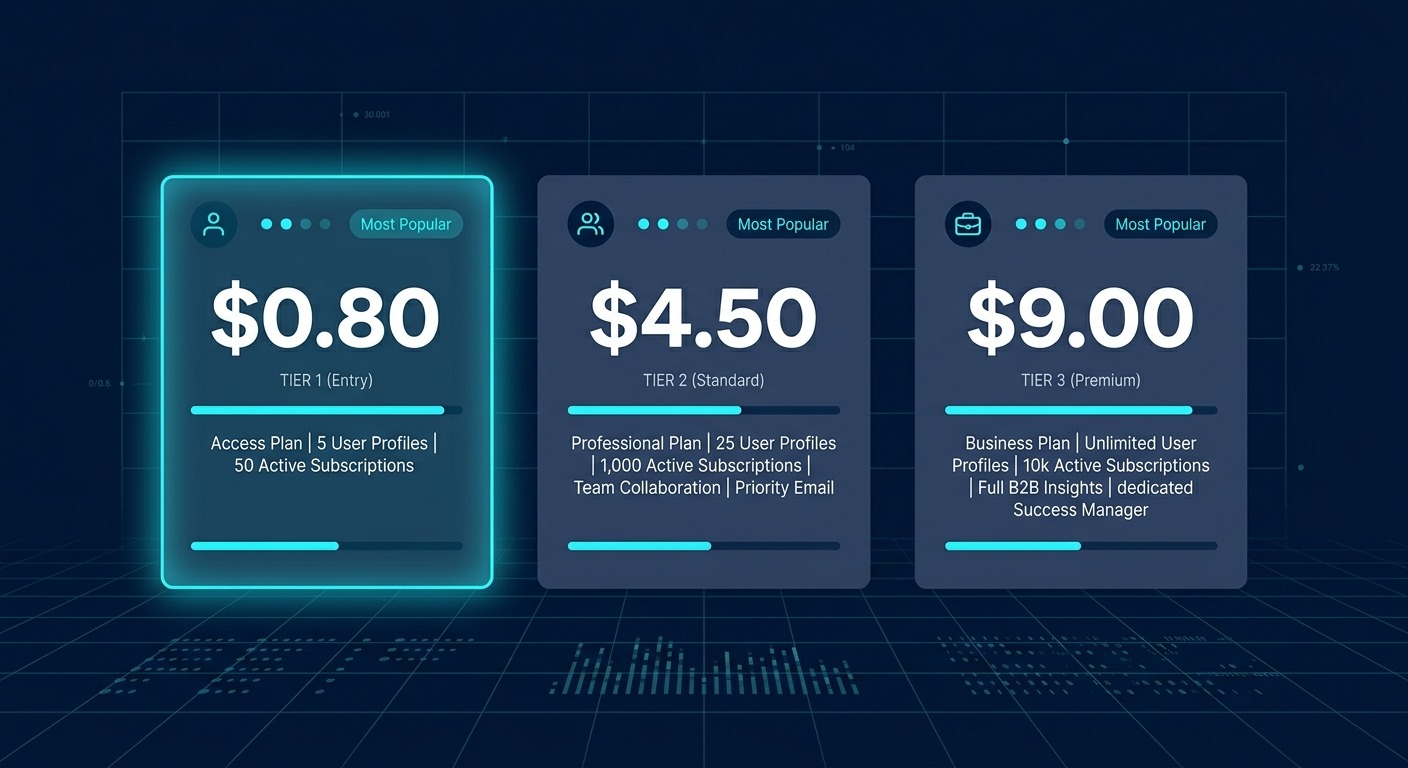
The numbers that actually matter to you came in the pricing slide. Sarvam 105B now serves at $0.80 per million blended tokens, against $4.50 for GPT-5.4 Mini and $9.00 for Gemini 3.5 Flash. That is roughly 5.5 times cheaper than one frontier-class competitor and 11 times cheaper than another, on infrastructure physically located in India, with data residency you can point at in a procurement document.
Sarvam Epoch 2026 was not a model launch. It was a platform launch dressed as one. Sarvam spent the day repositioning itself from “the company building India’s LLM” into a full-stack AI provider competing with hyperscalers on inference, with OpenAI and Anthropic on models, and with document-processing vendors on OCR. For anyone running customer support, sales conversations, or voice agents in India, that repositioning changes your options more than the trillion-parameter roadmap does.
This post covers what was announced, what the pricing means in rupees against real conversation volumes, where the claims need caution, and how to adopt any of it without rebuilding your stack around a single vendor.
Everything Sarvam announced at Epoch 2026
The event covered models, infrastructure, tooling, and hiring. Here is the full picture in one place.
Models and inference
- A trillion-plus parameter foundation model, being trained from scratch in India, targeted at coding, cybersecurity, scientific research, and simulation workloads. Sarvam has committed to a six-month build window.
- Sarvam 105B (upgraded), the flagship mixture-of-experts reasoning model, now handling more complex tasks and supporting voice, priced at $0.80 per million blended tokens.
- Sarvam Inference, an India-hosted inference platform serving Sarvam 105B alongside frontier open models including GLM 5.2 and Gemma 4. Sarvam claims an agentic optimisation layer delivering up to 15x inference speed improvement.
Speech and voice
- Saaras V4, speech recognition across all 22 scheduled Indian languages.
- Saaras V4 Multi-Speaker, adding speaker identification and diarisation for multi-party conversations.
- Bulbul V4, text-to-speech with expression control, emotional range, emphasis, and laughter.
- Kivi, a desktop voice tool for speech-driven control and coding.
Document intelligence
- Sarvam Vision 2.0, an OCR and document understanding model that reads Indian handwriting, parses tables and forms, and extracts entities like names, addresses, and ID numbers.
- Sarvam Vision Edge, the enterprise platform wrapping that model for invoice extraction, forms, PDFs, and workflow automation. The Odisha state government is already running it for land records digitisation.
Agents and developer platform
- Sarvam Code, a coding agent aimed at software development, machine learning, and cybersecurity work.
- Sarvam Work, an enterprise agent for dataset analysis and research, deployable into Slack or on-premise.
- Epoch Builder Edition, a platform giving developers and enterprises GPU capacity, training tooling, curated Indian-language datasets, and safety testing to build their own India-centric models. Private preview opens August 2026, with wider rollout planned for Q4 2026.
Infrastructure and people
- Access to roughly 2,000 NVIDIA Blackwell GPUs today, with a stated path to 10,000.
- A sovereign data centre partnership with HCLTech in Odisha.
- Pilot partnerships with three IITs and two state governments across education and public service delivery.
- A new San Francisco research lab, with Devendra Singh Chaplot joining as advisor. Chaplot was most recently at xAI, and before that at Mistral AI and Thinking Machines Lab.
On adoption, Sarvam reported over 500 enterprises and organisations using its products, more than a million registered developers, and 325 million-plus AI conversation minutes handled annually through Samvaad. Conversational AI reportedly accounts for around 80 percent of an estimated $12 million ARR.
That last figure deserves a pause. A company with $12 million in annual revenue is committing to train a trillion-parameter model in six months. Both things can be true, and IndiaAI Mission compute plus sovereign data centre partnerships explain part of the gap, but it is the right lens for reading every forward-looking claim in this announcement.
The $0.80 number, translated into rupees and conversations
Blended token pricing is a marketing construct. It assumes a particular input-to-output ratio, and vendors pick the ratio that flatters them. Before you compare anything, check the underlying split. Independent benchmarking puts Sarvam 105B (high) at roughly $0.04 per million input tokens and $0.17 per million output tokens, which is aggressive even against the blended headline.
So run your own arithmetic. Here is a realistic model for a support or sales conversation handled by an AI agent: system prompt, knowledge base retrieval, six to eight turns of dialogue, and a structured handoff summary. Call it 8,000 blended tokens per resolved conversation. That is on the heavier side, which is what you want when you are sizing a budget.
At 50,000 conversations per month, you consume 400 million tokens:
- Sarvam 105B at $0.80/M: $320 per month, roughly ₹28,000
- GPT-5.4 Mini at $4.50/M: $1,800 per month, roughly ₹1,58,000
- Gemini 3.5 Flash at $9.00/M: $3,600 per month, roughly ₹3,17,000
At 200,000 conversations per month, those become $1,280, $7,200, and $14,400 respectively. The gap stops being a line item and starts being a hiring decision.
Two caveats keep this honest.
First, inference cost is rarely the dominant cost in a support stack. For most teams, agent salaries, CRM licences, telephony minutes, and WhatsApp conversation charges dwarf token spend. A 5.5x saving on the smallest line item is pleasant, not transformative. It becomes transformative only at genuine scale, or in workloads where tokens are the whole product: bulk document extraction, transcript summarisation across millions of calls, or agentic pipelines that burn tokens on reasoning loops rather than user-facing turns.
Second, cheaper per token is not cheaper per resolution. A model that costs a fifth as much but needs three extra turns to reach the same answer has erased its own advantage and added latency. The only metric worth optimising is cost per resolved conversation, and it is measured, not quoted. We broke this down in detail when comparing Kimi K3, Claude Opus 5, and GPT-5.6 for agent workloads, and the same evaluation discipline applies here.
Run 500 of your own conversations through Sarvam 105B and your incumbent model. Compare resolution rate, escalation rate, average turns to resolution, and p95 latency. Then multiply. If Sarvam holds resolution quality within a few points at a fifth of the cost, the decision makes itself. If it does not, the headline price was never the point.
Token sovereignty is a procurement argument, not a slogan
Sarvam pushed the phrase “token sovereignty” hard at Epoch, and it is easy to dismiss as nationalist framing. It is not, at least not entirely. It is a sales argument aimed at a specific and growing objection inside Indian enterprises and government bodies: where do the tokens physically go, and under whose jurisdiction are they processed?
For a large slice of buyers, that question is now blocking. Banks, insurers, healthcare providers, and anyone touching Aadhaar-linked or land-record data face data residency requirements that a US-hosted API endpoint cannot satisfy without a lot of contractual gymnastics. An India-hosted inference platform running competitive models removes the objection entirely. That is the actual product Sarvam launched, and the trillion-parameter model is the credibility story attached to it.
The public sector angle is already live rather than aspirational. Vision 2.0 running on Odisha land records is a real deployment against a real problem: decades of handwritten registers that no global OCR model has been trained to read. Handwritten Devanagari, Odia, and Tamil land entries are not an edge case in India, they are the archive. Global document AI is not optimised for them because the training data was never there. This is the category of problem where an India-first model has a genuine structural advantage rather than a pricing one, and it follows the pattern seen across public sector AI deployments generally: the win comes from local data nobody else trained on, not from a better architecture.
If you sell into regulated Indian industries, or you are the one being asked the data residency question by your own compliance team, this announcement gives you a credible answer that did not exist eighteen months ago. That is worth more than the price cut.
Voice and vernacular: where the announcement is strongest
Saaras V4 covering all 22 scheduled languages, and Bulbul V4 adding emotional expression to text-to-speech, are the two releases most likely to change what you can actually ship this quarter.
Voice AI in India has been stuck on a specific failure. Global speech models handle Indian English acceptably, handle Hindi passably, and fall apart on everything else, especially code-mixed speech. Real customers do not speak clean Hindi or clean English. They speak Hinglish, they switch mid-sentence, they use English nouns inside Tamil grammar. A model trained primarily on Western speech data transcribes that as noise, and the downstream agent responds to garbage.
Multi-speaker support with speaker identification matters more than it sounds. Indian customer calls frequently involve three people: the customer, a family member, and your agent. A transcript that cannot separate them produces a summary that attributes the wrong intent to the wrong person, which is worse than no summary.
Expressive TTS closes the other end. A voice agent that sounds robotic gets hung up on within eight seconds, and no amount of model intelligence recovers a call that ended before it began. Emotional range and emphasis control are not cosmetic features, they are completion-rate features.
The strategic point is that voice, not text, is how the next hundred million Indian customers will reach a business. Typing in English is a filter that excludes most of the country. We argued this case in full in our piece on vernacular voice AI in India, and Sarvam shipping a credible 22-language speech stack is the supply side of exactly that thesis.
If you are running voice agents, evaluate Saaras V4 against your current ASR on your own call recordings, particularly the ones your current model transcribes badly. That is where the difference will show, if it exists.
The trillion-parameter model: what to believe, what to wait for
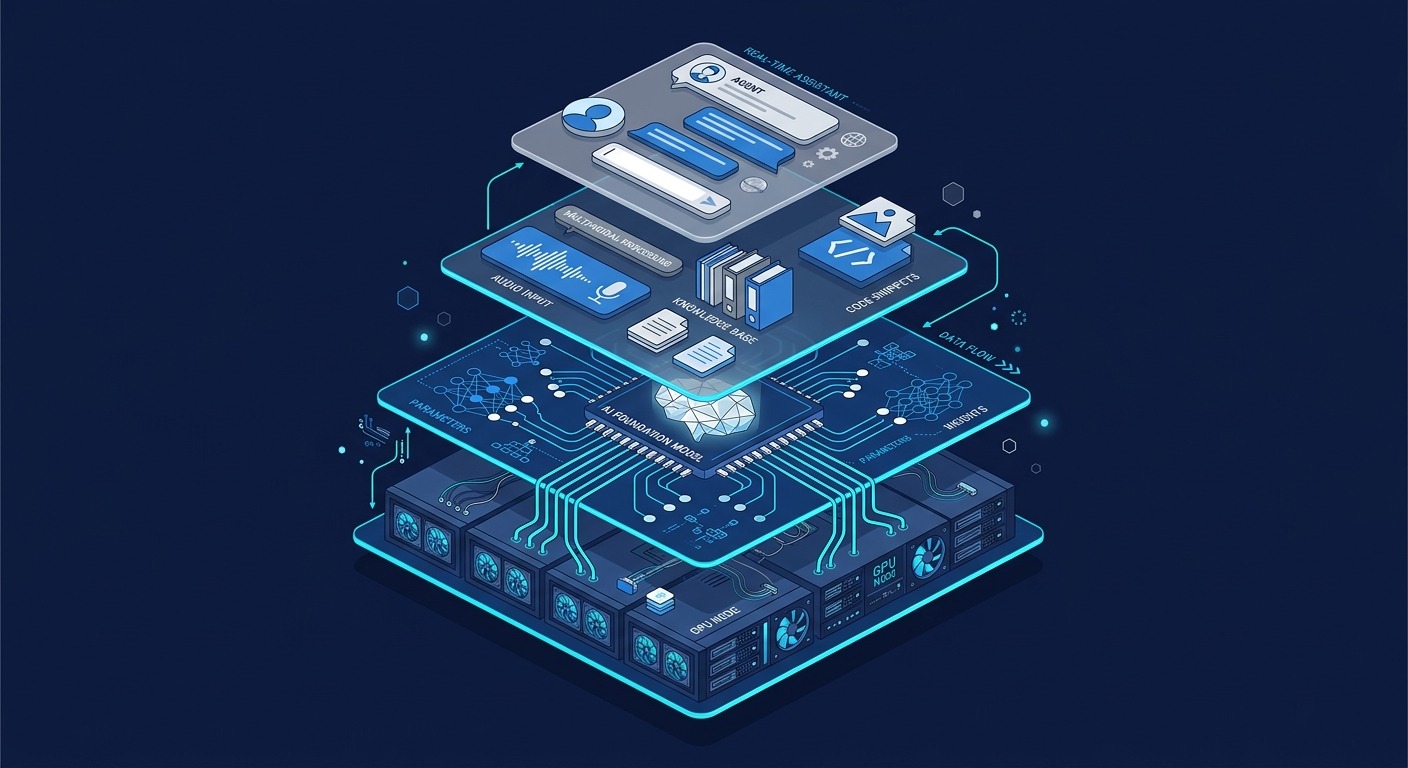
Six months to train a trillion-plus parameter model from scratch is an extremely aggressive timeline. Not impossible, but aggressive enough that it should be read as a direction of travel rather than a delivery date.
The constraint is compute. Roughly 2,000 Blackwell GPUs is a serious cluster by Indian standards and a modest one by frontier-lab standards. The stated path to 10,000 changes that materially, and the HCLTech sovereign data centre partnership in Odisha is the mechanism. But GPU procurement timelines, power provisioning, and network fabric are not software problems that can be compressed by hiring well. The 10,000-GPU target is the number to track, because the trillion-parameter timeline depends on it far more than on model architecture.
The domain choice is also worth reading carefully. Coding, cybersecurity, scientific research, and simulation are not Indian-language workloads. They are the highest-value, most competitive segments in global AI, and they are where the incumbents are strongest. Sarvam is explicitly not building “the Hindi model” at trillion scale. It is building a general frontier model and betting that Indian compute plus Indian cost structure produces something globally competitive.
That is a much harder bet than the vernacular one, and it is the one that could fail while everything else in the announcement succeeds. It is entirely plausible that in twelve months Sarvam is a thriving India-hosted inference and speech company with a genuinely useful 105B model, and the trillion-parameter model has slipped or shipped at a scale below the frontier. That outcome would still make Epoch 2026 a successful event.
The Chaplot hire signals seriousness on the research side. Someone with Mistral, Thinking Machines, and xAI on their record does not join a company with no path to frontier-scale training. But he joined as a part-time advisor operating out of a newly opened San Francisco lab, which is a different commitment level than relocating to run pretraining in Bengaluru.
Plan around what has shipped. Watch what has been promised.
What this actually changes for Indian businesses
Strip out the national narrative and here is the practical shortlist.
Your inference bill has a credible floor now. Whatever you are paying per token, there is an India-hosted option at roughly a fifth of mid-tier frontier pricing. Even if you never switch, that is leverage in your next renewal conversation with an incumbent provider. Vendors respond to substitutes existing.
Data residency stopped being a blocker. If a deal has stalled because your AI processing happens outside India, that objection now has an answer. This is most valuable in BFSI, healthcare, education, and any government-adjacent contract.
Regional language coverage got wider and cheaper simultaneously. Twenty-two languages of ASR plus expressive TTS at India-hosted pricing makes vernacular support economically viable for businesses that previously could only justify English and Hindi. The addressable customer base for a mid-sized Indian business genuinely expands when a Marathi or Odia speaker can complete a support conversation in their own language.
Document-heavy workflows got a new tool. If your operations involve handwritten forms, vernacular paperwork, scanned invoices, or legacy registers, Vision 2.0 and Vision Edge are worth a pilot. This is the announcement’s most immediately deployable piece, and the one with the least competition from global vendors.
Nothing here removes the need for orchestration. A cheaper, faster, India-hosted model is one component. It does not route conversations, does not manage WhatsApp and Instagram sessions, does not hand off to a human agent with full context, does not enforce business rules, and does not measure whether a conversation resolved. That layer is your product, and the model underneath it should be replaceable. ChatMaxima already supports Sarvam AI as a model provider, so testing it against your current model is a configuration change rather than a migration.
Adopt the model, do not marry it
The single most important lesson from the last three years of AI infrastructure is that models are dependencies, not foundations. Prices collapse, leaders change quarterly, models get deprecated, and export controls and regulation move faster than migration projects.
Sarvam at $0.80 per million tokens is a strong option today. In six months a different provider will undercut it, or Sarvam will undercut itself with the trillion-parameter model, or a global vendor will respond with India-hosted capacity of its own. Any architecture that treats one model as permanent is buying a rewrite.
The correct posture is a routing layer between your conversation logic and whichever model serves a given request. Cheap, fast, India-hosted models handle the high-volume, low-ambiguity traffic. Expensive frontier models handle escalations, complex reasoning, and edge cases. Speech goes to whichever ASR performs best on your actual call recordings, which may not be the same vendor as your text model. Each choice is evaluated on measured outcomes and each is swappable without touching your business logic. We laid out the full architecture for this in our guide to building AI infrastructure that survives losing its best model.
This matters more, not less, when the cheap option is compelling. Cost savings are the most seductive reason to hard-code a dependency, and the most expensive one to unwind.
A practical sequence for evaluating anything from Epoch 2026:
- Pick one workload, not your whole stack. Bulk transcript summarisation or document extraction are ideal first tests because quality is measurable and failure is contained.
- Run a shadow evaluation. Send the same 500 real inputs to Sarvam and your incumbent. Compare outputs blind, scored by someone who does not know which is which.
- Measure cost per resolved unit, not cost per token. Include retries, escalations, and latency-driven abandonment.
- Check the compliance story properly. India-hosted is a claim. Ask for the data processing agreement, the retention policy, and the specific data centre location before you put customer PII through it.
- Keep the fallback wired. If Sarvam’s endpoint degrades or a model version changes behaviour, your traffic should reroute automatically rather than page someone at 2am.
What to watch next
Three concrete markers will tell you whether Epoch 2026 was a turning point or a well-produced conference.
The GPU number. Movement from 2,000 toward 10,000 Blackwell GPUs is the single best proxy for whether the trillion-parameter timeline is real. Watch for data centre commissioning announcements out of the Odisha partnership.
Epoch Builder Edition availability. Private preview in August 2026, wider rollout in Q4. If Q4 slips, the platform ambition is running behind the platform narrative. If it ships with usable Indian-language datasets and real training tooling, Sarvam becomes infrastructure rather than a model vendor.
Independent benchmarks on Sarvam 105B upgraded. Vendor-quoted blended pricing and vendor-quoted speed improvements need third-party verification, particularly the 15x inference speed claim. Benchmark aggregators will have numbers within weeks. Wait for them before committing production traffic.
For most Indian businesses, the right action this quarter is small and specific: pick one token-heavy workload, run a real evaluation against Sarvam Inference, and keep your routing layer flexible enough that the answer can change next quarter. The trillion-parameter model will arrive when it arrives. The $0.80 price and the 22-language speech stack are available to test now, and they are the parts of Sarvam Epoch 2026 that can affect your numbers this year.
If you are building customer conversations on top of any of this, the model is the cheapest part of the decision. The orchestration, the channel coverage, the human handoff, and the measurement are what determine whether an AI agent actually resolves anything. ChatMaxima runs that layer across WhatsApp, Instagram, web, and voice, with the model underneath kept deliberately swappable. See what that costs on our pricing page, and start with one workload rather than a rebuild.
Sources: Sarvam AI, Inc42, Business Today